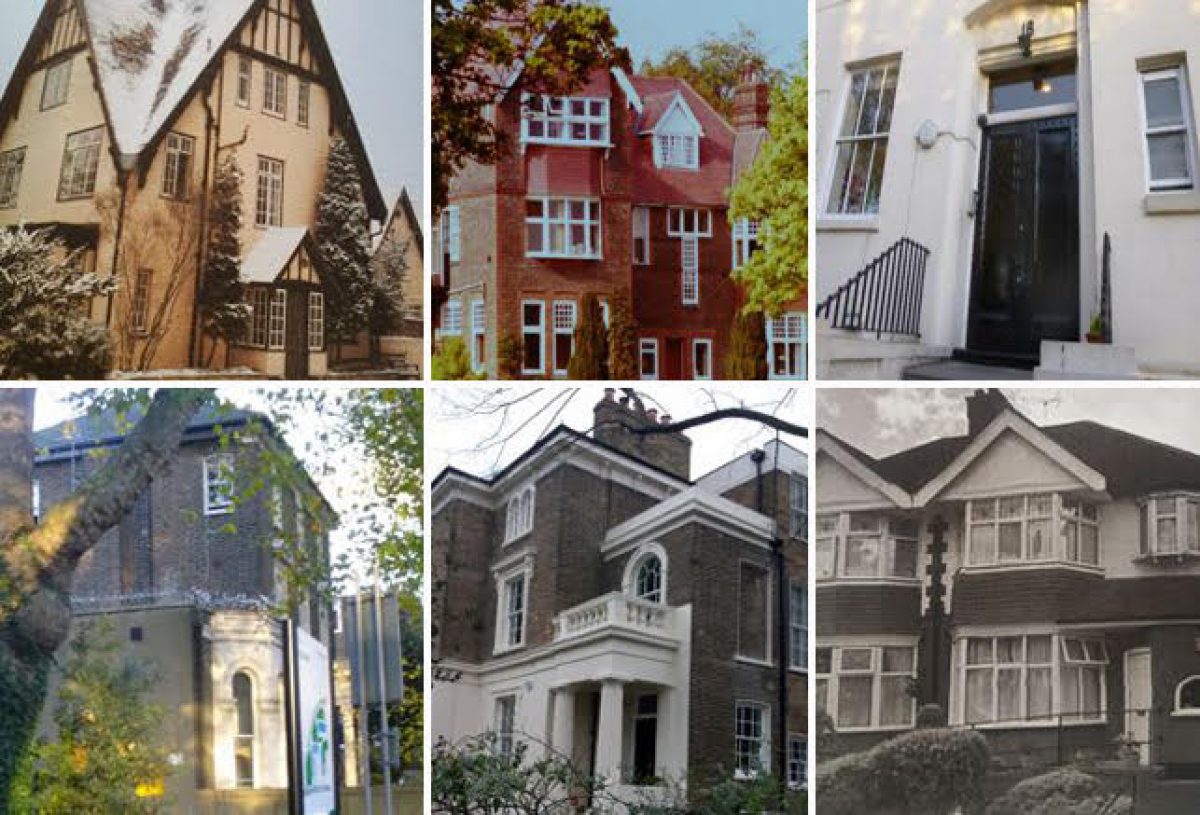
EXCLUSIVE
Islington Gazette 9th March
Met Police officer on abuse at Islington children’s home
Exclusive by Charles Thomson : Investigations Reporter
A police officer has detailed how abuse and neglect at an Islington children’s home left him at the mercy of a paedophile.
Aaron – not his real name – returned to the former Highbury Crescent home with the Islington Gazette last week, to detail his ordeal.
The man is among many to have been abused at Islington children’s homes and is now speaking out, decades after whistleblowers drew attention to the scandal.
Now in his 40s, he has applied to Islington Council’s Support Payment Scheme, which offers £10,000 payments to victims of historic abuse in its homes.
He said he was speaking out to encourage others to come forward.
“Horrific”
Aaron was placed in Highbury Crescent several times because his mother, an alcoholic, struggled to look after him and his siblings, he said.
But at the home, he claimed: “I was subject to various levels of abuse. I was physically assaulted and dragged around.
“Quite often my mum would show up, drunk, trying to get us back. We would be dragged away, struck and thrown into a closet room and locked in from the outside. There was writing all over the walls and small holes knocked through.”
In addition to this physical abuse, said Aaron, children at Highbury Crescent were “neglected” – left unsupervised most of the time and often unfed.
CATCH-UP:
- What was the Islington children’s homes abuse scandal? Our timeline.
- Intelligence ‘pours in’ on former Islington child abusers.
- Expert fears Met Police inaction could see abuser survivors take the law into their own hands.
“It was quite a horrific place,” he said.
“The only person that looked out for us was an Irish lady in the kitchen who used to give us a bit of cake or something.
“We would often just be left to our own devices for hours on end, to run around in the park opposite.”
That was where he and others encountered a paedophile called Roger Moody.
Aaron described the treatment of children at the Highbury Crescent home as ‘horrific’, including assaults and neglect (Image: Charles Thomson)
Groomed
“Whenever we used to play in the park opposite, he used to be there,” said Aaron.
“Perhaps he knew that was where he could find vulnerable children. He used to have a little black dog, Sadie.”
Gradually, Moody manipulated his way into Aaron’s life. At the time, Moody volunteered at an adventure playground near Pentonville Road, said Aaron, and told the kids he was a former youth worker.
He got to know Aaron’s family and began taking him on outings with other children, to parks and a swimming pool.
“He was very hands-on and playful with the children,” said Aaron. “We all got changed together and would all be thrown around the pool – hands-on, touching.”
Aaron’s mother accepted Moody’s offer to let Aaron stay at his house over weekends, to give her a break.
“My mother believed he was a trustworthy person,” said Aaron.
Aaron said it was in the park opposite the children’s home that he and other children encountered a paedophile called Roger Moody (Image: Charles Thomson)
Abuse
The house, in Liverpool Road, was filled “with lots of other local children that he knew and associated with, mainly of Asian descent.”
“The place was covered with cigar ash and dirt and dust,” Aaron recalled. “There was a piano with stuff piled on top of it. There were photocopiers in his house.”
Moody was a left-wing activist. He would take the boys to meetings and have them hand out the pamphlets he was producing at home.
Eventually, said Aaron, Moody’s true motive for befriending him became apparent.
Aaron described “unwanted sexual touching” by Moody, but did not want to go into detail.
“I won’t want to bring back the old demons,” he said. “I must have been about 11 or 12. No older than that. I was inappropriately touched on numerous occasions.”
Aaron is still plagued by “recurring nightmares”, he said, and sometimes situations he encounters during his work as a police officer trigger flashbacks.
Aaron never reported his abuse to the police, despite being an officer himself, but did report it several years ago to the Islington Survivors Network (ISN) (Image: Charles Thomson)
Speaking Out
Aaron never reported his abuse, even after joining the force.
“I know of historic cases that never go anywhere,” he said. “It was my word against his. I wasn’t willing to put myself through that.”
But in 2020, he contacted the Islington Survivors Network (ISN) and disclosed his abuse.
Two years later, Moody died.
Islington Council said: “We’re deeply sorry for the council’s past failure to protect vulnerable children in its children’s homes, which was the worst chapter in this council’s history.”
Since May 2022, the authority has paid more than £1 million in support payments to victims of abuse.
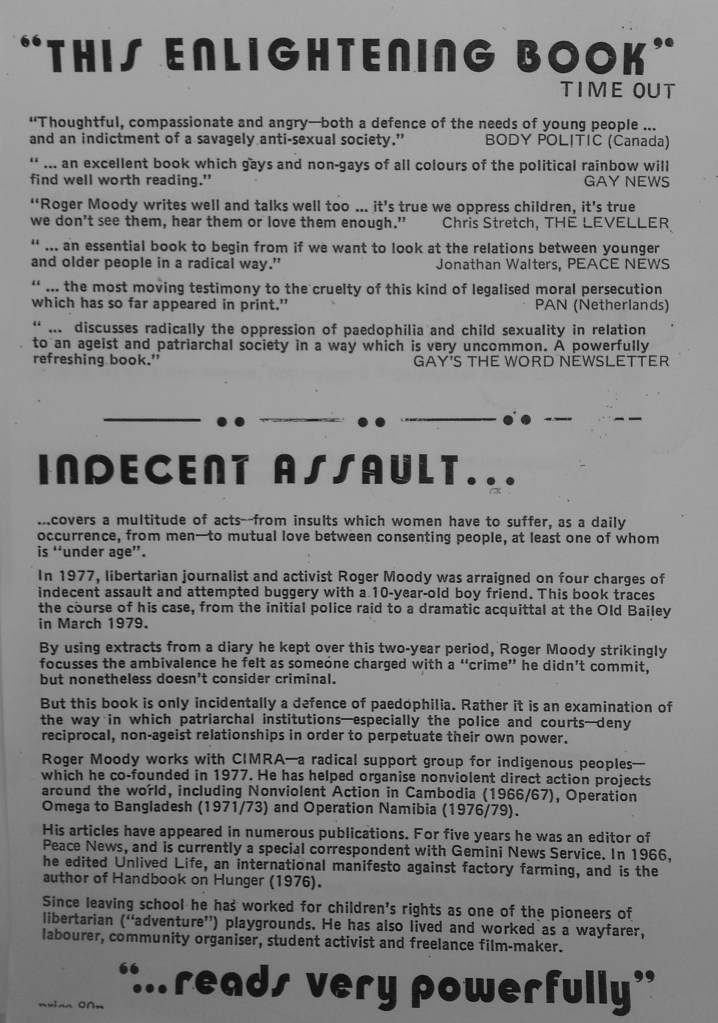
Next week: The Gazette investigates Roger Moody, the teflon paedophile who kept finding ways to work with children.
ISN can be reached on 0300 302 0930 or by emailing islingtonsn@gmail.com.
 Islington Survivors Network