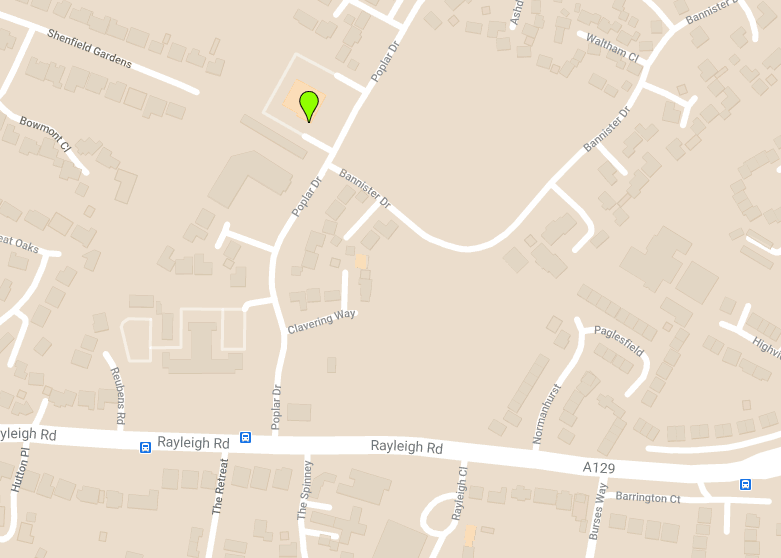
Address: Hutton Poplars, Rayleigh Road, Hutton, Brentwood, Essex
Open: 1906 to 1982
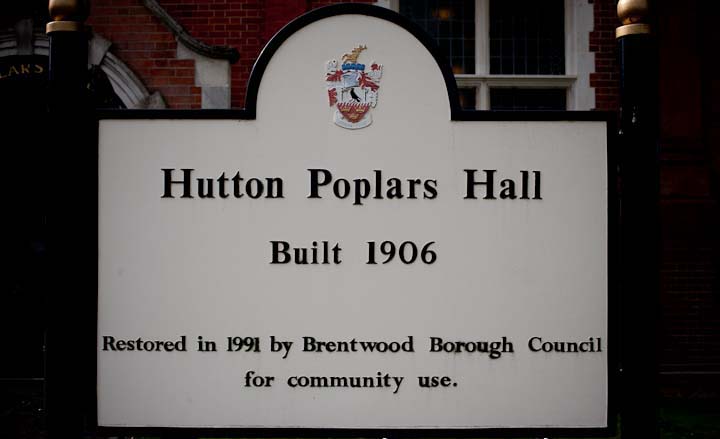
The London Picture Archive has over 1000 photographs of Hutton Poplars School available to view on this website. Here is just one example which also provides some history of the school.
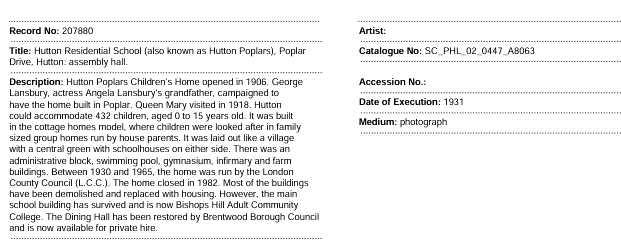
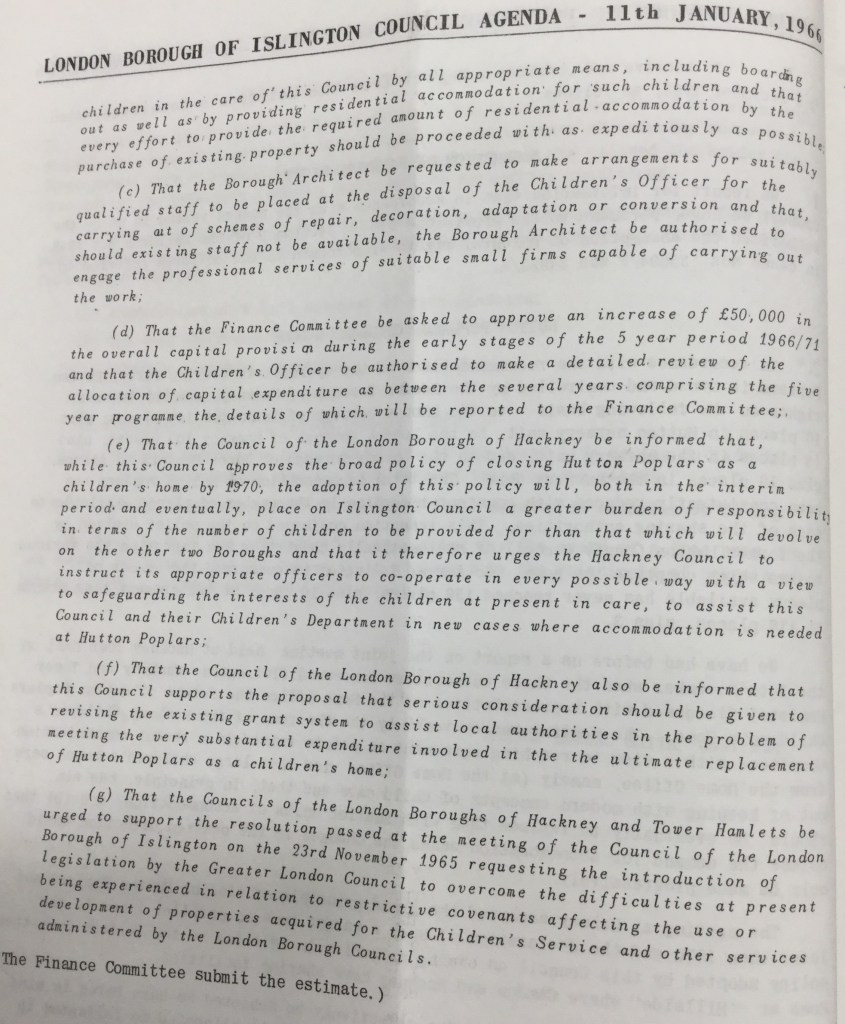
In 1966, Islington Council Minutes state that 119 children were placed at Hutton Poplars from Islington. The children placed there were the responsibility of the London County Council but in 1970 the London Borough of Hackney took over the ownership.
Islington Survivors Network has many survivors who lived at Hutton but because many of them lived there before 1966 they could not claim the Islington Support Payment Scheme – a payment of £10,000 – because they were under the authority of the London County Council and Islington as a London Borough did not exist until 1966. This seemed very unfair to us because there were some experiences of Hutton that were very abusive. Much depended on the particular house parents the child was placed with. However Hutton did keep siblings together which once children were in the care of Islington Council this was no longer the policy and many siblings were torn apart and placed in different children’s homes and foster placements which was cruel and distressing.
The Islington Experiment : An Islington survivor’s poignant and descriptive memory of having lived at Hutton Poplars with his brothers and then the sudden change to an Islington children’s home.
I want to highlight the contrast between the old stable secure children’s homes run by the LCC for many decades that were the forerunners to the new London borough community homes that opened in the late 60s.
This is the tale of the two homes that I lived in during my 17 years in care. The first was Hutton Poplars in Essex that served the London boroughs of Islington, Hackney and Tower Hamlets and a new purpose-built community care home in Islington that opened in 1970 that was known as Sherringham Road.
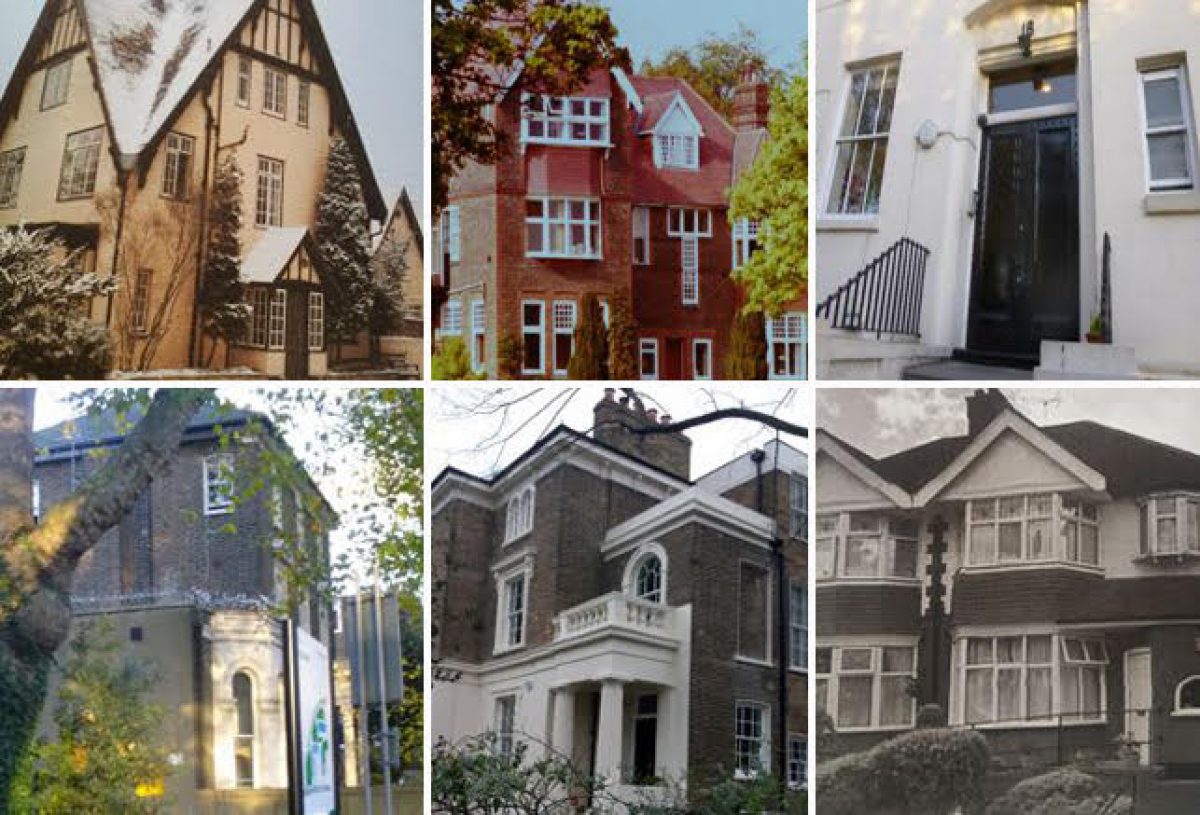
Hutton was a large impressive Edwardian institution that opened in 1905. It was owned by the London County Council and could look after at any one time around 400 kids in about 15 large weathered red-brick houses that were radiating a distinctly warm glowing orange hew by the time I arrived there less than a year old.
For a city kid out in the rural heartlands of Essex, it meant fresh air, trees, fields and the great outdoors all within its village-like set-up. Within the grounds were a swimming pool, an indoor football hall, a swing park, an adventure playground, cricket, football and tennis pitches. We would have and annual inter-house events like sports days, swimming galas and football tournaments. There would be pantos that the children starred in directed by famous people from London’s theatre world. Christmases were magical. Every Christmas eve Santa’s sleigh bedecked with mesmerising lights could be seen quietly approaching silently in the dark and distance as it made it’s way around the grounds with a brief call at every house dropping of a small gift for every child inside.
On lighter nights the fields were alive with the sound of children at play. If the boys were overly engaged in field sports the girls turned their skipping ropes for each other or flipped tennis balls between them all to the singing catchy ditties though there were never any exclusions for boys who might want to skip or girls who might want to punt a ball.
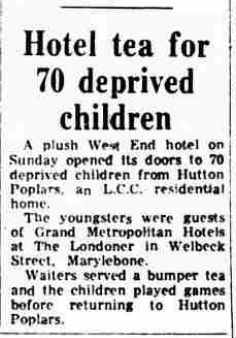
By the 60s Hutton Poplars had become a very well-managed home that had an unswerving commitment to providing as much fun and excitement as was possible for these, often referred to, ‘deprived’ children in its care. While we may have lacked the love and protection of an intimate maternal or parental bond the staff ensured we were never short of any material consolation prizes so holidays, Christmas parties, taxi-driver excursions to the seaside, trips to London theatres, pantomimes and circuses were always seeing us ferried around the country in coaches or the company minibus (generously donated as an inscription on the side read, from The Friends of Hutton Poplars). The link with the local community was as ever heartwarming as so many would volunteer to offer to be surrogate aunts and uncles and take individuals or siblings for Sunday tea or further trips out to wider amusements.
There was a Whit Monday fete day when the grounds would be bedecked in colourful bunting looping from the trees and lampposts and in the sunlight would transport us wide-eyed youngsters into a fairytale world. A brass band would open the proceedings marching back and forth across the field highly synchronised and filling the air with a wonderful cacophony of triumphant noise. It never ceased to amaze when the lines of the band turned and didn’t end up in a heap but would re-emerge again in perfect formation going the other way. The day included a fancy-dress competition that every child would seemingly revel in with uncontained joy. The main field would become a fair-ground with coconut shies, rifle ranges, shove ha’penny stalls and all manner of skill-testing endeavours for which the usual rewards from stuffed toys, confectionery and goldfish in plastic bags could be won and taken home. Fete day historically welcomed back old scholars as well as being open to the local community. It was always a joy to see people who had grown up and moved on from Hutton returning to be part of this incredibly exciting day.
So for me the day I got wind of the fact that Hutton Poplars would be closed and demolished as it was considered too institutional and too far from the families of London from which we came and was too costly to run was the day my world turned upside down. A small part of my soul was crushed forever.
In 1970 aged 12 I begrudgingly waved goodbye to my already disappearing world (several houses had already been flattened) to start my new life among the bright lights of London. I couldn’t engage with the departure. I just wanted it over as quickly as possible I didn’t want to grieve for this day. I first heard about the ‘policy shift’ in 1967. I’d had three years to let the tears and the tantrums wage a small war inside me wreaking havoc with sleep and education. I had failed my 11 plus my parting gesture to my wonderful primary school having been a firm favourite to succeed. I was already educationally self-harming. No one batted an eyelid. I was merrily streamed into one of the worst avenues of education in a failed inner city seconday modern always remaining one of the top pupils but I did not care a jot about school from that day forth.
Jewish child abuse victim recalls how a school pastor ‘made me admit guilt for death of Jesus’ : Article relating to ISN survivor.
Mike Bralowski, who says he suffered racist abuse at a council-run home in Essex during the mid-1950s, tells the JC both the Church of England and the local authority have denied responsibility.
Jewish Chronicle : OCTOBER 27, 2022 13:56
Abuse: Hutton Residential School in Essex, where Mike Bralowski was sentA Jewish man who says he suffered antisemitic and sexual abuse from a pastor at a council-run children’s home has said the church denied responsibility when he appealed for redress.
Mike Bralowski, who lived at Hutton Residential School near Brentwood in Essex between September 1955 and 1956, also came up against a brick wall at Islington council, which sent him to the school.
It told him he was not eligible for a payment scheme set up for survivors of abuse between 1966 and 1995 because he was at Hutton prior to that period.
Mr Bralowski, 79, told the JC the school pastor made him admit in front of the congregation he was personally responsible for the death of Jesus, and later subjected him to sexual assaults.
He added that he was regularly subjected to a “kill the Jew-boy” chant at the school, whose headteacher told him he was a “worthless Jew” and beat him.But when he contacted the Diocese of Chelmsford in 2019 about the abuse, Mr Bralowski claimed it denied responsibility, stating that the minister accused of abusing him, Pastor North, was not employed by the diocese.
“He was a Church of England-ordained priest and his actions took place in a building consecrated by the C of E; the diocese’s excuses are nonsense,” said Mr Bralowski. “I recently attempted to contact Lambeth Palace [the Archbishop of Canterbury’s headquarters] about my experience, but they also stressed that Pastor North was not employed by the Church but by Islington Council.”
When Mr Bralowski reported his horrific experiences to Islington in 2020, he was told that he was ineligible for compensation because at the time of the abuse the borough was under the remit of the now-abolished London County Council.

A spokesperson from Islington Survivors Network (ISN), which campaigns for victims of child abuse from the borough, told the JC that it was “unjust” that survivors of abuse that took place before 1966 are not covered in an existing payment scheme for victims.
ISN also confirmed that 12 other people had come forward to them about abuse at Hutton Residential School.
Mr Bralowski, who has gone on to forge a successful photography career, said he suffered extensive physical and emotional abuse from his parents, and spent his childhood in and out of social care.
“My earliest memory is of a bitterly cold winter night being led along a country lane covered in snow somewhere in Kent, I must have been between two and four years old.
“My mother handed me over to an austere lady who forbade me to speak or show any emotion when my mother departed, made me strip and get into a very cold bed in a dormitory full of other children like me, unwanted and frightened.”
Aged 12 he recalls being moved to the “really horrific” Hutton Residential School. “The home was vast with probably 200 to 300 children, most of whom were from East London. I was the only child from a Jewish background in my house and suffered frightening racial abuse.
“Most of the staff and children were antisemitic and I would often be subjected to a chant of ‘Kill the Jew boy’, which terrified me.
“The headteacher, often ranted about how I was a worthless Jew-boy and beat me. On Sundays, we all had to attend church on school grounds where Pastor North was in charge.
“At Easter he made me stand in front of the congregation and admit that I was personally responsible for the death of Jesus, which earned me yet another bad beating and another night of absolute terror as the chants went on and on..
“Other students and staff including Pastor North also subjected me to extensive sexual abuse. I eventually ran away back to my parents but they phoned the school, demanding they take me back.”
Mr Bralowski reported still “waking up screaming at least twice a week” after experiencing vivid nightmares about the abuse he faced.
In October, a Lambeth Palace safeguarding officer told Mr Bralowski that they were “sorry for the distress and suffering” he had experienced, and suggested that he may be eligible for financial support through a redress scheme the church was developing.
They added that Mr Bralowski may receive an official apology from the church, though they could not confirm whether or when this would happen.
A spokesperson for the Diocese of Chelmsford said: “We looked into this case and offered support when the issue was raised with us in 2019.
“The priest concerned, now deceased, was employed by the local authority to run Hutton Residential School, and we provided details of a survivor network which includes a redress scheme for survivors of abuse at this school.
“The priest concerned never held a Church of England appointment in the Diocese of Chelmsford or any authority from the Bishop of Chelmsford to exercise ministry in the Diocese.
“We are aware of the courage it takes for survivors of abuse to come forward and share their story. The cases of abuse perpetrated by clergy and others in the Church of England over many years are a cause of great shame and we are committed to supporting anyone who has suffered abuse.”
A spokesperson for Lambeth Palace said: “We can confirm that a safeguarding officer at Lambeth Palace was contacted about this case and signposted the Church of England’s National Redress Scheme.”
In March 2021 Islington Council launched a £10,000 payment for people abused by paid staff and volunteers across 41 Islington children’s homes between 1966 and 1995 but Mr Bralowski is not eligible for this payment.
A spokeman for the council said: “We’re deeply sorry for the council’s past failure to protect vulnerable children in its children’s homes, which was the worst chapter in this council’s history.”
James Reeves an ISN survivor (deceased) wrote online about his stay in Hutton.
One day I was told I was leaving, to be taken to another children’s home. I was picked up by car by a LCC Social Worker. I was driven to Hutton children’s residential home, in Shenfield, Essex. I was taken into a large house,
called Thames. All the other houses were named after rivers. I was never sexually abused there by any staff members. Though one boy was, in a different house and his abuser Mr Brabbon was sentenced to six month prison.
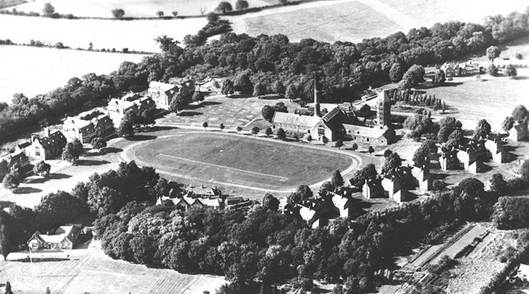
Pictured above: Hutton children’s residential home/school
Whilst there somehow some of us were invited to the Billy Cotton Band Show Christmas party, which was shown on BBC television. I was one of the kids who went. It was late 1950’s or early 1960’s. I can remember being seated at the tables full of food. There was Russ Conway, a woman singer and my abuser Alan Breeze. I didn’t know his name at the time. I asked Russ Conway his name. It happened in the men’s toilets. I was in there when Alan Breeze said “You going to toilet?”. I said “Yes”. “Let me help you.” he said and started touching my penis. He had his hand down my trousers holding my bum. I was trying to pull away, when someone else entered the toilet. I think he saw what was happening and he pulled me away, and sent me out of the toilet. As I left I complained to someone – a man – about what happened. He told me to go away and sit down, which I did. I was so upset and angry. I tried telling Billy Cotton but couldn’t get near him or Russ Conway anymore. I tried to tell staff at the home, but they laughed and walked away.
From that day, I was totally confused and felt alone. It got so bad I was taken to The Maudsley hospital, who after listening to my story told the person who took me there they wanted to keep me in. On hearing that, I ran out of the hospital and was found by my taker outside a big hospital opposite. I was crying and said “No one believes me! I am not staying in that place!”. I was taken back to the home and put on anti-depressants. I have never forgotten my abuse – it still haunts me to this day
COUNCIL MINUTES 11.01.1966 about Hutton