ISN News

Met Police officer on abuse at Islington children’s home

EXCLUSIVE

Islington Gazette 9th March

Met Police officer on abuse at Islington children’s home

Exclusive by Charles Thomson : Investigations Reporter

A police officer has detailed how abuse and neglect at an Islington children’s home left him at the mercy of a paedophile.

Aaron – not his real name – returned to the former Highbury Crescent home with the Islington Gazette last week, to detail his ordeal.

The man is among many to have been abused at Islington children’s homes and is now speaking out, decades after whistleblowers drew attention to the scandal.

Now in his 40s, he has applied to Islington Council’s Support Payment Scheme, which offers £10,000 payments to victims of historic abuse in its homes.

He said he was speaking out to encourage others to come forward.

“Horrific”

Aaron was placed in Highbury Crescent several times because his mother, an alcoholic, struggled to look after him and his siblings, he said.

But at the home, he claimed: “I was subject to various levels of abuse. I was physically assaulted and dragged around.

“Quite often my mum would show up, drunk, trying to get us back. We would be dragged away, struck and thrown into a closet room and locked in from the outside. There was writing all over the walls and small holes knocked through.”

In addition to this physical abuse, said Aaron, children at Highbury Crescent were “neglected” – left unsupervised most of the time and often unfed.

CATCH-UP:

“It was quite a horrific place,” he said.

“The only person that looked out for us was an Irish lady in the kitchen who used to give us a bit of cake or something.

“We would often just be left to our own devices for hours on end, to run around in the park opposite.”

That was where he and others encountered a paedophile called Roger Moody.

Aaron described the treatment of children at the Highbury Crescent home as ‘horrific’, including assaults and neglect (Image: Charles Thomson)

Groomed

“Whenever we used to play in the park opposite, he used to be there,” said Aaron.

“Perhaps he knew that was where he could find vulnerable children. He used to have a little black dog, Sadie.”

Gradually, Moody manipulated his way into Aaron’s life. At the time, Moody volunteered at an adventure playground near Pentonville Road, said Aaron, and told the kids he was a former youth worker.

He got to know Aaron’s family and began taking him on outings with other children, to parks and a swimming pool.

“He was very hands-on and playful with the children,” said Aaron. “We all got changed together and would all be thrown around the pool – hands-on, touching.”

Aaron’s mother accepted Moody’s offer to let Aaron stay at his house over weekends, to give her a break.

“My mother believed he was a trustworthy person,” said Aaron.

Aaron said it was in the park opposite the children’s home that he and other children encountered a paedophile called Roger Moody (Image: Charles Thomson)

Abuse

The house, in Liverpool Road, was filled “with lots of other local children that he knew and associated with, mainly of Asian descent.”

“The place was covered with cigar ash and dirt and dust,” Aaron recalled. “There was a piano with stuff piled on top of it. There were photocopiers in his house.”

Moody was a left-wing activist. He would take the boys to meetings and have them hand out the pamphlets he was producing at home.

Eventually, said Aaron, Moody’s true motive for befriending him became apparent.

Aaron described “unwanted sexual touching” by Moody, but did not want to go into detail.

“I won’t want to bring back the old demons,” he said. “I must have been about 11 or 12. No older than that. I was inappropriately touched on numerous occasions.”

Aaron is still plagued by “recurring nightmares”, he said, and sometimes situations he encounters during his work as a police officer trigger flashbacks.

Aaron never reported his abuse to the police, despite being an officer himself, but did report it several years ago to the Islington Survivors Network (ISN) (Image: Charles Thomson)

Speaking Out

Aaron never reported his abuse, even after joining the force.

“I know of historic cases that never go anywhere,” he said. “It was my word against his. I wasn’t willing to put myself through that.”

But in 2020, he contacted the Islington Survivors Network (ISN) and disclosed his abuse.

Two years later, Moody died.

Islington Council said: “We’re deeply sorry for the council’s past failure to protect vulnerable children in its children’s homes, which was the worst chapter in this council’s history.”

Since May 2022, the authority has paid more than £1 million in support payments to victims of abuse.

Next week: The Gazette investigates Roger Moody, the teflon paedophile who kept finding ways to work with children.

ISN can be reached on 0300 302 0930 or by emailing islingtonsn@gmail.com.

Roger Moody

North London: Youth worker Roger Moody was a proud paedophile

Islington Gazette 28th March 2023

By Charles Thomson Investigations Reporter

A proud paedophile managed to continue working with children even after authoring books, articles and pamphlets advocating sex between men and children.

Throughout the 1970s and 1980s, youth worker Roger Moody called for the age of consent to be abolished, even writing a book bemoaning “simplistic and bigoted” attitudes towards paedophiles.

But press cuttings from the late 1980s and early 1990s show he was still managing to get jobs working with children.  

Earlier this month, the Islington Gazette interviewed a Met Police officer who said he was abused by Moody in the 1990s and recalled him being a volunteer at an Islington adventure playground.

In 2020, that officer was one of two people to approach the Islington Survivors Network (ISN) and report historic abuse by Moody.

Others made allegations decades earlier, but Moody was acquitted at trial.

Moody died in 2022.

The Gazette interviewed a Met Police officer who said he encountered Roger Moody as a direct result of neglect at the former Highbury Crescent children’s home.

‘Boy lover’

Roger Moody was a left-wing activist, campaigning against human rights abuses in the developing world.

In 1971, he even wrote for the Islington Gazette from Bangladesh, where he was delivering aid.

He lived in Caledonian Road at the time and was a “youth worker” in the Bemerton Adventure Playground in Copenhagen Street, Barnsbury.

But in 1975, when Moody outed himself as a paedophile, that should surely have spelled the end of his work with children.

He outed himself in a letter to Peace News, later calling it “the first confessional article by a boy-lover to appear in the British radical press”.

In a follow-up, he claimed sex only occurred between children and paedophiles “because the kids really want it”.

Alarmingly, the address he gave in those letters – in Dartmouth Park Hill, Kentish Town – was also the exact address of a “children’s community centre”.

Trial

In 1978, Moody was charged with child sex offences.

He was acquitted in 1979 at the Old Bailey after the judge banned the jury from seeing his pro-paedophile articles.

In one, he had called on paedophiles to adopt “revolutionary” tactics against their “repression”.

“Specifically, this means we don’t work to lower the age of consent, but to abolish it,” it said.

Ten days after his acquittal, he was arrested again after being seen hand-in-hand with a ten-year-old boy.

No charges followed.

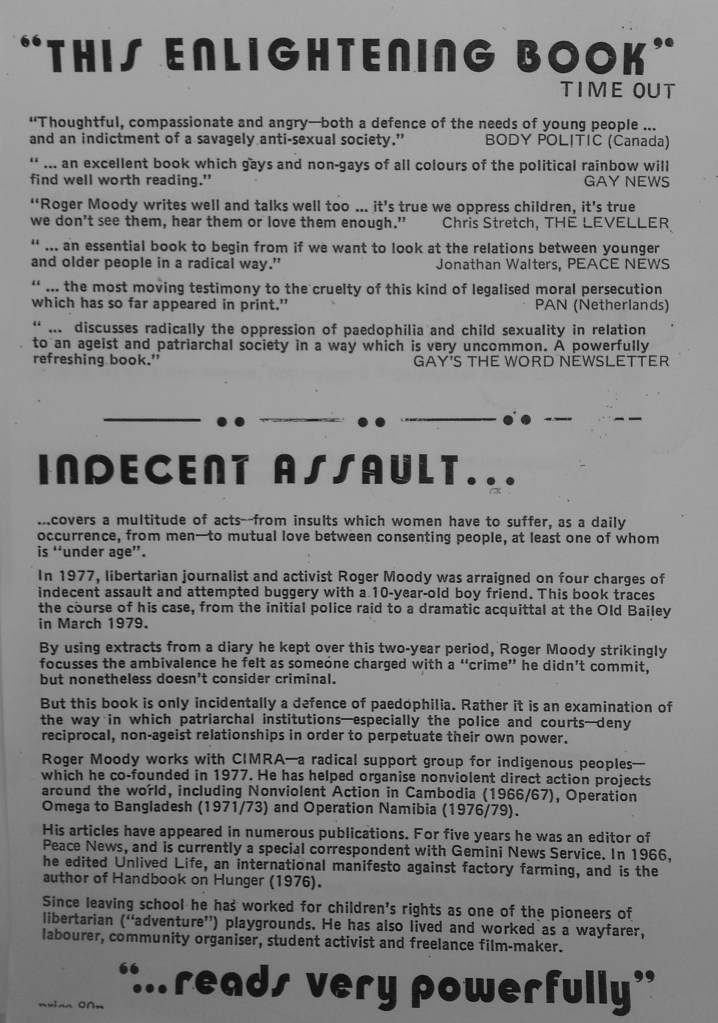
Roger Moody rote a book titled ‘Indecent Assault’, described on the jacket as ‘a defence of paedophilia’ (Image: Charles Thomson)

“Indecent Assault”

In 1980, Moody wrote a book called Indecent Assault, described on its jacket as “a defence of paedophilia”.

“I defend the rights of children to make mutual physical relationships with people of any age,” he wrote, describing young boys as “provocateurs”.

He even dedicated the book to “the boys”, writing: “By the time they are full grown, I trust that most of what this work describes will have become redundant ritual”.

In 1986, he wrote a chapter for another pro-paedophile book – “The Betrayal of Youth” by Warren Middleton, a former vice-chairman of the Paedophile Information Exchange.

He called his chapter: “Ends and Means: How to Make Paedophilia Acceptable”.

“The Dodger”

Despite his pro-paedophile advocacy, Moody continued finding work with kids.

In 1989, the Chelsea News and General Advertiser reported that he had just quit his job as a “youth worker” with the North Kensington Amenity Trust.

Now known as the Westway Trust, it was set up in partnership with the Royal Borough of Kensington and Chelsea.

“All employment matters would have been handled by the charity, not the local authority,” said Westway.

Roger Moody wrote to the Islington Gazette in 1991, saying he had recently been working in schools (Image: Newsquest)

A 1991 letter from Moody to the Islington Gazette, bemoaning “falling standards” in schools, revealed another job with children.

“As a youth worker who until recently worked in a school-based youth project, I was very disturbed to read your report,” he wrote, giving his address as Liverpool Road.

It was at around this time that the Met Police officer interviewed by the Gazette recalled Moody also volunteering in an Islington play park.

Islington Council said it had found no records of Moody being a past employee.

Moody’s death last year provoked tributes from academics and human rights campaigners, seemingly unaware of his murky past.

Among those who wrote eulogies was Thomas O’Carroll, former chairman of Paedophile Information Exchange.

He titled his: “Rodger the Dodger, who beat the rap”.

The Islington Survivors Network can be reached on 0300 302 0930 or by emailing islingtonsn@gmail.com.

“I am trapped in a system,” he wrote. “A decrepit system, completely broke’. Justice for Yusuf Ali who is in ‘state of despair’ from years of imprisonment on an indeterminate sentence

IslingtonTribune

Plea to MPs: Don’t throw away the key

Indeterminate sentences ‘rob young boys of their lives and families’

Friday, 25th November — By Anna Lamche

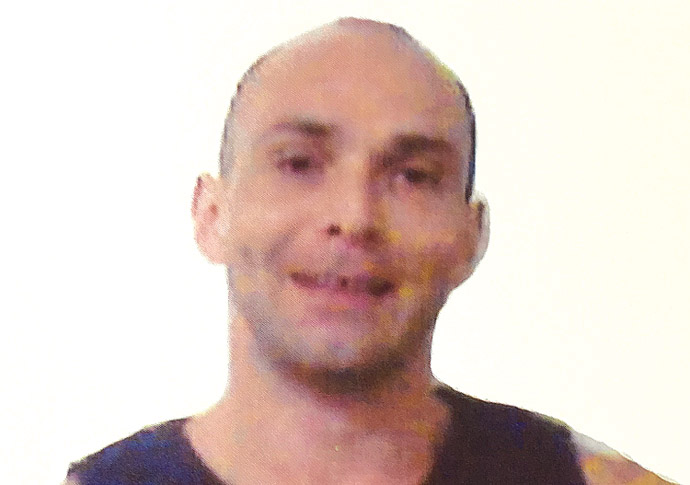
Yusuf Ali recently

A recent photograph of Yusuf Ali

CAMPAIGNERS want MPs to end indeterminate prison sentences as they respond to a landmark Justice Committee report on ­Monday, warning that thousands of inmates are lost in the jail system with no idea when they will ever be released.

The practice of not ruling how long prisoners have to serve was introduced in 2005 but then abolished in 2012. Anybody sentenced during this time are stuck with IPP (Imprisonment for Public Protection) orders.

These include Yusuf Ali, who has spent most of his adult life in prison, and his mother Jacqueline, from Barnsbury, says she fears he will never live in “normal society” again.

Speaking to the Tribune this week, Ms Ali said: “They have to understand the implications of what has been done. These young boys have been robbed of their lives and their families.”

She had Yusuf when she was just 14 – the product of abuse while she was living in Islington’s care homes during what has been described as the “worst chapter” in the borough’s history.

He grew up in care until his mother could look after him independently. As a teenager Yusuf was caught up in a series of crimes including robbing a betting shop with an imitation firearm that eventually saw him put in prison, aged just 19.

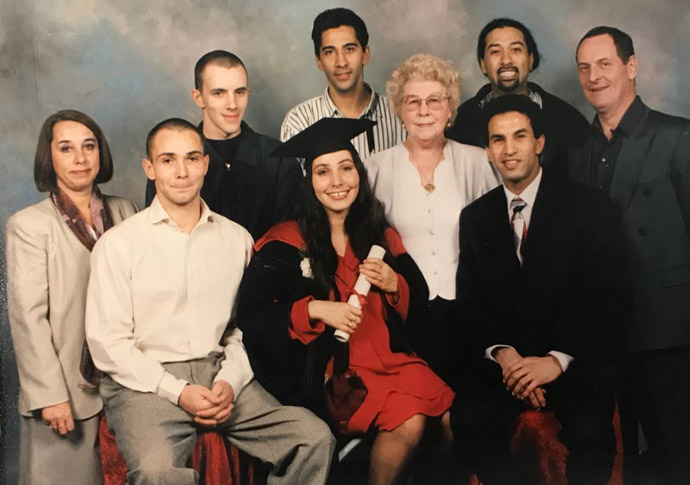
Jacqueline Ali’s graduation photo in 1994 – Yusuf is beside her

Now 49, he is still there and has spent over a decade serving an indefinite sentence that sees prisoners held without a release date.

Next week MPs must respond to a report by the Justice Committee which described IPP sentences as “irredeemably flawed” and called on the government to undertake a “large-scale resentencing exercise” to give straightforward sentences to all those currently serving a term under IPP.

Speaking ahead of that debate, Ms Ali said Yusuf has “turned… into a zombie” after losing all hope that he will ever be released.

Ms Ali, who grew up in Barnsbury, said: “They’ve smashed any hope out of him of ever being released – they’ve murdered him, he’s walking dead. The shell of my boy is what’s there. It’s so painful.”

IPP sentences have become known as the “seven-year trap” – due to the window in which they were handed down – or “a life sentence through the backdoor”.

While judges no longer hand down IPP sentences, all those given the sentence before 2012 did not have their jail terms changed retrospectively when the IPP scheme was abolished.

According to the Prison Reform Trust, there are 1,661 people in prison still serving an IPP sentence who have never been released.

In the landmark report by the Justice Committee published in September, the government was urged to “address the unique injustice caused by the IPP sentence” by undertaking a “re-sentencing exercise in relation to all IPP prisoners”.

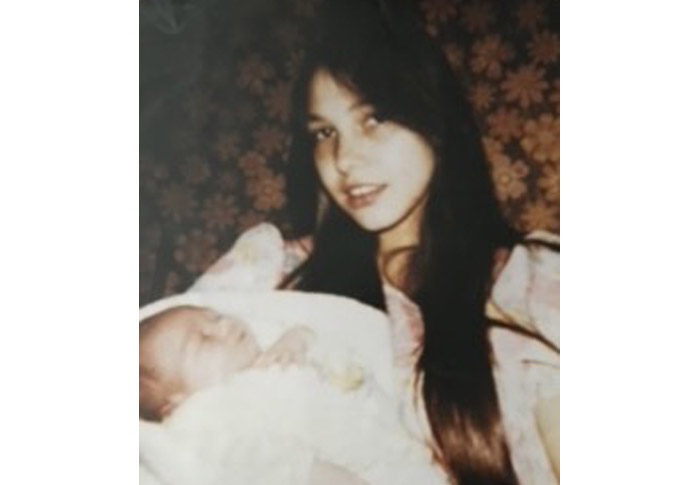
Fourteen-year-old Jacqueline with an infant Yusuf

Ms Ali said: “Re-sentencing, definitely, that would be great for anyone under IPP. Those convictions should not still be standing.

“All these cases should be looked at again, and they should be looked at independently.”

According to his mother, Yusuf now lives in a state of despair, and has developed a series of complex mental health conditions.

And her son’s sentence has impacted the rest of the family too, Ms Ali added. “It’s the complete dismantling of a family – the destruction of a family,” she said.

“He’s never going to be able to be in normal society,” Ms Ali said of her son. “[IPP prisoners] are going to need support, they’re going to need counselling, they’re going to need training and rehabilitation, and not just on a shoestring. They need to do this on a big scale.”

After being sent to prison as a teenager for the betting shop robbery, Yusuf escaped from custody during a six-year sentence and, according to his mother, “went on the run” for two years.

In the late 1990s, Yusuf handed himself in, and was given a life sentence with a minimum term of five years and seven months in 1999 for a series of crimes including robbery and driving offences.

Yusuf was still in prison in 2008 when he seriously injured another prisoner during a fight. Instead of being sentenced for grievous bodily harm, Yusuf was re-sentenced with an indefinite “Imprisonment for Public Protection” (IPP) jail term with a three-year minimum tariff. He is still in prison to this day.

In his letters to the Tribune, Yusuf described the criminal justice system as “sub­humanising”.

“I am trapped in a system,” he wrote. “A decrepit system, completely broke.

Yusuf as a teenager

“[The] system I subsist within [is] a machine of oppression, suppresses any efforts I try to make people outside aware of what is being done to human beings within the prison system.

“People really need to understand the true picture,” he wrote.

While Yusuf’s case has been considered by the Parole Board five times since 2011, he has had several hearings without any form of legal representation.

“Since the government did all the cut-backs, if you’re lucky enough to get legal aid, most solicitors don’t have the time to deep-dive into complex mental health and criminal law cases,” Ms Ali said.

“If I contact 50 solicitors, they’ll come back and say: ‘no, sorry, we can’t take your case.’ That’s happened to me. I’ve gone through the whole list.

“My barrister suggested I try to go pro bono, but nobody was touching it.”

A MoJ spokesperson said: “The number of IPP prisoners has fallen by two-thirds since 2012 and we are continuing to help those still in custody to progress towards release. These sentences were handed down by judges who decided offenders posed a significant risk to the public.

“Under the PCSC Act we have committed to automatically review IPP prisoners’ sentences 10 years after they are first released.”

Process and Procedures for accessing records

The Report of the Independent Inquiry into Child Sexual Abuse October 22 p277-8

Under the Data Protection Act 2018, victims and survivors have a legal right to request copies of records containing their personal information. This is known as the right of access or subject access request… A record may need redacting if it contains sensitive information about another individual and if it is not reasonable to disclose that information.  As a result, accessing personal records can be a lengthy and complex process where the time limits set out in the 2018 Act are not met.

Victims and survivors have faced difficulties when requesting their records from institutions… Issues may involve long delays, procedural hurdles, and poor communication and explanations from the institutions… For some the search for records and the lack of communication and explanation was difficult and upsetting.

Victims and survivors may also need practical and emotional support when accessing their records. Reading records may bring back traumatic memories and cause distress. Records that are redacted may also cause frustration particularly if there is no explanation as to why they are redacted.

Recommendation 17 Access to Records

The UK government should direct the Information Commissioners Office to introduce a Code of Practice on retention of and access to records known to relate to child sexual abuse.

The code should set out that institutions should have:

  • Retention policies that reflect the importance of such records to victims and survivors and that they may take decades to seek to access such records
  • Clear and accessible procedures for victims and survivors of child sexual abuse to access such records
  • Policies, procedures and training for staff responding to requests to ensure that they recognise the long term impact of child sexual abuse and engage with the applicant with empathy.

The Report of the Inquiry into Child Sexual Abuse October 2022 p 277-8

In March 2021 Islington Council launched a £10,000 payment for people abused by paid staff and volunteers across 41 Islington children’s homes between 1966 and 1995 but Mr Bralowski is not eligible for this payment.

Jewish child abuse victim recalls how a school pastor ‘made me admit guilt for death of Jesus’

Mike Bralowski, who says he suffered racist abuse at a council-run home in Essex during the mid-1950s, tells the JC both the Church of England and the local authority have denied responsibility

BY GEORGIA L GILHOLYOCTOBER 27, 2022 13:56

articlemain

Abuse: Hutton Residential School in Essex, where Mike Bralowski was sent

A Jewish man who says he suffered antisemitic and sexual abuse from a pastor at a council-run children’s home has said the church denied responsibility when he appealed for redress.

Mike Bralowski, who lived at Hutton Residential School near Brentwood in Essex between September 1955 and 1956, also came up against a brick wall at Islington council, which sent him to the school.

It told him he was not eligible for a payment scheme set up for survivors of abuse between 1966 and 1995 because he was at Hutton prior to that period.

thumbnail image1

Mike Bralowski today

Mr Bralowski, 79, told the JC the school pastor made him admit in front of the congregation he was personally responsible for the death of Jesus, and later subjected him to sexual assaults.

He added that he was regularly subjected to a “kill the Jew-boy” chant at the school, whose headteacher told him he was a “worthless Jew” and beat him.But when he contacted the Diocese of Chelmsford in 2019 about the abuse, Mr Bralowski claimed it denied responsibility, stating that the minister accused of abusing him, Pastor North, was not employed by the diocese.

“He was a Church of England-ordained priest and his actions took place in a building consecrated by the C of E; the diocese’s excuses are nonsense,” said Mr Bralowski. “I recently attempted to contact Lambeth Palace [the Archbishop of Canterbury’s headquarters] about my experience, but they also stressed that Pastor North was not employed by the Church but by Islington Council.”

When Mr Bralowski reported his horrific experiences to Islington in 2020, he was told that he was ineligible for compensation because at the time of the abuse the borough was under the remit of the now-abolished London County Council.

thumbnail image0

Mike Bralowski as a young boy

A spokesperson from Islington Survivors Network (ISN), which campaigns for victims of child abuse from the borough, told the JC that it was “unjust” that survivors of abuse that took place before 1966 are not covered in an existing payment scheme for victims.
ISN also confirmed that 12 other people had come forward to them about abuse at Hutton Residential School.

Mr Bralowski, who has gone on to forge a successful photography career, said he suffered extensive physical and emotional abuse from his parents, and spent his childhood in and out of social care.

“My earliest memory is of a bitterly cold winter night being led along a country lane covered in snow somewhere in Kent, I must have been between two and four years old.

“My mother handed me over to an austere lady who forbade me to speak or show any emotion when my mother departed, made me strip and get into a very cold bed in a dormitory full of other children like me, unwanted and frightened.”

Aged 12 he recalls being moved to the “really horrific” Hutton Residential School. “The home was vast with probably 200 to 300 children, most of whom were from East London. I was the only child from a Jewish background in my house and suffered frightening racial abuse.

“Most of the staff and children were antisemitic and I would often be subjected to a chant of ‘Kill the Jew boy’, which terrified me.

“The headteacher, often ranted about how I was a worthless Jew-boy and beat me. On Sundays, we all had to attend church on school grounds where Pastor North was in charge.

“At Easter he made me stand in front of the congregation and admit that I was personally responsible for the death of Jesus, which earned me yet another bad beating and another night of absolute terror as the chants went on and on.

“Other students and staff including Pastor North also subjected me to extensive sexual abuse. I eventually ran away back to my parents but they phoned the school, demanding they take me back.”

Mr Bralowski reported still “waking up screaming at least twice a week” after experiencing vivid nightmares about the abuse he faced.

In October, a Lambeth Palace safeguarding officer told Mr Bralowski that they were “sorry for the distress and suffering” he had experienced, and suggested that he may be eligible for financial support through a redress scheme the church was developing.

They added that Mr Bralowski may receive an official apology from the church, though they could not confirm whether or when this would happen.

A spokesperson for the Diocese of Chelmsford said: “We looked into this case and offered support when the issue was raised with us in 2019.

“The priest concerned, now deceased, was employed by the local authority to run Hutton Residential School, and we provided details of a survivor network which includes a redress scheme for survivors of abuse at this school.

“The priest concerned never held a Church of England appointment in the Diocese of Chelmsford or any authority from the Bishop of Chelmsford to exercise ministry in the Diocese.

“We are aware of the courage it takes for survivors of abuse to come forward and share their story. The cases of abuse perpetrated by clergy and others in the Church of England over many years are a cause of great shame and we are committed to supporting anyone who has suffered abuse.”

A spokesperson for Lambeth Palace said: “We can confirm that a safeguarding officer at Lambeth Palace was contacted about this case and signposted the Church of England’s National Redress Scheme.”

In March 2021 Islington Council launched a £10,000 payment for people abused by paid staff and volunteers across 41 Islington children’s homes between 1966 and 1995 but Mr Bralowski is not eligible for this payment.

A spokeman for the council said: “We’re deeply sorry for the council’s past failure to protect vulnerable children in its children’s homes, which was the worst chapter in this council’s history.”

How the abuse victims of the 1950s have missed out on support system

Islington Tribune, 25.06.2022

By Anna Lamche

FOR those in Islington’s childcare system before 1966, the “worst chapter” in the borough’s history has not yet drawn to a close, a man who suffered child abuse during the 1950s warned this week.

The council’s recently-launched scheme, which offers a £10,000 “support payment” to every survivor of the scandal, is open to anyone who suffered abuse between 1966 and 1995. But those whose abuse took place before 1966 are not eligible for the payment.

This is because, before 1966, London County Council (LCC) ran Islington’s childcare service. The London Borough of Islington was created in 1965, becoming responsible for the area’s childcare system the following year. This week, John*, 72, who was in Islington’s care system between 1950 and 1965, has decided to tell his story publicly.

A committed campaigner for justice with the Islington Survivors Network (ISN), he hopes to highlight the “unfairness” of his exclusion from the current support payment scheme. John was born in Holloway Prison in 1950. He remained with his mother for roughly eight months before being taken into Islington’s care system.

Throughout his childhood he was moved between abusive children’s homes, and foster care placements. At all times, John’s care was overseen by “childcare officers” based in 75 Mildmay Park, N1. In the 1950s he spent several years in Langley House, a care home where Islington children were placed, based in South Ockendon, Essex.

ISN recognises this address, open between 1952 and 1973, as a home in which abuse took place. John escaped Islington’s system aged just 15. “My life took off from there,” he said. As far as John is concerned, Islington Council should take responsibility for the abuse he suffered as an Islington child.

“They should man up and take their responsibilities seriously, at least pay some form of compensation to the people they hurt,” he said. “It’s not just me – all of them.”

John’s childhood abuse has cast a long shadow into his adult life.

“Any abuse, at that age, through your childhood – you remember all your life,” he said. “I used to have serious flashbacks to what happened until I was about 35. I feel I was completely and utterly used as just a piece of meat.

“They reckon 90 per cent of what you learn in life you’ve learned before you’re ten. So it never goes away. Some days what happened is quite vivid. Other times you suppress them.”

John said he was “furious” when he discovered he could not apply for the council’s scheme. “

They need to be brought to some sort of justice, or accounta­bility,” he said. ISN co-ordinator Liz Davies said: “This was supposed to be a goodwill gesture by Islington Council, having fully acknowledged the severe abuse that children suffered, going right back to the 50s. They’ve acknowledged that this abuse took place.

“Why on earth would they not be flexible in their approach, and honour their responsibility to the few [remaining] survivors who were in care during the 50s and early 60s? John came to Islington Survivors quite early on, and has been campaigning continually to get some justice.”

An Islington Council spokesperson said: “We’re deeply sorry for the council’s past failure to protect vulnerable children in its children’s homes, which was the worst chapter in this council’s history. All abuse is absolutely and equally legitimate and valid.

“The Islington Support Payment Scheme is open to applications from people affected by abuse while placed by Islington Council in its children’s homes between 1966 and 1995. The scheme was specifically designed for survivors who experienced abuse when placed by Islington Council in its children’s homes. It is legally and financially complex, and has taken a long period of time to develop.

“As set out in the report to Executive in October 2021, exploring the viability of further extending the scheme would have led to significant delays in opening the scheme to applications.”

* Last name withheld to preserve anonymity.

Abuse survivors ‘left out’ of support payments

Islington Tribune, 03.06.2022

by Anna Lamche

AS the Town Hall opens its long-awaited support payment scheme for the survivors of Islington’s child abuse scandal, only some of those who suffered can breathe “a sigh of relief”.

Those who experienced abuse – be it emotional, sexual, physical abuse or neglect – in an Islington care home between 1966 and 1995 can now apply for a £10,000 “support payment” from the council. Survivors have two years to make their applications via an online form.

However, according to Megan*, an abuse survivor and co-ordinator of Islington Survivors Network (ISN), many people who were abused in the council’s care system have been “left out” of the payments.

In 1970, Megan was just six months old when she was put into an Islington care home in Muswell Hill.

Shortly after, she was moved to Harlow in Essex and split up from her siblings. “We never lived together again after that,” Megan said. “That was very common in those days.”

All three siblings experienced abuse at the hands of Islington’s care system.

While Megan was placed into a care home, one of her sisters was put straight into a foster home and the other was placed in a hostel.

As the Town Hall launched its “support payment” scheme on Tuesday, Megan’s family story serves as a stark reminder of those who will miss out on the payment.

Because she was placed in an Islington home, Megan can claim the payment – but her two siblings, who were placed in foster care and hostels respectively, cannot.

“They’re not entitled to the money,” Megan said. “You have to have lived in an Islington children’s home [to be eligible].

“But we can’t forget that Islington placed 15-year-olds in hostels with drug abusers and people coming out of prison. They won’t take responsibility for whatever happened in those hostels, even though Islington social workers placed those children there.

“The same goes for foster parents – they were trained by Islington, they were paid by Islington, they underwent regular reviews by Islington. And again, they’ve decided no: they’re not going to pay this money to children who were abused by their foster parents.

“Islington Council took these children away from their parents, because they said it was the best thing. And they placed them with foster parents who abused them for 10 years. How is it possible that Islington isn’t taking responsibility for that?”

Megan has also said the £10,000 support payment will inspire “people that would never normally come forward to come forward now”. In this context, she hopes the council has “extra provisions” to give support to everyone who needs it.

Megan encourages anyone who would like to discuss the support scheme to “have a cup of tea” with ISN. The service is run by two survivors and Dr Liz Davies, who has “all of the historical context and all of the information that’s needed”.

Responding to Megan’s concerns, an Islington Council spokesperson said: “The Islington Support Payment Scheme was specifically designed for survivors who suffered abuse when placed by Islington in its children’s homes.

“The scheme is legally complex and it has taken significant legal, actuarial and financial input to get to the stage where we can launch it.

“All abuse is absolutely and equally legitimate and valid. We are conscious of the length of time it has taken to create this very complex scheme, and do not want to delay it any longer for these survivors. Further work would have to be carried out to ascertain if a foster care scheme would be viable.

“As a minimum, the council’s wider support available for survivors – which includes trauma support – will be available over the duration of the payment scheme.

“We recognise that this may be the first time that people are making contact with our support team; the scheme has been designed to offer support at every stage of the process. Those working on the scheme are experienced in social care and support in Islington.”

Leader of Islington Council, Cllr Kaya Comer-Schwartz, said: “We’re deeply sorry for the council’s past failure to protect vulnerable children in its children’s homes, which was the worst chapter in this council’s history.

“I’d like to thank the very many people, especially those directly affected by abuse and groups who support them, who have contacted us with questions and feedback throughout the development of the scheme, and who continue to help shape it.”

*Name has been changed

Police close child sexual abuse team Operation Winter Key without informing ISN

Survivors in the dark as abuse probe is ended. Despair as Met’s care homes investigation is wound down. Islington Tribune 08.04.22

Survivors in the dark as abuse probe is ended

‘Despair’ as Met’s care homes investigation is wound down

Friday, 8th April — By Anna Lamche

Dr Liz Davies

Dr Liz Davies: ‘At the very least, police should set up a small team to make sure children now are protected, which is the main concern for survivors’

A MET investigation into historic child abuse in Islington’s care homes has been wound down without a survivors’ group being told.

It has emerged that Operation Farmack, a dedicated police operation looking at the case, was brought to a stop in November.

Dr Liz Davies, from the Islington Survivors Network (ISN), said nobody had told them of this development and that she was in “complete despair” that nobody had been prosecuted by the Met in relation to the scandal since 2014.

She works closely with 300 survivors of abuse carried out in the 1970s, 80s and early 90s. The total number of those who suffered as children is even greater. The ISN refers allegations and evidence to the police, with many suspected perpetrators still alive.

The Met Police has said it thoroughly investigates the ISN’s referrals but will not update the organisation on the progress of the case.

Dr Davies, however, has said “we absolutely would be aware of any prosecutions – we work closely with survivors, do our own research, collate evidence and witnesses” – and she was not aware of any.

In 2017, the Met Police established Operation Farmack, a dedicated police operation set up to investigate all allegations of non-recent child sex abuse in Islington care homes, which ran in two iterations until 2021.

Now Dr Davies has learned it was wound down before Christmas and cases will instead go to local police.

“It’s shocking. In eight years, we’re not aware of a single prosecution [by the Met Police],” she said.

The only person known to be prosecuted in connection with the scandal is Paul Lamb, a former police officer who had worked in Islington.

Last year, he was found guilty of 19 sex offences. This investigation was led by Yorkshire Police – not the Met – in relation to a care home Lamb ran in York in the 1980s.

Another specialist inquiry into historic child abuse across all of London by the police – Operation Winter Key – was closed earlier this year.

Dr Davies said: “We’ve got absolutely nowhere: we’re back to square one.”

Islington survivors wishing to report their allegations are now being told to call 101, submit information online, or visit the front desk of a police station.

Dr Davies has said this is likely to deter survivors from reporting their allegations. “It’s a totally insensitive, disgraceful response,” she said.

“At the very least, police should set up a small team to make sure children now are protected, which is the main concern for survivors.

They want justice, but mainly they want to know that this person is not still out there hurting children like they were hurt.”

She added that it is vital any perpetrators are brought to justice immediately, as they may still pose a risk to children.

“Paedophiles don’t change their behaviour,” she said.

Islington Council apologised for the scandal and has set up a support payment scheme which is set to go live this spring.

“There must be back-up police teams for allegations of criminal offences that come to light as a result of the scheme,” Dr Davies said.

“That’s what we asked to be set up in readiness for the scheme.”

Dr Davies, who was an original whistleblower on the child abuse scandal, said: “When I worked [for the council] in the ’90s, I got one conviction. And I thought: people believe me now. If somebody had shown me a picture of me aged 73 still trying [to get justice], I would have fainted.”

A spokesperson for the Met Police said: “We take all reports of abuse, recent or non-recent, extremely seriously. Specially trained officers will support victim-survivors and we will work to seek justice for them wherever possible. Victim-survivors who have reported non-recent abuse will be directly updated with regards to their investigation. If a third party refers information relating to allegations, then we have and will follow these up directly with the individuals concerned.”

An Islington Council spokesperson said: “Abuse of children in Islington’s care homes was the worst chapter in the council’s history, and we’re deeply sorry for the council’s past failure to protect vulnerable children. We are talking with the Metropolitan Police about the best ways survivors can be supported to report allegations or evidence of abuse.

“Islington Council today is a very different organisation from in the past, and today protecting children from harm is our top priority.”

70s Shoebury Paedophile ring in Essex – crucial documents obtained

There are many strong connections between the criminal networks of abuse of children in Islington and those in Essex. Whistleblowers in Islington and Essex have worked together since the 90s to investigate the facts. When the Essex campaign managed to get a police team set up to investigate historic crimes against children in 2016, ISN completed an extensive report for that team. ISN know that Islington children from the children’s homes were networked outside of London – some most certainly to Essex.

Romford Recorder News > Crime

Revealed: The paedophile ring files the police didn’t want you to read

Charles Thomson

Published: 1:00 PM December 10, 2021

Updated: 4:56 PM December 15, 2021

A precedent-setting legal victory by the Archant Investigations Unit has unlocked secret police files on Dennis King (left, photographed in the 1970s) and Brian Tanner (right, photographed in 1980), the leaders of a paedophile ring which trafficked victims across Essex and east London – Credit: Archant

A police investigation into an Essex paedophile ring was mysteriously shut down just as key intelligence was coming in, secret files suggest.

The records also prove that a generous plea bargain given to the ringleaders freed them to abuse many more children.

Essex Police and the National Police Chiefs Council (NPCC) tried to withhold the documents, but a precedent-setting Freedom of Information battle by the Archant Investigations Unit forced their disclosure.

The unit’s award-winning true crime podcast ‘Unfinished: Shoebury’s Lost Boys’ has now released two new episodes exploring more than 1,000 pages of confidential police files.

They shed new light on Southend-based ringleaders Dennis King and Brian Tanner, who trafficked victims to locations including Havering and Tower Hamlets.

The duo, both now dead, were convicted in 1990 of running what the authorities dubbed “the Shoebury sex ring” – but a plea deal saw their predicted sentences of 15 years to life reduced to just three and four years.

Last year, Unfinished reported on evidence that King was a registered police informant linked to Lennie Smith, a suspect in the killings of Jason Swift, Mark Tildesley and Barry Lewis.

A police mugshot of Dennis King, then calling himself David Janson, in 1980 – Credit: Archant

A mugshot of Brian Tanner, taken in an unrelated case in 1980. King and Tanner – despite being linked to one another by police in 1978, would not be jointly prosecuted until 1990 – Credit: Archant

The new documents, spanning eight decades, have unearthed even more dark secrets.

Here are some of the biggest revelations:

King and Tanner were offending together for over 10 years

Essex Police files revealed that in 1980, Tanner was prosecuted for paying a victim to lie in court.

The podcast tracked down that victim, who said he had been abused not just by King but by Tanner as well.

He had “no idea” why only Tanner was prosecuted.

Files subsequently disclosed by the NPCC confirmed police had already listed King and Tanner as criminal associates in 1978.

They were not jointly prosecuted until 1989.

In a 1978 report on Dennis King – then calling himself David Janson – an officer at Westcliff police station listed Brian Tanner as one of his known criminal associates – Credit: Archant

Their generous plea deal freed them to abuse more children

Previous episodes of Unfinished revealed how Dennis King had left prison, moved to Peterborough and spent another two decades abusing children.

NPCC files have now shown Tanner also reoffended.

In 1998, he was convicted in Northampton of abusing teenage boys and possessing a hoard of child pornography.

Campaigners say that had the men been sentenced appropriately in 1990, they would have still been behind bars, unable to prey on more victims.

Dennis King and Brian Tanner arriving at court in 1990, where it was accepted that they were the leaders of the so-called ‘Shoebury sex ring’ – Credit: Anglia Press Agency / Essex Records Office

Loss of police records may have blocked justice

Essex Police files showed several complainants came forward in 2016, when a modern-day review was launched into the old case.

One of them claimed he had reported his abuse to police at the time.

But all of the force’s paper records from the original case had been lost or destroyed.

This meant the man’s past account and his more recent account could not be compared, so bringing charges could be argued to be an “abuse of process”.

Whistleblower Robin Jamieson – the former head of the Southend NHS psychology department, which treated several of the victims – condemned the revelation as “shocking”.

A report by Essex Police said that records from the original 1990 case had been lost or destroyed, weakening their prospects of seeking justice for one of the alleged victims in 2016 – Credit: Archant

An investigation into the ring suddenly ended without explanation

The only records police could find from 1989/90 were ten A4 pages of brief police computer entries showing that after King and Tanner’s sentencing, police had opened a new investigation into the wider ring.

Officers were probing contacts of King and Tanner, in locations including Barking.

On July 31, 1990, they received intelligence that King had been paid a weekly retainer by somebody higher up in the ring.

They were also told children had been solicited to appear in pornographic films and were given the names of witnesses who could allegedly corroborate this.

But days later, all computer activity in the case suddenly stopped, the reason for which remains shrouded in mystery.

Records salvaged from an old police computer system showed officers were told King was working underneath somebody else and that the ring’s operation included producing child pornography – but then all activity in the police investigation suddenly stopped – Credit: Archant

What the police say

Essex Police said that in 2016, “specialist detectives from our Child Abuse Investigation Teams carried out extensive enquiries, interviewing numerous witnesses and victims.

“As a result of our review, in April 2017, a further allegation of non recent child abuse was reported. Sadly, despite extensive investigation, this has not resulted in criminal charges.”

It urged anybody with information to contact police on 101 or online, or call Crimestoppers anonymously on 0800 555111.

*All 11 episodes of Unfinished: Shoebury’s Lost Boys are available on your usual podcast provider or by visiting www.podfollow.com/unfinished-1/


For more, read:

Essex police officers face action after investigator finds ‘inexcusable’ failures in paedophile ring case

What happened when police reopened an investigation into an Essex paedophile ring?

True crime podcast investigates claims that Essex paedophile ring victims were failed

‘Relief as survivors are told payment scheme won’t affect their benefits’

Islington Tribune, 5th November 2021

Cllr Kaya Comer-Schwartz: ‘In effect, this safeguards the Support Payment Scheme settlements, so they will not affect entitlement to means-tested benefits for those who apply’

THE government has this week written to the council after months of deliberation, saying benefits claimants will not lose out if they are among the survivors who receive an abuse support scheme payment.

The Department for Work and Pensions (DWP) has now decided that payments made from the council scheme will be disregarded in their benefits calculations after survivors feared they would have their money cut.

Secretary of State Thérèse Coffey wrote to Islington Council this week to inform them of the decision after the Tribune contacted the government office about the ongoing issue.

It follows council leader Kaya Comer-Schwartz writing to the government in July urging them to come to a decision on this matter.

Donna, who did not want her surname published as she is a survivor of abuse, said: “After the meeting [in October at the Town Hall] I felt quite positive that it was going to be a better outcome for more people.”

She said she will apply for the scheme even though she is not sure if her claim will be successful as she comes under the category of “neglect”.

Donna added: “I will support anybody who needs support, regardless of whether I am successful in my scheme.”

A DWP spokesperson said: “We have already made the decision that payments from the Islington scheme will be disregarded in full, and will not affect those receiving Universal Credit or other means-tested benefits because of these payments.”

Cllr Comer-Schwartz said: “I’m pleased that the Secretary of State has finally made the right decision, months after I wrote to the Minister for Welfare Delivery asking him to resolve this pressing issue which we have pursued for two years.

“We have had extensive correspondence and a face-to-face meeting with the Department for Work and Pensions in a bid to push them to make this critically important decision. In effect, this safeguards the Support Payment Scheme settlements, so they will not affect entitlement to means-tested benefits for those who apply.

“This uncertainty must have weighed heavily on the minds of many survivors and care-experienced adults, and I’m pleased that our close working relationship with local survivors’ groups means we could finally cut through the government’s red tape so the Support Payment Scheme can work as intended.

“Our lobbying, with Lambeth Council, means this decision will be enshrined in law in line with other similar schemes, removing a critical worry for some of society’s most vulnerable people.”

‘Abuse is abuse… money should go to the bereaved’

A WOMAN who grew up in an abusive foster care home with her sister says their childhood contributed to her sibling’s death.

The council support payment scheme was announced in October following a six-month consultation but does not include the families of survivors who died after 2017 and also excludes those who endured abuse in foster care.

Lisa, who did not want to give her surname, said: “I have never been open about my past ever, ever. This is the first time I have ever spoken about it. I am doing it on behalf of my blessed sister.

“She passed away last year but had been severely abused. She ended up with very serious mental health issues and ended up being found on the floor dead last year. Everything about her life, her past, is what contributed to her death.

“She now has a child – I have a nephew who is in care – he might now go through what she went through. Hopefully not but he is going to grow up without a mum or a family. Why shouldn’t her money go to him.”

Lisa’s sister died age 49. It would have been her birthday next week. They went into foster care in 1972. Lisa’s sister came out of foster care in 1982.

Lisa said: “I just don’t get it – abuse is abuse, it doesn’t matter who by, or if it was foster care, like we were, where we were abused over many years. She died because of a result of her childhood in care. Whether in foster care or residential care, the abuse was rife. My sister refused to speak with me for the best part of seven or eight years because of her own grief. I don’t think she felt worthy of having anyone around her.

“I grew up with my sister. She was not like that, life made her like that.

“We lived like slaved black kids in Stevenage, Hertfordshire, with what I would describe now as a very abusive family.

“I got chucked out at 16 with no family and had to find my own way in life.

“I didn’t know about Islington Survivors Network until my sister died. It is something us survivors keep close to our chest.

“I heard my sister was found on the floor dead with the papers scattered all over her. She could have been anyone she wanted to be.

“She was the most gorgeous and beautiful person but she was so troubled with her past that she couldn’t move forward ever. Everything about her was stunning. To watch her demise into this person you don’t recognise is worse than anything. That kind of abuse that troubles a human being until you don’t want to be here. You can’t put a date on it. It is insulting.”

She added: “Just because we [survivors of abuse] are up and can talk and can dress, doesn’t mean we are surviving, it means we are following the path of life. You can die slowly and that’s what my sister did.”