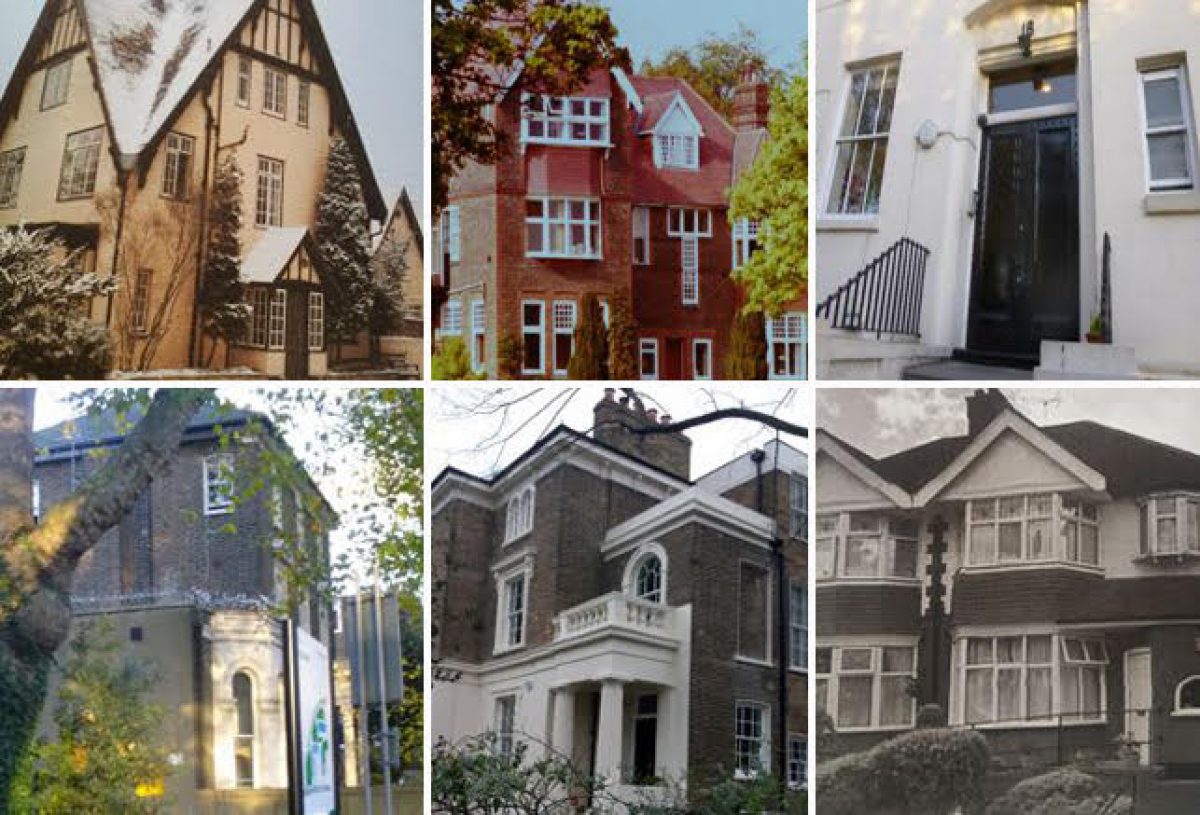
1989 from Report 14 The History- ISN Reports
Melanie Klein House
“Islington didn’t give a toss. They left me for 22 months to be abused constantly in this place.”
“Feeling fucked over again by todays report, but you know what – we know the truth, we won’t be silenced no more, very bothered to hear so much about the other hell hole I was sent to Melanie Klein.”ISN Survivor, Melanie Klein resident 1984-86, interviewed by Sarah Morgan QC

“It is also right to record that I saw no evidence that [Sandy Marks] was arranging or giving approval for young people for whom Islington were responsible being sent to live in Melanie Klein House, although I was looking for documents that gave any indication of that.”Morgan QC Report 7.11.18: 16.3

ISN are aware of at least 3 (possibly 5 children) from Islington who were sent to Melanie Klein House (MKH) during the 1980s. One ISN survivor, who had been sent to MKH under a secure accommodation order approved by a Case Review Sub-Committee Sandy Marks was a member of, was interviewed by Sarah Morgan QC. It was the responsibility of the Case Review Sub Committee to approve applications for secure accommodation prior to application to court.
ISN wish to understand whether Morgan QC is stating Sandy Marks recused herself from decisions involving Islington children and secure accommodation at MKH, or that by coincidence Sandy Marks was not at the specific Case Review Sub-Committee meetings where decisions were made concerning any of the 5 survivors’ that ISN are aware of who were sent to MKH.
Of course Melanie Klein was not the only secure accommodation Islington children were sent to. From the evidence of survivors, ISN are quite sure that many Islington children were sent to secure accommodation across the country and that there were connections between Islington abusers and staff within the secure units.
It was very common for children who spoke out about being abused to be threatened “with secure” and ISN have heard of visits arranged as a frightening, silencing tactic.

One survivor’s case record informs ISN that a report was sent to Case Review Sub-Committee at a time when Sandy Marks was Chair, prior to her receiving the letter from Greenwich Councillor, Chris Fay. However, ISN understand that Islington politicians had been alerted to abuse taking place in the home as early as 1986. In 1993/94 Jo Moad, former Assistant Principal at Melanie Klein House during the mid-1980s, was asked by Islington Council to undertake some of the individual inquiries into specific children’s case histories.

Sandy Marks certainly was aware of the allegations of widespread physical and sexual abuse of children in Melanie Klein House, Greenwich. The institution had a secure unit where one Islington survivor tells of being locked up for weeks in solitary confinement and subjected to violent restraint methods.

Greenwich Counsellor writes to Sandy Marks 22.3.89
Here is the first part of the letter – the rest contains confidential information relating to alleged abusers and lists many other matters of serious concern:


Liz Davies provided to Sarah Morgan QC a letter from Greenwich Labour Councillor Chris Fay to Sandy Marks (then vice chair of the Social Services Committee – but also concurrently Chair of the LBCRPC with responsibility for Secure Units). Morgan said this letter was the first time in her reading that she had come across something which evidenced directly Sandy Marks being personally told of risk to children.
“I was also troubled by the fact that it raised a serious issue in relation to sexual risk at a home outside the London Borough of Islington. It raised for me the prospect that from this there could be evidence to follow of children being sent from one borough to be abused in another.”Morgan QC Review 7.11.18:16.10
The letter was provided to demonstrate quite simply that Sandy Marks had been contacted about a matter of organised institutional abuse of children, including Islington children, in 1989.
However, Morgan, on reading the minutes of the London Boroughs Children’s Regional Planning Committee, saw nothing of ‘Sandy Marks knowledge of and involvement in investigating the allegations in relation to Melanie Klein House was inappropriate’ (Morgan 2018:16.13). Morgan was concerned that having herself felt alarmed when she read the letter in isolation she realised that ‘without the detail others who might see the letter might similarly understand it to be indicative of something that it is not’ (16.12). Something it certainly was – a councillor alerting Islington to very serious crimes committed against children in MKH. Although the LBCRPC investigated MKH and the home was closed the committee ‘found little evidence to support the individual allegations.’
Three years later, a former employee of MKH would be asked to conduct an independent investigation into a specific child’s case review. How well, if at all, did Marks come to know of Jo Moad’s time at MKH during the investigation into the allegations?


“We found little evidence to support the vast majority of the specific allegations. Allegations against individual staff had substance only in a very few cases, and generally had been dealt with already.”Summary of Conclusions, Appendix A, Extract from Melanie Klein House Panel Report, Planning Committee 05.07.1990, London Boroughs Childrens Regional Planning Committee 11.3
The response is astonishingly similar to the response of Islington Council in their first statement to the press which Sandy Marks speaks of giving orally to the rest of the Social Services Committee before submitting as a response to the Evening Standard allegations, printed on Wednesday 7 October 1992.
Summary of Marks’ responses:
1. Allegations are largely unsubstantiated and already dealt with
2. Not all staff are bad, and children who come into care were no angels before
3. Strongly condemn the press as irresponsible
“We must express our strong condemnation about the irresponsibility of publishing serious allegations against named individuals when there is no sound evidence to support the allegations or they relate to matters that have been dealt with already.”Summary of Conclusions, Appendix A, Extract from Melanie Klein House Panel Report, Planning Committee 05.07.1990, London Boroughs Childrens Regional Planning Committee 11.5
Fact. Islington Council knew about the abuse of children in MKH prior to Sandy Marks receiving a letter from a Greenwich counsellor.
Fact. Islington children were placed in MKH by the Case Review Sub-Committee whose statutory duty it was to approve applications for secure placements prior to court hearings.
Despite Sandy Mark’s statement in the LBCRPC minutes listed above that ‘there was little evidence to support the vast majority of the specific allegations and that allegations against individual staff had substance only in a very few cases,’ Morgan declares nothing to be inappropriate about Sandy Marks knowledge of and involvement in investigating the allegations relating to MKH (Morgan 2018:16.13). It seems to ISN that swathes of children’s and witness evidence relating to MKH , and that Islington children were sent to what an ISN survivor describes as a ‘hell hole’ at a time when Sandy Marks was a member of the relevant social services committee that made decisions about secure accommodation, mattered little to Morgan.
Instead of recognising MKH placements as a case of organised institutional abuse Morgan decried the whistleblowing councillor as writing a letter ‘indicative of something it is not’. This section of Morgan’s Review is a disgraceful insult to the children who were and still are victims of the violent and sexual crimes committed against them in MKH.
Well she’s [Sandy Marks] hoping to rebuild her life? What about our lives? I’m still suffering 33 years after leaving the care system…’Islington Survivor who was in MKH : 2018

Child control training ‘violent’, The Guardian, 15.06.1991
By MADELEINE BUNTING
WORKERS at a children’s home in Greenwich criticised Home Office-approved techniques taught on a ‘control and physical restraint’ course, as ‘aggressive and violent’, according to confidential council papers. Another home in the London borough was temporarily closed this year after allegations of inappropriate or excessive use of restraint.
A report by the director of social services to the council’s case review sub-committee on the temporary closure in March of Parkview children’s home stated: ‘Five male staff attended the control and restraint course organised by a regional establishment which concentrated on the approved techniques endorsed by the Home Office.’
The course held at Frant Court, a Community Home with Education, was discontinued last year. It was run by the council as part of a training programme provided and monitored by the London Boroughs Children Regional Planning Committee.
But at a staff meeting 18 months ago, seven members of staff from Melanie Klein House, a home for emotionally damaged girls in the borough, condemned the techniques taught.
Leaked minutes of the staff meeting in November 1989 make clear their concern that ‘the physical restraint techniques taught were not appropriate for use in a ‘care’ setting because they were perceived to be aggressive and violent’, and added that several participants were hurt during the course.
The minutes also stated: ‘Forcible strip-searching of clients was taught. This was felt to be totally inappropriate for use in a child care setting.’
Melanie Klein House was closed last year after a report by the London Boroughs committee expressed concern over the use of restraint and of the home’s secure unit.
Parkview was temporarily closed on March 28 after Greenwich’s director of social services received seven allegations of inappropriate or excessive use of restraint from staff and children.
In his report, the director states that disciplinary action was required in three cases. There is no evidence that these staff had attended the course.
It was alleged that children were held down for between five and 20 minutes. In one incident, a five-year-old boy was allegedly held around the throat in a way that restricted his breathing.
In the director’s report, the child protection co-ordinator comments that the means of restraint were ‘obviously dangerous and cannot be acceptable’ in one incident, and describes the use of restraint by male staff on a young woman as ‘very worrying’. But he adds: ‘On the information available I conclude that no serious maltreatment occurred.’
Parkview is expected to re-open shortly after the director of social services concluded that ‘as many positive things have been said about Parkview as negative. Whilst carrying out the very difficult and challenging task, many staff have consistently worked in the best interests of young people.
‘Without consistent leadership and direction, rifts developed in the staff group that reduced the centre to providing a service that was not the best it could have been.’
The Home Office has responsibility for children when they have committed a violent crime such as rape or murder, but are too young to go to prison.

