ISLINGTON COUNCIL PLANS TO STOP ALL FUNDING TO ISLINGTON SURVIVOR’S SUPPORT AND TRAUMA SERVICES

Islington Survivors Network has been informed that the council leader, Una O’Halloran, has decided to cease all funding to Islington Survivors Network and Services from 31st March 2026. This is sudden and devastating news. We only knew of the plans from survivors who sent us the council emails they had been individually sent. Since then we have had meetings with council officers who wish to discuss the feasibility of ‘replacement’ services possibly financed by local charities. After years of campaigning to establish specialist services and working since 2018 in the development and provision of these services, it is obvious to ISN that there can be no appropriate replacement service set up within the 3 month time period before closure is planned to take place.

These cuts will mean that the Islington Survivors Trauma Service at St Pancras Hospital will cease after many years of coproduction with ISN. This is an excellent service which since 2019 has received consistently good feedback from over 200 survivors. Referral is made directly by survivors without the need to go via a GP or other professional and there is rarely a waiting list. The psychologists have a deep understanding of the Islington child abuse scandal and have developed specialist knowledge and skills applicable to the experience of child abuse in Islington children’s homes and foster placements between the 1960’s and 90s. The service accepts re-referrals and survivors can return when they need to. From the beginning, when we planned the service it was clear it could not be time-limited.

The Non recent Abuse Team at 222 Upper Street will also close. This consists of 2 support workers and a social work manager. This team has also been coproduced with ISN since 2018 after we had received a full apology from the council leader Richard Watts. In 2017 Watts publicly acknowledged survivor’s accounts of the abuse experienced until the 90s. He apologised for what he called ‘the darkest chapter in the council’s history’ and said,‘ We are desperately sorry. The council clearly did not do it best. There was systematic failure all the way through all of those years’. ‘Its incredibly important that we as councillors hear this because it’s important that we understand the full horror of what went on’. The Non recent Abuse Team has provided a highly valued service responding to more than 200 survivor’s practical needs related to housing, benefits, disability needs and much else. They also assisted ISN in accessing childhood care records in a sensitive way enabling us to collect the files from 222 Upper Street instead of, as before, at the site of a former children’s home in Elwood Street. The commitment, sensitivity and dedication of the staff on both these teams is highly valued by survivors.

Richard Watts, before he left the council, put in place the Support Payment Scheme which from 2022-4 provided over 450 survivors with a payment of £10,000. Implementation of the scheme was a rocky road with many difficulties, but the scheme was innovative and provided a one-off flat rate payment for survivors who would have found it difficult to claim compensation through civil litigation. In 2018, the Sarah Morgan QC Review, commissioned by the council stated that services for survivors must be ‘lifelong’ . We think it is important for Islington Councillors and Officers to revisit these report recommendations.

‘It is in my view, impressive and right, that the Islington Council of today is different from the Islington Council of the 80s and 90s and is committed to the provision of support for victims and survivors and is working with victims and survivors to make sure that the support which is offered is that which is needed

‘The direct contact I had with victims and survivors helped me to understand , in a way I had not previously, the need to be able to trust that what is being offered will be enough and will not be taken away. Many will need access to specialist counselling or therapy; some will be ready to take that up as soon as it is offered; some may not be ready to take it up yet and may find that they are in a few years. It must still be available to them when they are ready. Those who do not take it up need to be secure in the knowledge that they will not face a situation in which they will reach the end of their allocation of sessions and feel that they are cast adrift’

As the Review continued and my knowledge of the past failures of the Council and the experiences of the victims and survivors increased, I was forcibly struck by the extent to which characterisation of abuse as ‘non recent and of failings by the council as ‘past’ is entirely inapposite when it comes to understanding the life long and continuing effects on those who were abused. I saw and heard from adults who were able to explain to me how their experience affects their lives, their children’s lives and, as the next generation is born, their grandchildren’s lives on a daily basis. In some ways the message was conveyed to me even more clearly by those who could not find the words to explain but in whose presence I could see for myself the enduring harm and the continuing need for help’ (Morgan Review 2018.p125-6).

But cast adrift survivors will indeed be in April 2026. It seems the council’s memories are very short and that all the services put into place by Richard Watts and recommended in the Islington Council’s very own commissioned Morgan Review, are to be closed. ISN have consulted with survivors and the response has been unanimous in opposing these cuts and in fearing the impact on themselves and other survivors when and if these services are closed down.

The ISN office will continue to be at London Metropolitan University. A steady number of new survivors continue to come forward and our work with civil litigation and criminal cases continues. We also need to begin to archive our documents – such as the the press archive and inquiry reports.

Islington Council: Concerns over abuse scheme appeal panel

Islington Gazette, 5th March 2024

Exclusive by Charles Thomson, Investigations Reporter

Dr Liz Davies, from the Islington Survivors Network (ISN), said she felt let down by the council. She claims ISN was meant to help compile the appeal panel – but then the council did it without them and now won’t even tell ISN who is on it.

Women who say they were sexually abused in Islington Council’s care have had their case files forwarded to a mysterious panel who will decide whether they are entitled to payouts.

Alleged victims previously turned down were last week given ten days to decide whether or not to argue their cases before an appeal panel, without being told who will be on it.

In the meantime, their personal information has already been shared with the unnamed strangers.

Applicants to Islington’s ‘Support Payment Scheme’ are automatically referred to the panel if lawyers initially turn them down.

But expert Dr Liz Davies said the council had so far refused to say who is on the appeal panel or give survivors any opportunity to vet them.

“In Lambeth, survivors and their representatives had the chance to review the list of panel members and do their own due diligence,” said Dr Davies, of the Islington Survivors Network (ISN).

“As it turned out, it was a very good list and they were happy. But they at least had the opportunity to review it.”

In 2017, Islington Council apologised for decades of violent, sexual and emotional abuse in its former children’s homes.

Allegations from hundreds of former looked-after children include staff assaulting children; giving them booze, drugs and cigarettes; facilitating paedophile parties; and forcing teens to abort babies.

The council gave a special apology in 2017 to Dr Davies, a whistleblowing former Islington social worker who had spent decades campaigning for justice for the victims.

In consultation with her organisation ISN, it then created the Support Payment Scheme, offering £10,000 pay-outs to survivors of abuse.

The council insists the sums are referred to as support payments, not compensation, and says payment under the scheme is not an admission of liability.

So far more than 300 applications have been received, of which 270 have resulted in payouts.

But Dr Davies said that in recent months there had been a spate of rejections, most of which are not reasonable in her opinion.

The Gazette has reported on people being rejected even though witnesses and photos place them in the homes, and others have been paid out after alleging similar abuse by the same staff.

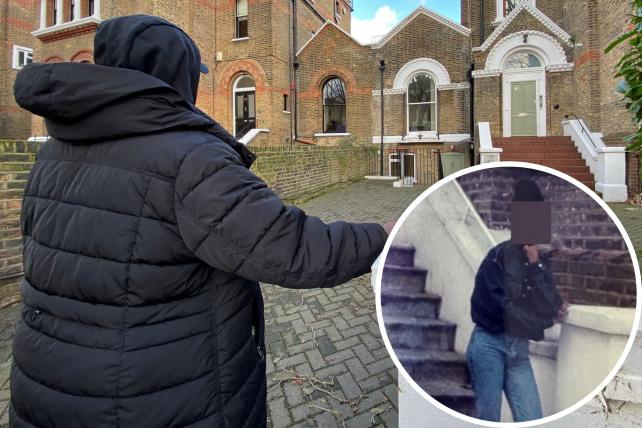
‘Zara’ was referred to the appeal panel after lawyers said there was insufficient evidence she was in a children’s home – despite having witnesses and photos that put her there (Image: Charles Thomson)

Seven people were rejected in one day in early October, said Dr Davies. Each received an email saying the council would be in touch with further information “shortly”.

But they received no further communication until last week, after the Gazette asked why they had been left waiting for over four months.

“Last week, 10 people whose applications were automatically referred to the independent appeals panel were contacted by email and provided with further details about their individual appeal hearings,” a spokesperson said.

The council confirmed that the appeal panel had now been appointed but did not say who was on it or whether survivors would have the chance to vet them.

It said the appointees “all have relevant backgrounds and experience”.

But Dr Davies said ISN had been frozen out of the selection process.

“We were led to believe that we would be interviewing people for the panel,” she alleged.

“That was what we were told when we were planning it. We were also told there would be someone from a survivors’ group.”

The council said its appointees’ relevant experience included having been in care themselves; social work experience; legal backgrounds; and prior experience on panels considering historic abuse claims.

“One word that is missing there is ‘survivors’,” said Dr Davies.

“People who have been in care are completely different to survivors of abuse in care.”

Islington Council said the appeal process was “entirely voluntary”, with applicants able to decide whether to attend, whether to provide further evidence or argument and whether to “bring someone along for support”.

But, said Dr Davies: “They still haven’t told us if we can advocate, as opposed to support. Can we advocate in someone’s absence, which is really important? One woman is in hospital, for example.”

A council spokesperson said the panel was “independent”, with council staff prevented from applying to sit on it.

“The council has no influence or control over the decisions it makes,” it said.