SURVIVORS of the Islington Council children’s home abuse scandal have been left stranded after services were “recklessly axed” in a budget cut, the social worker who exposed the abuse has said.
The former Islington social worker said survivors were now being directed to the mental health charity MIND, but added that it was worrying that this was not a specialist service and that phone operators had never heard of ISN, the organisation which has helped some 800 survivors.
She told the Tribune: “Survivors now feel that no one cares about them, that they’ve got nobody. Before, campaigners felt like they were being listened to when the services were first set up.
“This was a very specialist service, and now they’ve lost all these people they had that they could ring about whatever it was that had upset them. Maybe they couldn’t even explain it that well but they could ring them and they could get a response. Now, they will have to start from scratch.”
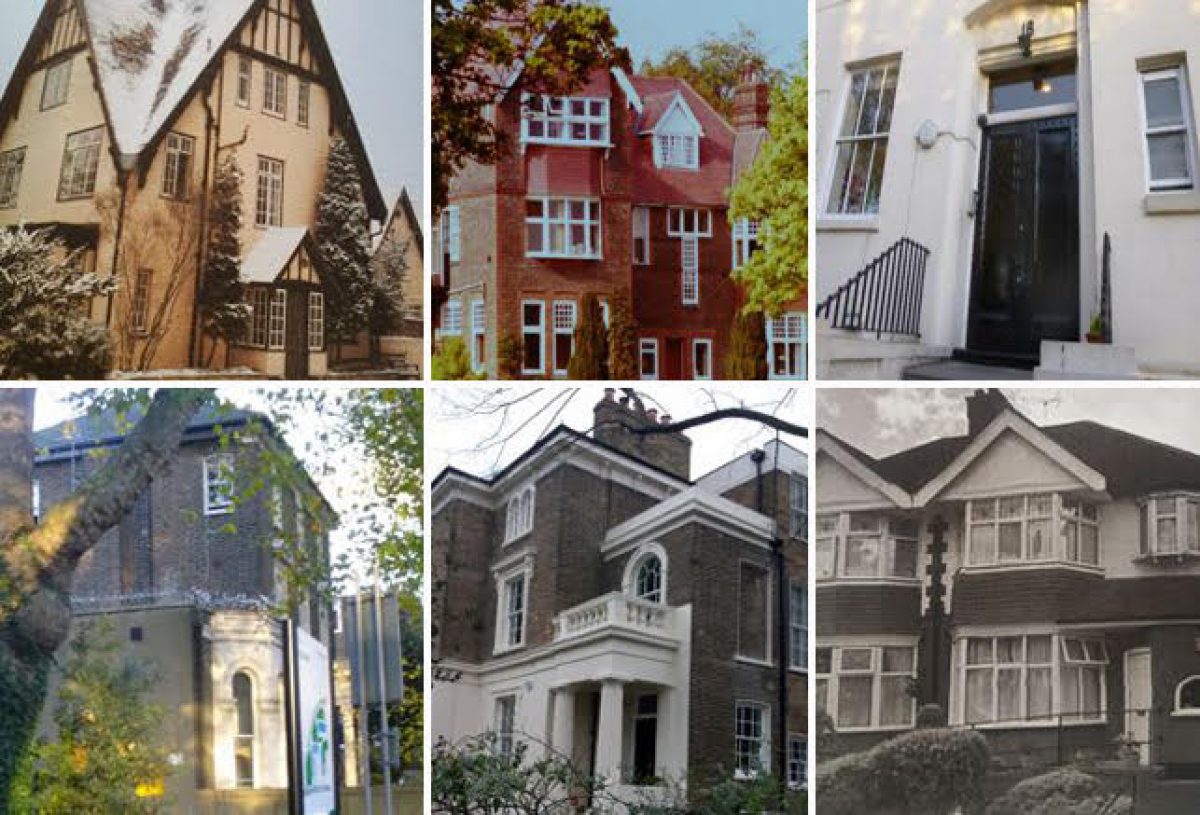
The Town Hall said earlier this year that it was an “appropriate” time for them to end the support scheme which has run since 2017, and seen the council pay for therapy and other services for victims. It has previously described decades of sexual abuse against children placed in council-run homes as the “worst chapter in its history”. The abuse took place between the 1960s to the early 1990s, while warnings of a paedophile ring were dismissed.
Dr Davies estimates there were 2,000 children living in the homes during this period.
A report by Sarah Morgan QC, commissioned by the council in 2018, concluded that: “Many will need access to specialist counselling or therapy; some will be ready to take that up as soon as it is offered; some may not be ready to take it up yet but may find that they are in a few years. It must still be available to them when they are ready.”
Dr Davies said it was “shattering” that this support – the trauma service at St Pancras hospital, the Non Recent Abuse Team, and a grant for the ISN itself – was now being taken away.
She told the Tribune: “It’s just terrible. It’s absolute devastation which we can’t solve. I’ve written and said I hold the council responsible for the consequences, and there will be consequences. These are people who have been kept alive by these services, and they feel in absolute despair. A lot of them we won’t hear from, they will go back into their shells.
“It’s tragic. The trauma service was so good, and the work they did was life-changing. We spent so long in meetings with them and survivors, and they got it right, we never had one complaint about them.”
An Islington Council spokesperson said: “We remain committed to ensuring that survivors continue to have access to meaningful, trauma-informed support. The new model of support is designed to be sustainable in the long term. It was shaped over several months with input from survivors themselves and partners including the Islington Survivors Network.
“Best practice has been embedded into adult social care provision. A new community support service, delivered by Islington Mind, complements existing community and NHS services, working together to support people in different ways.
“Islington Mind have extensive experience working with residents who have experienced trauma. They are ready to support survivors and understand their needs. Islington Mind are also well connected with other services and are committed to partnership working to support survivors with a range of issues they may be experiencing. Our shared goal remains the same – to ensure that survivors continue to have access to informed, compassionate and safe support in Islington.”
Protecting children from abuse has been Liz Davies’ life’s work. In the 90s, as a social worker in Islington, she investigated and exposed abuse at 41 children’s homes.
She has been disbelieved, discredited and even received death threats. But she kept going, fuelled by her social work values.
In 2017, her dogged determination was vindicated with an apology from the London borough’s then leader Richard Watts to survivors, and herself, for “the council’s failure historically”.
A support payment scheme was set up offering £10,000 to all survivors of which more than 450 have benefited.
Though the scheme has now closed, The Islington Survivors Network founded by Liz with survivors in 2014 continues to investigate on behalf of and support survivors. Some 800 people have come forward providing statements of abuse in the homes dating back to the 60s.
“The survivors’ information about abusers is priceless in terms of protecting children now,” says Liz. “The reasons why they made those statements was to protect children now. It wasn’t for the money.”
Since the 90s public awareness of child abuse has grown. There has been the uncovering of horrific abuse by disgraced television personality Jimmy Savile. The Independent Inquiry into Child Sexual Abuse. Sex trafficking by Jeffrey Epstein and allegations of other powerful men in his network of abusers, including Andrew Mountbatten Windsor. The grooming gangs scandal.
Despite this, Liz believes cultures of disbelief still exist.
“I raised the alarm in the 90s, as a senior Islington social worker, about an organised network of child sexual exploitation that I witnessed between 1986 and 92.
“I have since spent 35 years seeking justice and healing for the survivors – but even now the struggle continues and the battles are ongoing.”
Liz says she was met with “numerous obstacles” when she uncovered evidence of children being “networked to child sex abusers” in Islington.
“In the 2020s, survivors told me that 50 children at a time were in this flat which ran as a ‘peep’ show for the posh cars that pulled up at the window.
“Survivors also told me that staff took them from children’s homes into forests at night and abandoned them there, leaving them to find their way back. They told me that men would try and drag them into their cars and that the children would hang onto each other to try and avoid separation.
“There is still no investigation of what I consider to have been many examples of child trafficking. Similarly I have on record that Islington children and Jersey children were swopped between abusive children’s homes under the guise of ‘holidays’.
“I have collated the names of 80 known and alleged abusers, mainly residential workers and visitors, who were allowed access to children in the homes.
“In spite of well prepared evidence, many of the abusers have avoided investigation.”
Liz co-wrote 15 reports into the organised child sex abuse network in the borough. However, 14 subsequent inquiries ended with a report in 1995 that found no evidence of such networks. The Morgan QC Review, commissioned by Islington Council, repeated this denial in 2018. Liz says she has testimonies from 60 survivors claiming otherwise.
Liz left Islington disillusioned in 1992, citing as the final straw being asked to place a seven-year-old boy in a foster placement she had reported as abusive.
She went on to work as a child protection manager and trainer in the London Borough of Harrow for 11 years until political changes ended the role.
“From the mid 90s a policy shift took place to destroy the effective protection of children in England and Wales,” she says. “It took place slowly and systematically so that hardly anyone noticed what was happening or realised how sinister the changes were.”
Liz describes this as a shift away from social workers being involved in investigating child abuse to social workers focusing on assessing and supporting families.
She cites the introduction of the 2000 Framework for the Assessment of Children in Need as solidifying this, recalling a training event about managing change that indicated the writing was on the wall: “At this manager’s meeting I could not see my post as child protection manager and trainer anywhere on her redesign chart.”
What followed, says Liz, was an end of social workers and police working jointly in child protection, something she links this to subsequent deaths of children known to services and reviews highlighted failings to share information and “missed opportunities”.
“The Assessment Framework divided the work of police and social workers,” she said. “Social workers were removed from the investigation of child abuse which was seen to be the sole domain of police.
“Instead, social work’s role was restricted to the broad assessment of every child’s needs. Words like ‘risk’, ‘investigation’ ‘protection’ and ‘abuse’ were frowned upon with the intention of seeing the child’s holistic needs. Prevention was pushed at the expense of protecting children from abuse.”
Now in her 70s and emeritus professor of social work at London Metropolitan University, Liz remains an outspoken critic of the child protection system. She blames deregulation and the removal of the child protection register – a database of children subject to child protection plans – for priming the sector for privatisation.
“Lord Laming suggested the abolition of the register which took place in 2008 even though Victoria Climbié might have been protected had she been on it, and Peter Connolly if the emphasis had been to comply with Section 47.
“Privatisation and deregulation were the main goals of government and IT companies needed systems to be minimised and able to be completed by anyone, however unskilled.
“The flow of ideology towards prevention not protection had set in firmly and was propagated by many academics who lost sight of the need for risk assessment and child safety.
“Investigation and intervention became dirty words indicative of a totalitarian state, rather than justifiable, proportionate action to protect children from harm.”
An outlier for many years, Davies’ call for the investigative skills of social work to be strengthened are now more in line with mainstream policy in England and Wales.
The government is planning to rollout specialist multi-agency child protection teams that will include social workers and police as core members in every area. It is also creating a new post of lead child protection practitioner.
A potential cap on profit is among a raft of measures aimed at “rebalancing the market” in children’s social care, with a focus on not-for-profit providers.
Liz welcomes plans to bring back joint working: “Police cannot investigate abuse on their own – child protection investigation required the skills of social workers who know the child and police who understand perpetrators and crime networks.”
But both professions, she said, will need appropriate pre and post qualifying training: “Training must include the skills to analyse the threshold between prevention and protection, and to make decisions about when to escalate and deescalate interventions in order to avoid false positives and false negatives.”
Asked for her message to government, top of her list is to “investigate the invasive takeover of child protection policy and practice by profiteers”.
She would also like to see child protection training made mandatory on police and social work courses and the removal of children’s residential and fostering provision from the private sector.
She called on social workers to stand firm against pressure to practice against their profession’s principles and to “seek allies along this journey”, such as their trade unions and BASW.
Liz urged social workers to “take notice of your intuition and feelings” and use investigative skills and analysis to test them.
For the next generation of practitioners, she offers this advice: “Use the powers you are given by society wisely and responsibly. Power is not always an oppressive concept if it is used to protect the vulnerable.
“Recognise this is a privilege and you have a duty to use this power when needed.
Listen and respond to the views of children and hear what they say through speech and behaviours.
“If a child speaks about abuse, or abuse is reported, then follow child protection guidance and investigate with colleagues from other agencies. This is what being proactive means.”
TRAUMA services for the survivors of the Islington care home abuse scandal are set to close after a shock council funding decision.
The Town Hall – which described the decades of sexual abuse against children placed in council-run homes as the “worst chapter in its history” – has paid for therapy and other services for the victims since 2017.
But ahead of next week’s local budget announcement, the Tribune understands Islington has decided to pull funding for the support described as a “lifeline” for those affected.
The abuse took place from the 1960s to the early 1990s, while warnings of a paedophile ring were dismissed.
ISN has helped some 800 survivors, including around 400 who received £10,000 through the council’s Support Payment Scheme, which ran between 2022 and 2024.
Dr Davies told the Tribune she was shocked and devastated by the impending cuts, which she learned about from survivors themselves, many of whom were informed via email.
“We’re picking up the pieces for these survivors who are panicking, because they have been told out of the blue that the services they rely on are being taken from them,” she said.
“We have already had some people saying that when it stops, they won’t be able to carry on. We’ve spent 10 years developing these services to the level of expertise they have, and now they will be gone.”
Cuts will affect three programmes: Islington Survivors Trauma Service at St Pancras Hospital, which lets survivors self-refer for therapy without needing to go via a GP or through a waiting list, and to which they can return whenever they feel they need to.
Islington’s Non Recent Abuse Team, which has helped some 200 survivors with practical needs related to housing, benefits, disability and more, will also be cut, as will a £31,000 per year grant to ISN itself.
Survivor Jane Frawley, who works with Dr Davies at ISN, said: “It made such a difference – it’s immeasurable. What Liz and a lot of the people that stood up and made a lot of noise for us did was make it so we didn’t have to go to the back of the list. We could call a number, say we had been in care, and then straight away we had a place where we could be heard.
“It’s a lifeline for many survivors, and one you can tap in and out of. The thing about long term trauma is it comes back, but if you take away those services, what do I do? Where do I go?”
Ms Frawley added: “It’s not easy when your history is as dark as ours, and we need support. It’s the least that we deserve, and it’s the very least that Islington Council can do. People were being paid to look after us, and they didn’t – in fact, they were being paid to torment, torture and abuse us.”
Any people who have accessed the services already will be affected by the cuts, but so too will those who have not yet come forward to identify themselves as survivors – Dr Davies estimates there could have been as many as 2,000 children who lived in Islington’s care homes when the abuse was going on.
Dr Davies said: “We have a dedicated team just for survivors, who they can access quickly and who understand what they have been through. To access general trauma informed support, they would have to go via their GP and there is a waiting list of about a year and a half. This isn’t the service they have had in any shape or form.”
The campaigners said it took years of work to set up the specialised service and this had been done so on the expectation that those services were not time-limited.
Dr Davies also highlighted a report by Sarah Morgan QC in 2018, commissioned by the council to look into allegations surrounding the care home abuse. Ms Morgan said in her report that she was struck by “the life long and continuing effects on those who were abused” and could see the “enduring harm and the continuing need for help”.
She added: “The direct contact I had with victims and survivors… helped me to understand, in a way I had not previously, the need to be able to trust that what is being offered will be enough and will not be taken away.
“Many will need access to specialist counselling or therapy; some will be ready to take that up as soon as it is offered; some may not be ready to take it up yet but may find that they are in a few years. It must still be available to them when they are ready.”
An Islington Council spokesperson said: “We’re deeply sorry for the council’s past failure to protect vulnerable children in its children’s homes, which was the worst chapter in this council’s history.
“We recognise how important specialist support has been for survivors and understand why news of change is distressing. We’ve been encouraged by the positive, productive discussions we’ve had with ISN about what the new model of support will look like and how it will work going forward.
“We’re committed to providing the broadest possible range of support to survivors in future and, alongside input from survivors, have had in-depth conversations with our own Non-Recent Abuse Team and health professionals at Islington Survivors Trauma Support service to understand survivors’ needs.
“We are grateful for the assistance ISN has provided to survivors and welcome their continued input. Our shared goal remains the same – to ensure that survivors continue to have access to high-quality, informed, compassionate and safe support in Islington.
“We have extended the funding of ISN to assist survivors on a recurring annual basis and throughout the lifetime of the Support Payment Scheme (SPS).
“The closure of the SPS in March this year, and the co-produced transition to a new, sustainable model of support for survivors in the long term, is an appropriate time to end our funding support for ISN.
“We are helping ISN to explore external sources of funding and retain a role in survivor engagement.”