Islington: Man says he was abused in Northampton Park home

Islington Gazette, 23rd February 2024

Exclusive by Charles Thomson, Investigations Reporter

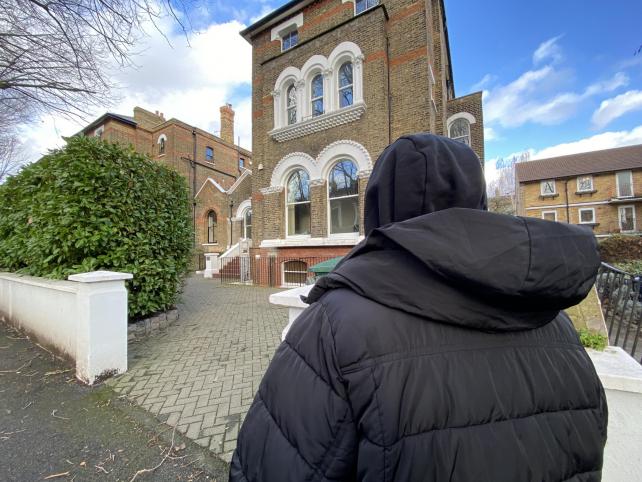
‘Max’ says he was placed in Northampton Park children’s home, Canonbury – but Islington Council appears to have lost his care file (Image: Charles Thomson)

A man calling for support after he was left addicted to drugs after years of abuse in children’s homes found his care records had been lost.

Max – not his real name – says he was placed in two Islington Council children’s homes in the 1990s, where children and staff used drugs and he lived in fear of sexual assault.

But when he applied for his care records to support his bid for a £10,000 payout, the council could not find them.

“This is potentially very serious,” said Dr Liz Davies, of the Islington Survivors Network (ISN).

Councils are supposed to keep the records of looked after children for 75 years.

Dr Davies said she had referred several people with missing or incomplete files to a lawyer to see whether a legal action could be brought.

Islington Council would not comment on Max’s case, but said applicants to the support scheme did not necessarily need their care records.

However, Dr Davies said other applicants whose records were missing or incomplete had been turned down.

‘Children smoked crack’

Max said he was taken into care in 1993 and placed in the former Northampton Park children’s home, near Canonbury station.

He said some staff there openly smoked cannabis and permitted children in their care to smoke cigarettes and other substances.

He was given hashish, he alleged, and witnessed other children using crack cocaine.

The former children’s home at Northampton Park, near Canonbury station, is now private residential building (Image: Charles Thomson)

He was neglected, he claimed, with nobody noticing conditions he was later diagnosed with disorders like dyslexia and ADHD, which impacted his education. He left school with no qualifications.

The home was also rife with rumours of sexual abuse, he said.

“Other kids told me something bad was happening in the home,” said Max. “They said to keep away from certain people.”

At night, he claims, he would put furniture against his door and was frightened to go to sleep.

Heroin addiction

Max said he was later moved to another children’s home and got no help finding accommodation after turning 18.

His adulthood has been marred by heroin addition, which sabotaged his career in IT, and failed relationships. At one point, he lived in a hostel.

Only now he is clean and sober has he joined the dots between his childhood trauma and his destructive drug use.

“I was trying to forget,” he said.

Max, now in his 40s, still lives in north London – but has had a chaotic adulthood, marred by heroin addiction and depression. He is now clean and sober, and wants Islington Council to offer redress for the impact of his alleged childhood abuse (Image: Charles Thomson)

He now has constant pain in the left side of his body, which he believes is linked to his past heroin use.

He also has depression – not helped, he said, by living in a rented studio flat so dilapidated that he can’t use his own bathroom. He has to visit a relative daily to use theirs.

He is on the council’s bidding list for a one-bedroom flat, but several thousand places from the top.

Missing file

After admitting and apologising for decades of abuse in its former children’s homes, Islington Council set up the Support Payment Scheme, offering £10,000 to survivors.

Dr Davies helps survivors obtain their care records and file applications.

The Arrangements for Placement of Children Regulations 1991 say case files should be kept until the looked-after child’s 75th birthday – but Max’s cannot be found.

“It’s important to note that we do not require a care file to be supplied as part of an application for the support payment scheme,” a council spokesperson said.

“We don’t want potential applicants to be dissuaded from applying.”

But Dr Davies said some previous applicants have been rejected under similar circumstances.

Max returned to the former children’s home with the Islington Gazette. He said the £10,000 support payment would help get his life back on track (Image: Charles Thomson)

In January, the Gazette reported on Zara, also not her real name, who was rejected after receiving an incomplete care file.

Like Zara, Dr Davies said Max’s memories – the names of staff and children at Northampton Park, and his descriptions of what happened there – are corroborated by other survivors.

But Zara was still turned down and told to apply to an appeal panel if she wanted to pursue payment.

The same happened to another applicant, Tony Darke, even with a care file.

Whistleblowing former Islington social worker Liz Davies said she had referred the cases of several people with missing files to a lawyer, to see whether legal action could be mounted over the apparent legal breaches (Image: Charles Thomson)

Max’s Dream

If Max received the £10,000, he said, he would first book some private therapy – something he started once before but could not really afford.

“If you want it on the NHS you have to wait forever and you might die before you ever get treated,” he said.

He says he would then invest in some IT training to try to get his career back on track.

“I think the main thing I need is to find a nine-to-five job,” he said. 

“The payment would definitely improve some things in my life. It’s not something that would go to waste.”

Once he is back on his feet, he said, he would like to help other recovering addicts get their lives back on track.

The payment scheme is open to applications until May. Visit www.islingtonsupportpayment.co.uk.

Islington Survivors Network can be reached at 0300 302 0930 or islingtonsn@gmail.com.

Islington Council refuses claim under abuse payment scheme

Islington Gazette, 22nd January 2024

Exclusive by Charles Thomson, Investigations Reporter

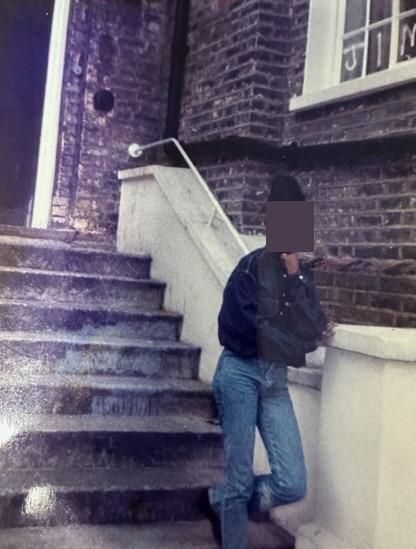
Zara – not her real name – says she was abused in this former children’s home – and even has a photograph of herself standing outside. But Islington Council has refused her a payout, saying there is no evidence she was ever there (Image: Charles Thomson)

Islington Council has refused to pay an alleged abuse survivor, claiming there is no evidence she was in one of its children’s homes – even though she has photos and witnesses.

The woman, now in her 50s, says she was neglected in two Islington children’s homes in the 1980s, where children smoked, drank and used drugs with staff members’ knowledge.

When she fell pregnant on their watch, she says the staff then tried to force her to get an abortion.

But when she applied to the Islington Support Payment Scheme, set up to help survivors of widespread abuse in the borough’s children’s homes, the council said there was insufficient evidence Zara – not her real name – had been in their care  

Dr Liz Davies, a whistleblowing former Islington social worker whose decades of campaigning led to the fund’s creation, blasted the “ridiculous” decision. 

Dr Davies, founder of the Islington Survivors Network (ISN), said she help Zara compile and submit her application, which included photos of her inside one children’s home with staff and other residents.

A witness has also told the Islington Gazette that she was Zara’s roommate in one of the children’s homes and had already informed the scheme of this before Zara was rejected.

“It’s unbelievable,” said Annabelle, whose name has also been changed. “She was there. I mentioned her on two different occasions. I mentioned in my application the things we would get up to and how Zara would protect me.

“It’s just crazy. There are other people who know her and know she was there too.”

Annabelle said she was with Zara in two children’s homes: 11-12 Highbury Crescent, then 80 Highbury New Park.

Islington Council would not comment on Zara’s case.

Zara said the stress and upset of having her application refused had left her unable to sleep (Image: Charles Thomson)

Islington Gazette: Zara said the stress and upset of having her application refused had left her unable to sleep

“We are having to spill out all our traumas, only for them to reject us,” said Zara.  

“I had a panic attack and hyperventilated when I found out. It’s traumatising to be subjected to all this – to go back over what’s happened to you, only for them to slap you in the face and still keep insulting you time and time again. It’s upsetting.

“All of this has brought back memories for me. It’s very emotionally draining. I’m waiting for a doctor’s appointment because I’m not sleeping properly. Sometimes I’m sitting in my house and I get very tearful because it’s all resurfacing.

“The most hurtful part is that the proof is all in there. I included photos. They’ve clearly not even looked at my application.”

Dr Davies helped Zara apply for her council records before applying to the scheme, but when they were supplied, said Zara, the contents were “almost completely missing”.

“I was in the homes for four years and my file was about four pages,” she said.

“There was no mention of her being in the children’s homes in her file,” said Dr Davies. “So I knew I really had to prove it.

“I attached photos of her in her room, with the manager, nursing her newborn baby with other residents and even standing outside the front door with the number 80 on it.”

This photograph shows Zara stood outside 80 Highbury New Park, said Dr Liz Davies, and is part of a collection of photos she has of herself at the home, including posing with staff (Image: ISN)

Islington Gazette: This photograph shows Zara stood outside 80 Highbury New Park, said Dr Liz Davies, and is part of a collection of photos she has of herself at the home, including posing with staff

But in December, Zara was told her application had been rejected.

“I wrote to the lawyers straight away and said, ‘There must be a mistake here, I sent you all the photographs’,” said Dr Davies.

“Then I remembered another survivor had mentioned Zara in her own statement and already been paid out.

“So this is a failure on their part, in my view. But instead of pulling back and apologising, they said, ‘We know it’s disappointing but she will soon hear from the appeal panel’.”

“It’s not about the money,” said Zara. “It’s about getting justice for things that people feel like they’ve gotten away with.”

Dr Liz Davies, of the Islington Survivors Network (ISN), helped Zara submit her application and has condemned its rejection (Image: Charles Thomson)

Zara, who was in the homes in the 1980s, said she was still dealing with the consequences.

“It was mainly neglect,” she alleged. “We were left on our own. When you were in a predicament, there was no one there for you.

“Kids would be smoking, drinking, taking drugs. I was afraid of taking drugs so I didn’t do it, but used to drink alcohol. The staff would see us and do nothing. They’d even take us to the pub.

“At the time it seemed great, but it wasn’t. I’m grown now but I still have issues in my life because I didn’t get the guidance I needed when I was young.”

Left to her own devices by the staff, said Zara, she fell pregnant as a teenager.

“They tried to force me to have a termination,” she claimed. “I wanted to have my child but they keep taking me to a clinic in Euston, even though I didn’t want to go.

“I think maybe they wanted me to have a termination because I fell pregnant in their care. It was evidence of their neglect.”

Zara said she would fight against Islington Council’s decision for herself and others (Image: Charles Thomson)

Islington Gazette: Zara said she would fight against Islington Council's decision for herself and othersZara said she would fight against Islington Council’s decision for herself and others (Image: Charles Thomson)

Zara said she would fight against her rejection to inspire others to do the same.

“It’s not right and it’s not fair,” she said. “I don’t see why they should get away with it..

“I’ve always been the one that’s quiet and just expected to take everything on the chin, but I’m not doing that. This life has taught me to be strong.

“There are other people out there far worse off than me and if this is how they’re going to treat them too, it’s not right.”

Islington Council sent a lengthy statement but it did not address Zara’s case. It reiterated the council’s apology for past abuse in its children’s homes and said its support scheme remained open to applications. 

Contact: Islingtonsn@gmail.com for assistance in claiming the Support Payment: Call voicemail 0300 302 0930 @theIslingtonSN

Intelligence ‘pours in’ on Islington Council child abusers

EXCLUSIVE

HISTORICAL CHILD ABUSE

Islington Gazette: 25th February 2023

Exclusive by Charles Thomson: Investigations Reporter

Intelligence ‘pours in’ on Islington Council child abusers

Islington Council has paid out almost £1 million in the past ten months to victims of historic abuse in its children’s homes. 

More than 180 complainants have come forward since last May, yielding a wealth of new intelligence about paedophiles who infiltrated the borough’s care system.

The support scheme was launched last year, more than three decades after whistleblowers first reported that Islington’s care system had been “infiltrated by paedophiles”.

“They are pouring it out,” said Dr Liz Davies, who has worked on many of the applications. 

“They’ve been naming abusers. Serious assaults. Sexual assaults. Physical assaults. Crimes.” 

In some cases, Dr Davies said, multiple complainants have named the same alleged abusers. 

READ MORE:

“I’ve done a collation of all the children’s homes,” she explained. 

“So if the police contact me and say somebody’s come forward making allegations about Mr So-and-so, I can say, ‘Ten other people have named him’.  

“Then I can contact all those survivors and say, ‘This officer in this police station is investigating Mr So-and-so’, to see if they would like to speak to them.” 

Survivors 

Dr Davies, an emeritus professor of social work at the London Metropolitan University, first raised the alarm about widespread abuse in the homes in 1990, whilst working as a social worker. 

No large-scale police investigation has ever been mounted. 

The Met Police would not comment for this article as to why.

Dr Davies now co-ordinates the Islington Survivors Network (ISN), a non-profit launched in 2016 to help victims access support, and “collate and publish the history of the Islington child abuse scandal”. 

ISN also aims to help the authorities bring abusers to justice. 

Since launching, it has been contacted by more than 600 complainants, as well as ex-staff offering witness testimony. 

In 2017, the council finally admitted and apologised for the abuse. In 2021, it announced the Islington Support Payment Scheme. 

Support Payments 

The scheme, which opened in May 2022 and closes in May 2024, offers £10,000 payments to anyone abused in any of 42 children’s homes between 1966 and 1995. 

“Abuse may be sexual, physical, emotional or neglect,” according to the 16-page form that applicants must complete. 

The scheme covers 12 homes in Islington, plus other Islington-run homes in London, Essex and Hertfordshire.  

It has received 181 applications. To date, 95 have been approved and paid out. 

“No applications have been rejected,” the council said.  

A number of successful claims will also be taken forward as individual civil suits, said Dr Davies. 

“If they win, the £10,000 will come off the damages,” she explained. 

Excluded 

Three-quarters of all applications so far have been made through ISN, which was instrumental in getting the scheme set up. 

Dr Davies said she had lost some battles, with those abused in foster care excluded from the scheme, as well as those abused in children’s homes before Islington became a London borough in 1965. 

“So there were things that were not just,” she said. 

“But in the end, because of time, we thought, we’ve got to run with what we’ve got now, to get people getting paid – because they’re dying. We’re losing them and they’re not getting the money.” 

Dr Davies said the main issue she was experiencing now was waits of “up to six months” for claimants’ care files to be disclosed, then discovering that they are missing or incomplete. 

The Rules 

“Applicants do not need their childhood care records to apply for the scheme,” the council told the Gazette

But the scheme does require “credible information and/or material” supporting a claim. 

In some cases, said Dr Davies, missing files have been overcome by ex-staff providing witness statements confirming that they remember the applicants being in the homes. 

The council confirmed that those still waiting for their care records when the scheme closes will not be excluded, as long as they have already applied for the scheme. 

“All applications submitted before the scheme ends in May 2024 will be processed,” it said. 

The Department for Work and Pensions has agreed that payments under the scheme will not be considered when calculating eligibility for benefits. 

ISN can be reached at http://www.islingtonsurvivors.co.uk: Islingtonsn@gmail.com : 0300 302 0930 They will assist survivors with applying to this Scheme.

The Met Police said anyone wishing to report non-recent abuse should do so by calling 101 or visiting http://www.met.police.uk/ro/ocr/how-to-report-a-crime/

“Your information will be passed to a specialist team who will work with you and support you,” it said.