Islington Council: Concerns over abuse scheme appeal panel

Islington Gazette, 5th March 2024

Exclusive by Charles Thomson, Investigations Reporter

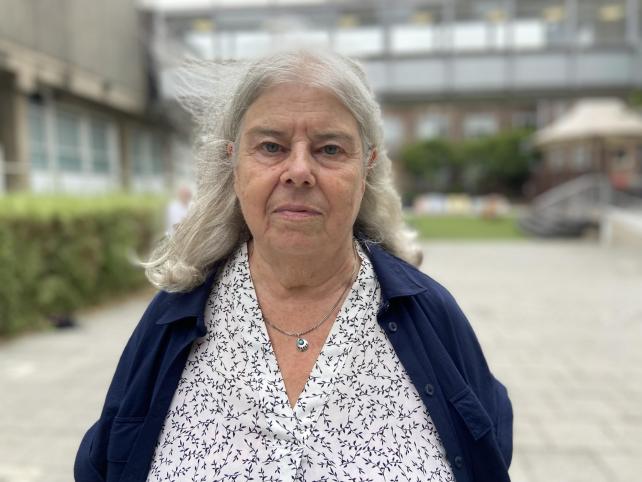
Dr Liz Davies, from the Islington Survivors Network (ISN), said she felt let down by the council. She claims ISN was meant to help compile the appeal panel – but then the council did it without them and now won’t even tell ISN who is on it.

Women who say they were sexually abused in Islington Council’s care have had their case files forwarded to a mysterious panel who will decide whether they are entitled to payouts.

Alleged victims previously turned down were last week given ten days to decide whether or not to argue their cases before an appeal panel, without being told who will be on it.

In the meantime, their personal information has already been shared with the unnamed strangers.

Applicants to Islington’s ‘Support Payment Scheme’ are automatically referred to the panel if lawyers initially turn them down.

But expert Dr Liz Davies said the council had so far refused to say who is on the appeal panel or give survivors any opportunity to vet them.

“In Lambeth, survivors and their representatives had the chance to review the list of panel members and do their own due diligence,” said Dr Davies, of the Islington Survivors Network (ISN).

“As it turned out, it was a very good list and they were happy. But they at least had the opportunity to review it.”

In 2017, Islington Council apologised for decades of violent, sexual and emotional abuse in its former children’s homes.

Allegations from hundreds of former looked-after children include staff assaulting children; giving them booze, drugs and cigarettes; facilitating paedophile parties; and forcing teens to abort babies.

The council gave a special apology in 2017 to Dr Davies, a whistleblowing former Islington social worker who had spent decades campaigning for justice for the victims.

In consultation with her organisation ISN, it then created the Support Payment Scheme, offering £10,000 pay-outs to survivors of abuse.

The council insists the sums are referred to as support payments, not compensation, and says payment under the scheme is not an admission of liability.

So far more than 300 applications have been received, of which 270 have resulted in payouts.

But Dr Davies said that in recent months there had been a spate of rejections, most of which are not reasonable in her opinion.

The Gazette has reported on people being rejected even though witnesses and photos place them in the homes, and others have been paid out after alleging similar abuse by the same staff.
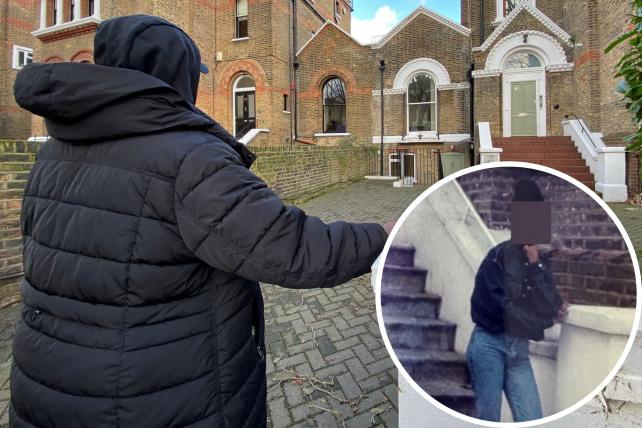
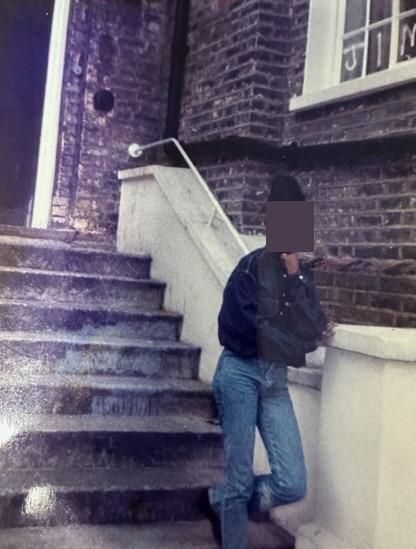
‘Zara’ was referred to the appeal panel after lawyers said there was insufficient evidence she was in a children’s home – despite having witnesses and photos that put her there (Image: Charles Thomson)

Seven people were rejected in one day in early October, said Dr Davies. Each received an email saying the council would be in touch with further information “shortly”.

But they received no further communication until last week, after the Gazette asked why they had been left waiting for over four months.

“Last week, 10 people whose applications were automatically referred to the independent appeals panel were contacted by email and provided with further details about their individual appeal hearings,” a spokesperson said.

The council confirmed that the appeal panel had now been appointed but did not say who was on it or whether survivors would have the chance to vet them.

It said the appointees “all have relevant backgrounds and experience”.

But Dr Davies said ISN had been frozen out of the selection process.

“We were led to believe that we would be interviewing people for the panel,” she alleged.

“That was what we were told when we were planning it. We were also told there would be someone from a survivors’ group.”

The council said its appointees’ relevant experience included having been in care themselves; social work experience; legal backgrounds; and prior experience on panels considering historic abuse claims.

“One word that is missing there is ‘survivors’,” said Dr Davies.

“People who have been in care are completely different to survivors of abuse in care.”

Islington Council said the appeal process was “entirely voluntary”, with applicants able to decide whether to attend, whether to provide further evidence or argument and whether to “bring someone along for support”.

But, said Dr Davies: “They still haven’t told us if we can advocate, as opposed to support. Can we advocate in someone’s absence, which is really important? One woman is in hospital, for example.”

A council spokesperson said the panel was “independent”, with council staff prevented from applying to sit on it.

“The council has no influence or control over the decisions it makes,” it said.
Islington Council child abuse scheme faces fresh criticism

Islington Gazette, 15th February 2024

Exclusive by Charles Thomson, Investigations Reporter

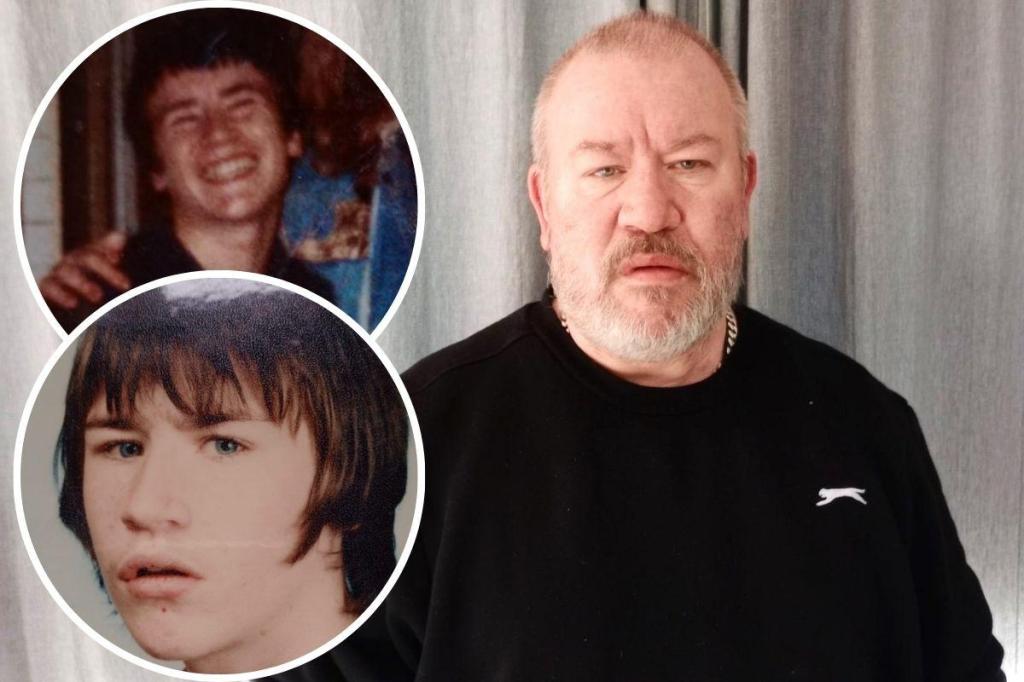
Tony Darke, 55, says he applied to Islington Council’s Support Payment Scheme after suffering years of cruel and violent abuse in children’s homes – but has been told he will receive no pay-out unless he wins over an appeal panel (Image: Tony Darke)

A man forced to recount years of painful and humiliating abuse says he feels “kicked in the teeth” after his account was not believed.

Tony Darke has been rejected by Islington Council’s support scheme for abuse victims, despite his account being corroborated by others.

The 55-year-old lived in three children’s homes in the early 1980s, where he says he suffered neglect and “very violent” abuse.

But he says he has been refused financial help on grounds that there is insufficient evidence.

“You spill your guts out, remembering all this stuff you don’t want to remember, revealing all these intimate details, and it’s like you get kicked in the teeth in return,” he said.

Initial applications to the Islington Support Payment Scheme are done in writing – but Tony must now face an appeal panel.

“Now I’ve got to relive the whole thing again, but this time to a load of strangers,” he added.

The council told him months ago that it contact him soon with details – but he said he had heard nothing since.

It is the second time this year that the Islington Gazette has reported on applicants being rejected despite what the Islington Survivors Network (ISN) says is compelling corroboration.

Islington Council said it would not comment on individual cases.

A photo of Tony with one of the friendlier staff members inside one of the homes (Image: Tony Darke)

 ‘A knee in the back’

Tony was placed in care, aged 13, when his mother was deemed not to be coping.

He lived in homes in Conewood Street and Highbury Crescent, then Gisburn House in Hertfordshire.

The violent abuse started at Conewood, he alleged, with what he called “pin-downs”.

“It could be anything that triggered it,” he said. “They didn’t really need a reason. You might just swear, or say something they didn’t agree with.

“Everyone plays up sometimes – we were kids! It might be something like, it’s bedtime and you don’t want to go to bed.

“Two or three of them would basically jump you, wrestle you to the ground and hold you down by your legs, your shoulders, so you literally couldn’t move. It hurt. You’d have a knee in your back or  chest. It was a lot of pressure.

“They only let you up when they decided. They lifted you up with your arms behind your back and took you off to your room.”

Sometimes, said Tony, he was grabbed by the throat.

Others were treated even worse, he claimed. He recalled one child who staff taunted constantly, then attacked if they reacted.

One of the few photos Tony Darke has of himself during his years in Islington Council’s care (Image: Tony Darke)

Self-harm

At Gisburne House, Tony alleged, staff gave cigarettes to children as a means of control.

“Most of the kids in there smoked,” he said.

He said some staff at Gisburne were cruel.

“If you misbehaved you would go without dinner, or get a cold dinner. Or they banned you from going home at weekends to your family,” he claimed.

Staff drove children into the woods in the middle of the night in a Transit van and dumped them there, he said. They were split up and told to find their own way home in the dark.

Files show that by the end of Tony’s time in care, he was “beset by anxiety”, with “no confidence and low self-esteem”, and was self-harming.

One a camping trip, files record that he stuck his feet in the campfire. He bit his fingers until they bled, punched walls and scratched his arms.

He was deemed a potential suicide risk and described as very thin. He was caught shoplifting items to sell so he could buy food.

Dr Liz Davies claimed the Islington Support Payment Scheme was making ‘inconsistent’ decisions, with with some applicants rejected despite having no less proof than others who were approved (Image: Charles Thomson)

 “Ridiculous”

After admitting and apologising for decades of abuse in children’s homes, Islington Council’s Support Payment Scheme opened in 2022, offering £10,000 pay-outs to victims.

Tony applied last spring but received a letter on October 12 – his 55th birthday – saying he would receive no payment due to insufficient evidence. It said he could appeal.

The networl’s Dr Liz Davies described the decision as “ridiculous” and “inconsistent”.

“Tony has no less evidence than others who’ve received payments,” she said.

“Others have described the same sorts of abuse in the same homes, naming the same staff. Lots from Gisburn, for example, describe the night runs in the woods.

“Files prove Tony was in the homes. He names other children who were in the homes with him, some of whom I know have already successfully applied.”

Islington Council said all applications were “treated equally and carefully assessed”, adding: “We do not regard an application as having been ‘rejected’ when in fact it has been referred to the independent appeals panel for further consideration.”

The payment scheme is open to applications until May. Visit www.islingtonsupportpayment.co.uk.

Islington Survivors Network can be reached at 0300 302 0930 or islingtonsn@gmail.com.

Islington Council refuses claim under abuse payment scheme

Islington Gazette, 22nd January 2024

Exclusive by Charles Thomson, Investigations Reporter

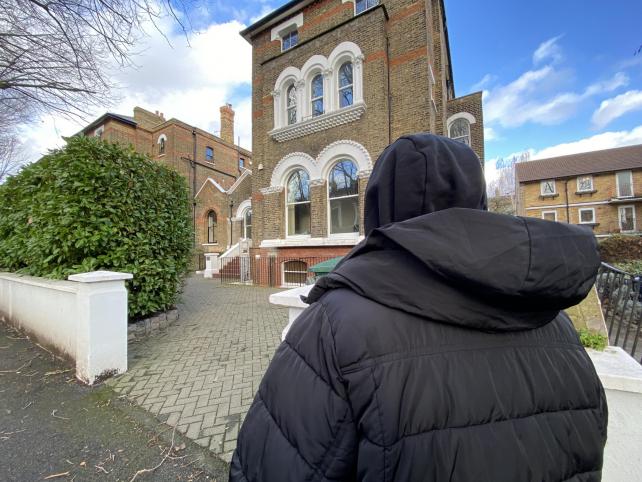
Zara – not her real name – says she was abused in this former children’s home – and even has a photograph of herself standing outside. But Islington Council has refused her a payout, saying there is no evidence she was ever there (Image: Charles Thomson)

Islington Council has refused to pay an alleged abuse survivor, claiming there is no evidence she was in one of its children’s homes – even though she has photos and witnesses.

The woman, now in her 50s, says she was neglected in two Islington children’s homes in the 1980s, where children smoked, drank and used drugs with staff members’ knowledge.

When she fell pregnant on their watch, she says the staff then tried to force her to get an abortion.

But when she applied to the Islington Support Payment Scheme, set up to help survivors of widespread abuse in the borough’s children’s homes, the council said there was insufficient evidence Zara – not her real name – had been in their care  

Dr Liz Davies, a whistleblowing former Islington social worker whose decades of campaigning led to the fund’s creation, blasted the “ridiculous” decision. 

Dr Davies, founder of the Islington Survivors Network (ISN), said she help Zara compile and submit her application, which included photos of her inside one children’s home with staff and other residents.

A witness has also told the Islington Gazette that she was Zara’s roommate in one of the children’s homes and had already informed the scheme of this before Zara was rejected.

“It’s unbelievable,” said Annabelle, whose name has also been changed. “She was there. I mentioned her on two different occasions. I mentioned in my application the things we would get up to and how Zara would protect me.

“It’s just crazy. There are other people who know her and know she was there too.”

Annabelle said she was with Zara in two children’s homes: 11-12 Highbury Crescent, then 80 Highbury New Park.

Islington Council would not comment on Zara’s case.

Zara said the stress and upset of having her application refused had left her unable to sleep (Image: Charles Thomson)

Islington Gazette: Zara said the stress and upset of having her application refused had left her unable to sleep

“We are having to spill out all our traumas, only for them to reject us,” said Zara.  

“I had a panic attack and hyperventilated when I found out. It’s traumatising to be subjected to all this – to go back over what’s happened to you, only for them to slap you in the face and still keep insulting you time and time again. It’s upsetting.

“All of this has brought back memories for me. It’s very emotionally draining. I’m waiting for a doctor’s appointment because I’m not sleeping properly. Sometimes I’m sitting in my house and I get very tearful because it’s all resurfacing.

“The most hurtful part is that the proof is all in there. I included photos. They’ve clearly not even looked at my application.”

Dr Davies helped Zara apply for her council records before applying to the scheme, but when they were supplied, said Zara, the contents were “almost completely missing”.

“I was in the homes for four years and my file was about four pages,” she said.

“There was no mention of her being in the children’s homes in her file,” said Dr Davies. “So I knew I really had to prove it.

“I attached photos of her in her room, with the manager, nursing her newborn baby with other residents and even standing outside the front door with the number 80 on it.”

This photograph shows Zara stood outside 80 Highbury New Park, said Dr Liz Davies, and is part of a collection of photos she has of herself at the home, including posing with staff (Image: ISN)

Islington Gazette: This photograph shows Zara stood outside 80 Highbury New Park, said Dr Liz Davies, and is part of a collection of photos she has of herself at the home, including posing with staff

But in December, Zara was told her application had been rejected.

“I wrote to the lawyers straight away and said, ‘There must be a mistake here, I sent you all the photographs’,” said Dr Davies.

“Then I remembered another survivor had mentioned Zara in her own statement and already been paid out.

“So this is a failure on their part, in my view. But instead of pulling back and apologising, they said, ‘We know it’s disappointing but she will soon hear from the appeal panel’.”

“It’s not about the money,” said Zara. “It’s about getting justice for things that people feel like they’ve gotten away with.”

Dr Liz Davies, of the Islington Survivors Network (ISN), helped Zara submit her application and has condemned its rejection (Image: Charles Thomson)

Zara, who was in the homes in the 1980s, said she was still dealing with the consequences.

“It was mainly neglect,” she alleged. “We were left on our own. When you were in a predicament, there was no one there for you.

“Kids would be smoking, drinking, taking drugs. I was afraid of taking drugs so I didn’t do it, but used to drink alcohol. The staff would see us and do nothing. They’d even take us to the pub.

“At the time it seemed great, but it wasn’t. I’m grown now but I still have issues in my life because I didn’t get the guidance I needed when I was young.”

Left to her own devices by the staff, said Zara, she fell pregnant as a teenager.

“They tried to force me to have a termination,” she claimed. “I wanted to have my child but they keep taking me to a clinic in Euston, even though I didn’t want to go.

“I think maybe they wanted me to have a termination because I fell pregnant in their care. It was evidence of their neglect.”

Zara said she would fight against Islington Council’s decision for herself and others (Image: Charles Thomson)

Islington Gazette: Zara said she would fight against Islington Council's decision for herself and othersZara said she would fight against Islington Council’s decision for herself and others (Image: Charles Thomson)

Zara said she would fight against her rejection to inspire others to do the same.

“It’s not right and it’s not fair,” she said. “I don’t see why they should get away with it..

“I’ve always been the one that’s quiet and just expected to take everything on the chin, but I’m not doing that. This life has taught me to be strong.

“There are other people out there far worse off than me and if this is how they’re going to treat them too, it’s not right.”

Islington Council sent a lengthy statement but it did not address Zara’s case. It reiterated the council’s apology for past abuse in its children’s homes and said its support scheme remained open to applications. 

Contact: Islingtonsn@gmail.com for assistance in claiming the Support Payment: Call voicemail 0300 302 0930 @theIslingtonSN