03.06.22. Islington Tribune. ‘Abuse survivors ‘left out’ of support payments‘
by Anna Lamche
As the Town Hall opens its long-awaited support payment scheme for the survivors of Islington’s child abuse scandal, only some of those who suffered can breathe “a sigh of relief”.
Those who experienced abuse – be it emotional, sexual, physical abuse or neglect – in an Islington care home between 1966 and 1995 can now apply for a £10,000 “support payment” from the council. Survivors have two years to make their applications via an online form.
However, according to Megan*, an abuse survivor and co-ordinator of Islington Survivors Network (ISN), many people who were abused in the council’s care system have been “left out” of the payments. In 1970, Megan was just six months old when she was put into an Islington care home in Muswell Hill. Shortly after, she was moved to Harlow in Essex and split up from her siblings. “We never lived together again after that,” Megan said. “That was very common in those days.”
All three siblings experienced abuse at the hands of Islington’s care system. While Megan was placed into a care home, one of her sisters was put straight into a foster home and the other was placed in a hostel.
As the Town Hall launched its “support payment” scheme on Tuesday, Megan’s family story serves as a stark reminder of those who will miss out on the payment. Because she was placed in an Islington home, Megan can claim the payment – but her two siblings, who were placed in foster care and hostels respectively, cannot.
“They’re not entitled to the money,” Megan said. “You have to have lived in an Islington children’s home [to be eligible].
“But we can’t forget that Islington placed 15-year-olds in hostels with drug abusers and people coming out of prison. They won’t take responsibility for whatever happened in those hostels, even though Islington social workers placed those children there.
“The same goes for foster parents – they were trained by Islington, they were paid by Islington, they underwent regular reviews by Islington. And again, they’ve decided no: they’re not going to pay this money to children who were abused by their foster parents. “Islington Council took these children away from their parents, because they said it was the best thing. And they placed them with foster parents who abused them for 10 years. How is it possible that Islington isn’t taking responsibility for that?”
Megan has also said the £10,000 support payment will inspire “people that would never normally come forward to come forward now”. In this context, she hopes the council has “extra provisions” to give support to everyone who needs it.
Megan encourages anyone who would like to discuss the support scheme to “have a cup of tea” with ISN. The service is run by two survivors and Dr Liz Davies, who has “all of the historical context and all of the information that’s needed”.
Responding to Megan’s concerns, an Islington Council spokesperson said: “The Islington Support Payment Scheme was specifically designed for survivors who suffered abuse when placed by Islington in its children’s homes.
“The scheme is legally complex and it has taken significant legal, actuarial and financial input to get to the stage where we can launch it. “All abuse is absolutely and equally legitimate and valid. We are conscious of the length of time it has taken to create this very complex scheme, and do not want to delay it any longer for these survivors. Further work would have to be carried out to ascertain if a foster care scheme would be viable.
“As a minimum, the council’s wider support available for survivors – which includes trauma support – will be available over the duration of the payment scheme.
“We recognise that this may be the first time that people are making contact with our support team; the scheme has been designed to offer support at every stage of the process. Those working on the scheme are experienced in social care and support in Islington.”
Leader of Islington Council, Cllr Kaya Comer-Schwartz, said: “We’re deeply sorry for the council’s past failure to protect vulnerable children in its children’s homes, which was the worst chapter in this council’s history. “I’d like to thank the very many people, especially those directly affected by abuse and groups who support them, who have contacted us with questions and feedback throughout the development of the scheme, and who continue to help shape it.”
*Name has been changed
25.06.22. Islington Tribune. How the abuse victims of the 1950s have missed out on support system
By Anna Lamche
FOR those in Islington’s childcare system before 1966, the “worst chapter” in the borough’s history has not yet drawn to a close, a man who suffered child abuse during the 1950s warned this week.
The council’s recently-launched scheme, which offers a £10,000 “support payment” to every survivor of the scandal, is open to anyone who suffered abuse between 1966 and 1995. But those whose abuse took place before 1966 are not eligible for the payment.
This is because, before 1966, London County Council (LCC) ran Islington’s childcare service. The London Borough of Islington was created in 1965, becoming responsible for the area’s childcare system the following year. This week, John*, 72, who was in Islington’s care system between 1950 and 1965, has decided to tell his story publicly.
A committed campaigner for justice with the Islington Survivors Network (ISN), he hopes to highlight the “unfairness” of his exclusion from the current support payment scheme. John was born in Holloway Prison in 1950. He remained with his mother for roughly eight months before being taken into Islington’s care system. Throughout his childhood he was moved between abusive children’s homes, and foster care placements. At all times, John’s care was overseen by “childcare officers” based in 75 Mildmay Park, N1. In the 1950s he spent several years in Langley House, a care home where Islington children were placed, based in South Ockendon, Essex.
ISN recognises this address, open between 1952 and 1973, as a home in which abuse took place. John escaped Islington’s system aged just 15. “My life took off from there,” he said. As far as John is concerned, Islington Council should take responsibility for the abuse he suffered as an Islington child.
“They should man up and take their responsibilities seriously, at least pay some form of compensation to the people they hurt,” he said. “It’s not just me – all of them.” John’s childhood abuse has cast a long shadow into his adult life.
“Any abuse, at that age, through your childhood – you remember all your life,” he said. “I used to have serious flashbacks to what happened until I was about 35. I feel I was completely and utterly used as just a piece of meat. “They reckon 90 per cent of what you learn in life you’ve learned before you’re ten. So it never goes away. Some days what happened is quite vivid. Other times you suppress them.”
John said he was “furious” when he discovered he could not apply for the council’s scheme. “
They need to be brought to some sort of justice, or accountability,” he said. ISN co-ordinator Liz Davies said: “This was supposed to be a goodwill gesture by Islington Council, having fully acknowledged the severe abuse that children suffered, going right back to the 50s. They’ve acknowledged that this abuse took place.
“Why on earth would they not be flexible in their approach, and honour their responsibility to the few [remaining] survivors who were in care during the 50s and early 60s? John came to Islington Survivors quite early on, and has been campaigning continually to get some justice.”
An Islington Council spokesperson said: “We’re deeply sorry for the council’s past failure to protect vulnerable children in its children’s homes, which was the worst chapter in this council’s history. All abuse is absolutely and equally legitimate and valid.
“The Islington Support Payment Scheme is open to applications from people affected by abuse while placed by Islington Council in its children’s homes between 1966 and 1995. The scheme was specifically designed for survivors who experienced abuse when placed by Islington Council in its children’s homes. It is legally and financially complex, and has taken a long period of time to develop.“As set out in the report to Executive in October 2021, exploring the viability of further extending the scheme would have led to significant delays in opening the scheme to applications.”
* Last name withheld to preserve anonymity.
25.02.23. Islington Gazette. ‘Intelligence ‘pours in’ on Islington Council child abusers‘
Exclusive by Charles Thomson: Investigations Reporter
Islington Council has paid out almost £1 million in the past ten months to victims of historic abuse in its children’s homes. More than 180 complainants have come forward since last May, yielding a wealth of new intelligence about paedophiles who infiltrated the borough’s care system. The support scheme was launched last year, more than three decades after whistleblowers first reported that Islington’s care system had been “infiltrated by paedophiles”.
“They are pouring it out,” said Dr Liz Davies, who has worked on many of the applications. “They’ve been naming abusers. Serious assaults. Sexual assaults. Physical assaults. Crimes.” In some cases, Dr Davies said, multiple complainants have named the same alleged abusers.
“I’ve done a collation of all the children’s homes,” she explained. “So if the police contact me and say somebody’s come forward making allegations about Mr So-and-so, I can say, ‘Ten other people have named him’. “Then I can contact all those survivors and say, ‘This officer in this police station is investigating Mr So-and-so’, to see if they would like to speak to them.”
Survivors
Dr Davies, an emeritus professor of social work at the London Metropolitan University, first raised the alarm about widespread abuse in the homes in 1990, whilst working as a social worker.
No large-scale police investigation has ever been mounted.
The Met Police would not comment for this article as to why.
Dr Davies now co-ordinates the Islington Survivors Network (ISN), a non-profit launched in 2016 to help victims access support, and “collate and publish the history of the Islington child abuse scandal”.
ISN also aims to help the authorities bring abusers to justice.
Since launching, it has been contacted by more than 600 complainants, as well as ex-staff offering witness testimony.
In 2017, the council finally admitted and apologised for the abuse. In 2021, it announced the Islington Support Payment Scheme.
Support Payments
The scheme, which opened in May 2022 and closes in May 2024, offers £10,000 payments to anyone abused in any of 42 children’s homes between 1966 and 1995.
“Abuse may be sexual, physical, emotional or neglect,” according to the 16-page form that applicants must complete.
The scheme covers 12 homes in Islington, plus other Islington-run homes in London, Essex and Hertfordshire.
It has received 181 applications. To date, 95 have been approved and paid out. “No applications have been rejected,” the council said.
A number of successful claims will also be taken forward as individual civil suits, said Dr Davies. “If they win, the £10,000 will come off the damages,” she explained.
Excluded
Three-quarters of all applications so far have been made through ISN, which was instrumental in getting the scheme set up.
Dr Davies said she had lost some battles, with those abused in foster care excluded from the scheme, as well as those abused in children’s homes before Islington became a London borough in 1965. “So there were things that were not just,” she said. “But in the end, because of time, we thought, we’ve got to run with what we’ve got now, to get people getting paid – because they’re dying. We’re losing them and they’re not getting the money.”
Dr Davies said the main issue she was experiencing now was waits of “up to six months” for claimants’ care files to be disclosed, then discovering that they are missing or incomplete.
The Rules
“Applicants do not need their childhood care records to apply for the scheme,” the council told the Gazette. But the scheme does require “credible information and/or material” supporting a claim. In some cases, said Dr Davies, missing files have been overcome by ex-staff providing witness statements confirming that they remember the applicants being in the homes.
The council confirmed that those still waiting for their care records when the scheme closes will not be excluded, as long as they have already applied for the scheme. “All applications submitted before the scheme ends in May 2024 will be processed,” it said.
The Department for Work and Pensions has agreed that payments under the scheme will not be considered when calculating eligibility for benefits.
ISN can be reached at http://www.islingtonsurvivors.co.uk: Islingtonsn@gmail.com : 0300 302 0930 They will assist survivors with applying to this Scheme.
02.06.23. Islington Tribune. ‘Time running out for child abuse payments’
Survivors of care homes scandal can apply for £10,000 support sum
By Anna Lamche
SURVIVORS of Islington’s child abuse scandal only have one year left to apply for a £10,000 support payment, amid warnings the Town Hall could be doing more to widen access to the scheme.
The support payment scheme, which opened in May last year, offers £10,000 to every Islington child who suffered abuse while in care homes during the “worst chapter” of Islington’s history.
As of this week, applicants only have one year left to submit their statements to the scheme before it closes.
According to a council press release published to mark the one-year anniversary of the opening of the scheme, the Town Hall has so far made 155 payments to survivors, totalling £1.535million.
Anyone who was abused in care between 1966 and 1995 can apply. The Town Hall has said it “particularly welcomes more applications from people from black and Asian communities”.
But Islington Survivor’s Network (ISN), an independent group that has long campaigned for justice for the victims of the child abuse scandal, is asking why the council hasn’t done more to advertise the scheme.
Dr Liz Davies, founder of ISN, is calling on the council to do more to advertise the scheme outside of Islington, in places like Bournemouth, Hertfordshire, Stevenage and Harlow, where many Islington children were sent, and survivors are known to have settled.
Dr Davies would also like to see the council working “more collaboratively” with ISN going forward.
“We were supposed to have regular review meetings. I think we’ve only had one proper review, which came quite late in the day. They’re not involving us on an ongoing basis,” she said.
ISN has worked with survivors over many years, gathering information on the crimes committed, including precise information on the people involved in the abuse, and the care homes in which the abuse took place.
Dr Davies warned resources are being wasted because the council and ISN often duplicate work, with both services taking statements from survivors. “We’ve met these people, we know their stories,” she said. “We could do it between us.”
According to Dr Davies, ISN has so far worked with 190 survivors to help them submit their applications to the scheme, including help with accessing their case files, filling in forms and supporting them through trauma.
Of those 190 ISN has worked with, some 143 have received support payments so far. But Dr Davies has warned time is running out for some: “We’ve had a few with life-limiting illness… we’ve lost a few people along the way,” she said.
“It’s not what I thought it would be,” Dr Davies said of the scheme.
A spokesperson for Islington Council said it had advertised the scheme in health services, GPs, and housing providers among other places and had featured an article on the scheme in the council magazine.
“There will be further communications promoting the scheme to more communities, both inside and outside Islington, in the coming months,” they said.
22.01.24. Islington Gazette. Islington Council refuses claim under abuse payment scheme
Exclusive by Charles Thomson, Investigations Reporter
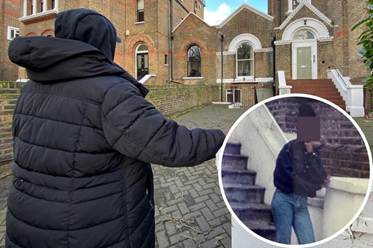
Zara – not her real name – says she was abused in this former children’s home – and even has a photograph of herself standing outside. But Islington Council has refused her a payout, saying there is no evidence she was ever there (Image: Charles Thomson)
Islington Council has refused to pay an alleged abuse survivor, claiming there is no evidence she was in one of its children’s homes – even though she has photos and witnesses. The woman, now in her 50s, says she was neglected in two Islington children’s homes in the 1980s, where children smoked, drank and used drugs with staff members’ knowledge.
When she fell pregnant on their watch, she says the staff then tried to force her to get an abortion.
But when she applied to the Islington Support Payment Scheme, set up to help survivors of widespread abuse in the borough’s children’s homes, the council said there was insufficient evidence Zara – not her real name – had been in their care.
Dr Liz Davies, a whistleblowing former Islington social worker whose decades of campaigning led to the fund’s creation, blasted the “ridiculous” decision.
Dr Davies, founder of the Islington Survivors Network (ISN), said she help Zara compile and submit her application, which included photos of her inside one children’s home with staff and other residents.
A witness has also told the Islington Gazette that she was Zara’s roommate in one of the children’s homes and had already informed the scheme of this before Zara was rejected.
“It’s unbelievable,” said Annabelle, whose name has also been changed. “She was there. I mentioned her on two different occasions. I mentioned in my application the things we would get up to and how Zara would protect me.
“It’s just crazy. There are other people who know her and know she was there too.”
Annabelle said she was with Zara in two children’s homes: 11-12 Highbury Crescent, then 80 Highbury New Park.
Islington Council would not comment on Zara’s case.
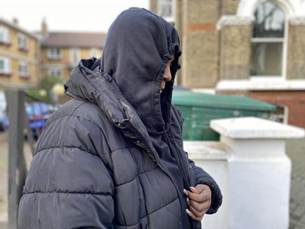
Zara said the stress and upset of having her application refused had left her unable to sleep (Image: Charles Thomson).“We are having to spill out all our traumas, only for them to reject us,” said Zara. “I had a panic attack and hyperventilated when I found out. It’s traumatising to be subjected to all this – to go back over what’s happened to you, only for them to slap you in the face and still keep insulting you time and time again. It’s upsetting.
“All of this has brought back memories for me. It’s very emotionally draining. I’m waiting for a doctor’s appointment because I’m not sleeping properly. Sometimes I’m sitting in my house and I get very tearful because it’s all resurfacing.“The most hurtful part is that the proof is all in there. I included photos. They’ve clearly not even looked at my application.”
Dr Davies helped Zara apply for her council records before applying to the scheme, but when they were supplied, said Zara, the contents were “almost completely missing”. “I was in the homes for four years and my file was about four pages,” she said.
“There was no mention of her being in the children’s homes in her file,” said Dr Davies. “So I knew I really had to prove it.“I attached photos of her in her room, with the manager, nursing her newborn baby with other residents and even standing outside the front door with the number 80 on it.”
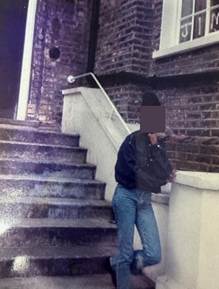
This photograph shows Zara stood outside 80 Highbury New Park, said Dr Liz Davies, and is part of a collection of photos she has of herself at the home, including posing with staff (Image: ISN)
But in December, Zara was told her application had been rejected.
“I wrote to the lawyers straight away and said, ‘There must be a mistake here, I sent you all the photographs’,” said Dr Davies. “Then I remembered another survivor had mentioned Zara in her own statement and already been paid out. “So this is a failure on their part, in my view. But instead of pulling back and apologising, they said, ‘We know it’s disappointing but she will soon hear from the appeal panel’.”
“It’s not about the money,” said Zara. “It’s about getting justice for things that people feel like they’ve gotten away with.”
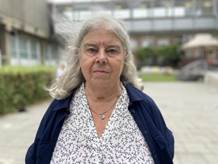
Dr Liz Davies, of the Islington Survivors Network (ISN), helped Zara submit her application and has condemned its rejection (Image: Charles Thomson)
Zara, who was in the homes in the 1980s, said she was still dealing with the consequences.
“It was mainly neglect,” she alleged. “We were left on our own. When you were in a predicament, there was no one there for you.
“Kids would be smoking, drinking, taking drugs. I was afraid of taking drugs so I didn’t do it, but used to drink alcohol. The staff would see us and do nothing. They’d even take us to the pub.“At the time it seemed great, but it wasn’t. I’m grown now but I still have issues in my life because I didn’t get the guidance I needed when I was young.”
Left to her own devices by the staff, said Zara, she fell pregnant as a teenager. “They tried to force me to have a termination,” she claimed. “I wanted to have my child but they keep taking me to a clinic in Euston, even though I didn’t want to go. “I think maybe they wanted me to have a termination because I fell pregnant in their care. It was evidence of their neglect.”
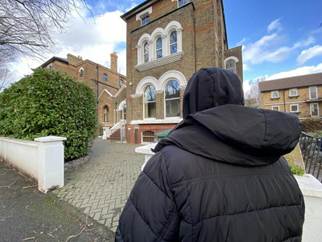
Zara said she would fight against Islington Council’s decision for herself and others (Image: Charles Thomson)
Zara said she would fight against Islington Council’s decision for herself and others (Image: Charles Thomson)
Zara said she would fight against her rejection to inspire others to do the same.
“It’s not right and it’s not fair,” she said. “I don’t see why they should get away with it..
“I’ve always been the one that’s quiet and just expected to take everything on the chin, but I’m not doing that. This life has taught me to be strong.
“There are other people out there far worse off than me and if this is how they’re going to treat them too, it’s not right.”
Islington Council sent a lengthy statement but it did not address Zara’s case. It reiterated the council’s apology for past abuse in its children’s homes and said its support scheme remained open to applications.
Contact: Islingtonsn@gmail.com for assistance in claiming the Support Payment: Call voicemail 0300 302 0930 @theIslingtonSN
15.02.24. Islington Gazette. Islington Council child abuse scheme faces fresh criticism
Exclusive by Charles Thomson, Investigations Reporter
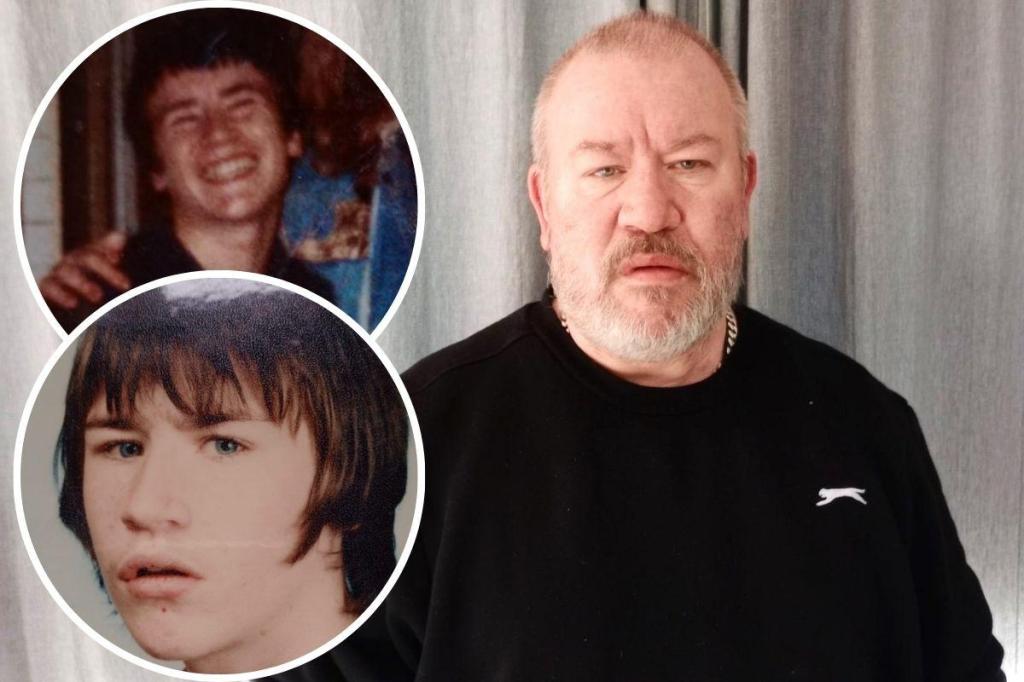
A man forced to recount years of painful and humiliating abuse says he feels “kicked in the teeth” after his account was not believed.
Tony Darke has been rejected by Islington Council’s support scheme for abuse victims, despite his account being corroborated by others.
The 55-year-old lived in three children’s homes in the early 1980s, where he says he suffered neglect and “very violent” abuse.
But he says he has been refused financial help on grounds that there is insufficient evidence.
“You spill your guts out, remembering all this stuff you don’t want to remember, revealing all these intimate details, and it’s like you get kicked in the teeth in return,” he said.
Initial applications to the Islington Support Payment Scheme are done in writing – but Tony must now face an appeal panel.
“Now I’ve got to relive the whole thing again, but this time to a load of strangers,” he added.
The council told him months ago that it contact him soon with details – but he said he had heard nothing since.
It is the second time this year that the Islington Gazette has reported on applicants being rejected despite what the Islington Survivors Network (ISN) says is compelling corroboration.
Islington Council said it would not comment on individual cases.

‘A knee in the back’
Tony was placed in care, aged 13, when his mother was deemed not to be coping.
He lived in homes in Conewood Street and Highbury Crescent, then Gisburn House in Hertfordshire.
The violent abuse started at Conewood, he alleged, with what he called “pin-downs”.
“It could be anything that triggered it,” he said. “They didn’t really need a reason. You might just swear, or say something they didn’t agree with.
“Everyone plays up sometimes – we were kids! It might be something like, it’s bedtime and you don’t want to go to bed.
“Two or three of them would basically jump you, wrestle you to the ground and hold you down by your legs, your shoulders, so you literally couldn’t move. It hurt. You’d have a knee in your back or chest. It was a lot of pressure.
“They only let you up when they decided. They lifted you up with your arms behind your back and took you off to your room.”
Sometimes, said Tony, he was grabbed by the throat.
Others were treated even worse, he claimed. He recalled one child who staff taunted constantly, then attacked if they reacted.

Self-harm
At Gisburne House, Tony alleged, staff gave cigarettes to children as a means of control.
“Most of the kids in there smoked,” he said.
He said some staff at Gisburne were cruel.
“If you misbehaved you would go without dinner, or get a cold dinner. Or they banned you from going home at weekends to your family,” he claimed.
Staff drove children into the woods in the middle of the night in a Transit van and dumped them there, he said. They were split up and told to find their own way home in the dark.
Files show that by the end of Tony’s time in care, he was “beset by anxiety”, with “no confidence and low self-esteem”, and was self-harming.
One a camping trip, files record that he stuck his feet in the campfire. He bit his fingers until they bled, punched walls and scratched his arms.
He was deemed a potential suicide risk and described as very thin. He was caught shoplifting items to sell so he could buy food.
“Ridiculous”
After admitting and apologising for decades of abuse in children’s homes, Islington Council’s Support Payment Scheme opened in 2022, offering £10,000 pay-outs to victims.
Tony applied last spring but received a letter on October 12 – his 55th birthday – saying he would receive no payment due to insufficient evidence. It said he could appeal.
The networl’s Dr Liz Davies described the decision as “ridiculous” and “inconsistent”.
“Tony has no less evidence than others who’ve received payments,” she said.
“Others have described the same sorts of abuse in the same homes, naming the same staff. Lots from Gisburn, for example, describe the night runs in the woods.
“Files prove Tony was in the homes. He names other children who were in the homes with him, some of whom I know have already successfully applied.”
Islington Council said all applications were “treated equally and carefully assessed”, adding: “We do not regard an application as having been ‘rejected’ when in fact it has been referred to the independent appeals panel for further consideration.”
The payment scheme is open to applications until May. Visit www.islingtonsupportpayment.co.uk.
Islington Survivors Network can be reached at 0300 302 0930 or islingtonsn@gmail.com.
23.02.24. Islington Gazette. ‘Islington. Man says he was abused in Northampton Park home’.
Exclusive by Charles Thomson, Investigations Reporter
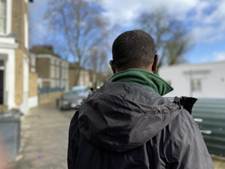
‘Max’ says he was placed in Northampton Park children’s home, Canonbury – but Islington Council appears to have lost his care file (Image: Charles Thomson)
A man calling for support after he was left addicted to drugs after years of abuse in children’s homes found his care records had been lost.
Max – not his real name – says he was placed in two Islington Council children’s homes in the 1990s, where children and staff used drugs and he lived in fear of sexual assault. But when he applied for his care records to support his bid for a £10,000 payout, the council could not find them.“This is potentially very serious,” said Dr Liz Davies, of the Islington Survivors Network (ISN). Councils are supposed to keep the records of looked after children for 75 years.
Dr Davies said she had referred several people with missing or incomplete files to a lawyer to see whether a legal action could be brought. Islington Council would not comment on Max’s case, but said applicants to the support scheme did not necessarily need their care records. However, Dr Davies said other applicants whose records were missing or incomplete had been turned down.
‘Children smoked crack’
Max said he was taken into care in 1993 and placed in the former Northampton Park children’s home, near Canonbury station. He said some staff there openly smoked cannabis and permitted children in their care to smoke cigarettes and other substances.He was given hashish, he alleged, and witnessed other children using crack cocaine.

The former children’s home at Northampton Park, near Canonbury station, is now private residential building (Image: Charles Thomson)
He was neglected, he claimed, with nobody noticing conditions he was later diagnosed with disorders like dyslexia and ADHD, which impacted his education. He left school with no qualifications.
The home was also rife with rumours of sexual abuse, he said. “Other kids told me something bad was happening in the home,” said Max. “They said to keep away from certain people.” At night, he claims, he would put furniture against his door and was frightened to go to sleep.
Heroin addiction
Max said he was later moved to another children’s home and got no help finding accommodation after turning 18.His adulthood has been marred by heroin addition, which sabotaged his career in IT, and failed relationships. At one point, he lived in a hostel.
Only now he is clean and sober has he joined the dots between his childhood trauma and his destructive drug use.“I was trying to forget,” he said.
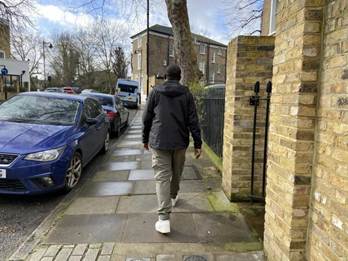
Max, now in his 40s, still lives in north London – but has had a chaotic adulthood, marred by heroin addiction and depression. He is now clean and sober, and wants Islington Council to offer redress for the impact of his alleged childhood abuse (Image: Charles Thomson)
He now has constant pain in the left side of his body, which he believes is linked to his past heroin use.
He also has depression – not helped, he said, by living in a rented studio flat so dilapidated that he can’t use his own bathroom. He has to visit a relative daily to use theirs. He is on the council’s bidding list for a one-bedroom flat, but several thousand places from the top.
Missing file
After admitting and apologising for decades of abuse in its former children’s homes, Islington Council set up the Support Payment Scheme, offering £10,000 to survivors.
Dr Davies helps survivors obtain their care records and file applications.The Arrangements for Placement of Children Regulations 1991 say case files should be kept until the looked-after child’s 75th birthday – but Max’s cannot be found.
“It’s important to note that we do not require a care file to be supplied as part of an application for the support payment scheme,” a council spokesperson said. “We don’t want potential applicants to be dissuaded from applying.”
But Dr Davies said some previous applicants have been rejected under similar circumstances.
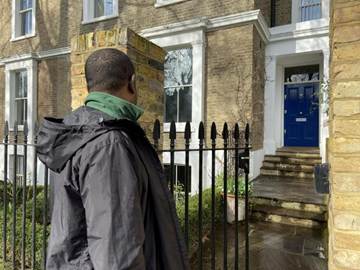
Max returned to the former children’s home with the Islington Gazette. He said the £10,000 support payment would help get his life back on track (Image: Charles Thomson)
In January, the Gazette reported on Zara, also not her real name, who was rejected after receiving an incomplete care file.
Like Zara, Dr Davies said Max’s memories – the names of staff and children at Northampton Park, and his descriptions of what happened there – are corroborated by other survivors. But Zara was still turned down and told to apply to an appeal panel if she wanted to pursue payment.
The same happened to another applicant, Tony Darke, even with a care file.
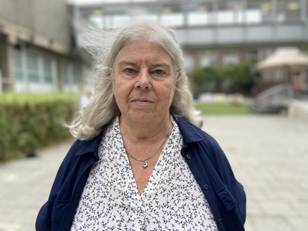
Whistleblowing former Islington social worker Liz Davies said she had referred the cases of several people with missing files to a lawyer, to see whether legal action could be mounted over the apparent legal breaches (Image: Charles Thomson)
Max’s Dream
If Max received the £10,000, he said, he would first book some private therapy – something he started once before but could not really afford.“If you want it on the NHS you have to wait forever and you might die before you ever get treated,” he said.
He says he would then invest in some IT training to try to get his career back on track.“I think the main thing I need is to find a nine-to-five job,” he said. “The payment would definitely improve some things in my life. It’s not something that would go to waste.”
Once he is back on his feet, he said, he would like to help other recovering addicts get their lives back on track.
The payment scheme is open to applications until May. Visit www.islingtonsupportpayment.co.uk.
05.03.24. Islington Gazette. Islington Council: Concerns over abuse scheme appeal panel
Exclusive by Charles Thomson, Investigations Reporter

Dr Liz Davies, from the Islington Survivors Network (ISN), said she felt let down by the council. She claims ISN was meant to help compile the appeal panel – but then the council did it without them and now won’t even tell ISN who is on it.
Women who say they were sexually abused in Islington Council’s care have had their case files forwarded to a mysterious panel who will decide whether they are entitled to payouts.
Alleged victims previously turned down were last week given ten days to decide whether or not to argue their cases before an appeal panel, without being told who will be on it.
In the meantime, their personal information has already been shared with the unnamed strangers.
Applicants to Islington’s ‘Support Payment Scheme’ are automatically referred to the panel if lawyers initially turn them down.
But expert Dr Liz Davies said the council had so far refused to say who is on the appeal panel or give survivors any opportunity to vet them.
“In Lambeth, survivors and their representatives had the chance to review the list of panel members and do their own due diligence,” said Dr Davies, of the Islington Survivors Network (ISN).
“As it turned out, it was a very good list and they were happy. But they at least had the opportunity to review it.”
In 2017, Islington Council apologised for decades of violent, sexual and emotional abuse in its former children’s homes.
Allegations from hundreds of former looked-after children include staff assaulting children; giving them booze, drugs and cigarettes; facilitating paedophile parties; and forcing teens to abort babies.
The council gave a special apology in 2017 to Dr Davies, a whistleblowing former Islington social worker who had spent decades campaigning for justice for the victims.
In consultation with her organisation ISN, it then created the Support Payment Scheme, offering £10,000 pay-outs to survivors of abuse.
The council insists the sums are referred to as support payments, not compensation, and says payment under the scheme is not an admission of liability.
So far more than 300 applications have been received, of which 270 have resulted in payouts.
But Dr Davies said that in recent months there had been a spate of rejections, most of which are not reasonable in her opinion.
The Gazette has reported on people being rejected even though witnesses and photos place them in the homes, and others have been paid out after alleging similar abuse by the same staff.
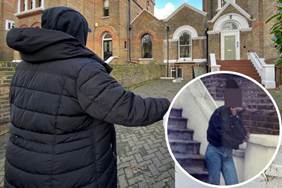
‘Zara’ was referred to the appeal panel after lawyers said there was insufficient evidence she was in a children’s home – despite having witnesses and photos that put her there (Image: Charles Thomson)
Seven people were rejected in one day in early October, said Dr Davies. Each received an email saying the council would be in touch with further information “shortly”.
But they received no further communication until last week, after the Gazette asked why they had been left waiting for over four months.
“Last week, 10 people whose applications were automatically referred to the independent appeals panel were contacted by email and provided with further details about their individual appeal hearings,” a spokesperson said.
The council confirmed that the appeal panel had now been appointed but did not say who was on it or whether survivors would have the chance to vet them.
It said the appointees “all have relevant backgrounds and experience”.
But Dr Davies said ISN had been frozen out of the selection process.
“We were led to believe that we would be interviewing people for the panel,” she alleged.
“That was what we were told when we were planning it. We were also told there would be someone from a survivors’ group.”
The council said its appointees’ relevant experience included having been in care themselves; social work experience; legal backgrounds; and prior experience on panels considering historic abuse claims.
“One word that is missing there is ‘survivors’,” said Dr Davies.
“People who have been in care are completely different to survivors of abuse in care.”
Islington Council said the appeal process was “entirely voluntary”, with applicants able to decide whether to attend, whether to provide further evidence or argument and whether to “bring someone along for support”.
But, said Dr Davies: “They still haven’t told us if we can advocate, as opposed to support. Can we advocate in someone’s absence, which is really important? One woman is in hospital, for example.”
A council spokesperson said the panel was “independent”, with council staff prevented from applying to sit on it.
“The council has no influence or control over the decisions it makes,” it said.
11.03.24. Islington Gazette. Islington denies payout to woman starved in children’s home
Exclusive by Charles Thompson, Investigations Reporter
A woman who says she was starved in an children’s home has been refused a pay-out, even though details of it are recorded in the council’s own files, a victims’ organisation has said.
A woman who says she was starved in an children’s home has been refused a pay-out, even though details of it are recorded in the council’s own files, a victims’ organisation has said.
Jo – not her real name – must face an appeal panel after being turned down by the Islington Support Payment Scheme – a project set up in 2022 after Islington Council admitted decades of abuse in its children’s homes.
But the council’s own records record that she was “under-nourished” while staying in a children’s home at 14 Conewood Street, metres from the old Arsenal Stadium.
“Don’t they even read the files?” asked Dr Liz Davies, of the Islington Survivors Network (ISN).
Under the support scheme, victims can apply for £10,000 payments in recognition of physical, sexual or psychological abuse.
Jo applied in November 2022 and had to wait until October 2023 to learn she was unsuccessful. The letter said there was insufficient evidence she had been abused.
“Under-nourished”
Jo was placed in 14 Conewood Street when she began acting up and skipping school after her mother left the family home.
That she was taken into care at all, said Dr Davies, showed a failure by social services.
A psychiatrist had written in Jo’s records that her misbehaviour was “likely a reaction to the loss of her mother”, saying she should be “treated for her mourning, which could be done locally.”
Instead, said Jo: “They took me out of my own home. I was better off there. In Conewood, I was on my own. I had no friends.”

Dr Liz Davies, of the Islington Survivors Network, said Jo’s rejection was one of several in recent months which she felt was at odds with the available evidence (Image: Charles Thomson)
When she acted up even more, as a result of being institutionalised, she said she was punished by starvation and banned from having family visits.
When ISN obtained Jo’s file, a social worker had written about her “complaining of a lack of food” and described her as “under-nourished”.
“Restraint”
On other occasions, Jo said, she was punished violently: wrestled to the ground and pinned down, unable to move.
“Nothing justified this horrific violence,” said Jo. “I was 15 and very thin.”
“Pin-down” is listed in the support payment scheme’s terms and conditions as a form of abuse which would merit payment.
“We’ve got so many other people who have made allegations about the same man,” said ISN’s Jane Frawley.
“If it happened to Jo even once, it is physical abuse. It should never be done to any child.”
When ISN obtained Jo’s files, it even made mention of her “not accepting restraint”.
“It’s all there in her social care file,” said Dr Davies.
15.03.24. Islington Tribune. ‘I was abused but denied support’.
‘It’s not about the money, it’s about my story,’ says woman brought up in scandal-hit care home By Charlotte Chambers
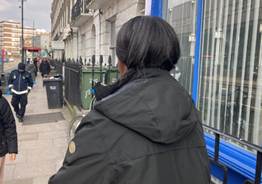
‘Michelle’ picture this week
A WOMAN who says she is a survivor of the Islington children’s home abuse scandal says she has been cut out of the support payment scheme.
Michelle (not her real name) was told her application for a payment was refused on the grounds that Islington could not establish she was at one particular children’s home and that “we do not have sufficient information and material that you suffered qualifying abuse” in a different one.
The mother of two from Highbury said: “I didn’t have a childhood. Stuff like not being fed or like male members of staff just walking into your room. I can’t believe I actually lived like that. I didn’t have that chance to be a child.”
She added: “I’ll be honest with you, I have suffered. It’s the principle of it now. It’s having to be shut down time and time again. And then for them to do what they’ve done – give somebody a promise and then take it away. It was never ever about the money for me. It was about getting my story out there.”
The Town Hall launched its scheme in 2022 with payments of up to £10,000 after apologising for the widescale abuse by staff from 1966 to 1995 – described as the “worst chapter” in the borough’s history. It has so far paid out just under £3m, but has set a deadline of May 31 to claim.
Michelle, a former Mount Carmel student, who said she first experienced abuse while in her home around the age of five, spoke out against the system after Islington issued a notice last week warning that time was running out.
Michelle’ while she was at the care home
Dr Liz Davies, the social worker-turned-whistleblower who campaigned for decades for survivors to be paid compensation, has been critical of the scheme after 10 people from her Islington Survivors Network (ISN) had their applications rejected. Another 230 from ISN have received the lump sum.
She said: “Ten people from ISN have been denied the payments. They’re just such tragic, awful stories, and how dare they decline these people.”
She said ISN have spent months painstakingly detailing their clients’ previous lives in the homes and the abuse they suffered after at least four of them had no file, while others had massive chunks missing.
Islington recently announced those who have seen their applications rejected would have their cases assessed by a so-called independent panel – but again Dr Davies said the identities of these panelists have been kept a secret and no one from ISN has been allowed to join the panel.
Michelle, one of the 10, was placed in a children’s home aged 14. During her time there, she said she was neglected and told by workers to abort her unborn son. She was taken to pubs by staff, who bought the children alcohol and gave them cannabis and described being locked in her room if she became “verbal” about “something wrong”.
“My claim would come under neglect because we were left to our own devices, they never fed us,” said Michelle, who suffers from insomnia and panic attacks and started therapy at 35. “It was just having to survive on our own. All I can recall is they called it a supper and you’d get a cup of tea and a slice a toast.”
An Islington Council spokesperson said: “Each application is treated equally and carefully assessed on its own merits by the independent service provider against the scheme’s qualifying criteria, which is set out on the Islington Support Payment website.
“This person’s application is still live and has automatically been referred to the independent appeals panel for further consideration, so no final decision has been made.”
He added that 10 people were contacted last week to be told their cases had been referred to an independent appeals panel.
16.03.24. Private Eye ‘Survivors Short-Changed’
04.04.24. Islington Gazette. Islington Council child abuse scheme ‘breaking own rules’
Exclusive by Charles Thomson, Investigations Reporter
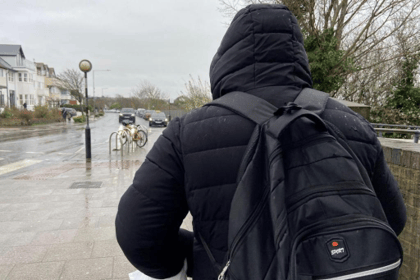
Maria’ says she was sexually assaulted in her bed at an Islington Council children’s home – but has been denied payment by its support scheme for supplying ‘insufficient’ evidence (Image: Charles Thomson)
A woman who says she was sexually abused in her bed at an Islington children’s home claims the council is breaking its own rules by asking her to prove it.
Maria – her name has been changed for legal reasons – says she remembers waking up to find someone holding her down and sexually assaulting her. The alleged attack – which happened in her teens – left her needing therapy as she was unable to form normal relationships.
But she has been denied payment under Islington Council’s ‘Support Payment Scheme’ for abuse victims and told she must face an appeals panel.
“Unfortunately, we do not have sufficient information and material that you suffered qualifying abuse,” solicitors running the scheme wrote in a letter.
“It was distressing to read,” said Maria. “It was nearly 40 years ago. How am I supposed to prove it?”
The scheme’s own rules say applicants should not be expected to provide proof.
But Maria must now face an appeal panel if she wants to access the £10,000 support payment being offered to all survivors of abuse in Islington’s children’s homes.
“I’m fighting it,” said Maria. “Both of my siblings have already received the payment, so I don’t understand why they aren’t giving it to me. It’s distressing to know they were believed and I wasn’t.”
Maria’s story
Maria was placed into care at birth, as her mother left the hospital without her and could not be traced. Her parents later came forward and claimed her, but Maria went back into care because she was being abused at home.
She was placed in a home called Oak Lodge aged eight, where staff noted she had been “starved of affection” and showed unusual affection towards male staff.
But she was never referred for counselling or psychological assessment, which social work expert Dr Liz Davies, of the Islington Survivors Network (ISN), said qualified as neglect under the support scheme’s rules.
Maria spent time in several homes over the years, but said the sexual assault occurred in Highbury Crescent, where she was placed in her mid-teens.
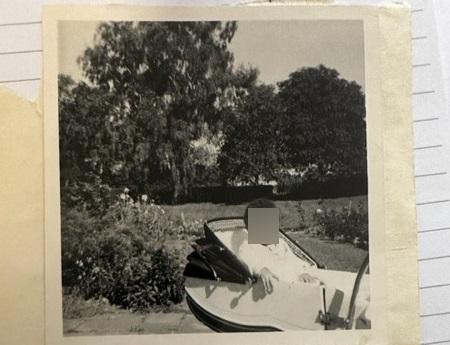
Maria was taken into care from birth after her mother left the hospital without her. She was in and out of care for the rest of her childhood (Image: Supplied)
The attack
“I have a memory of someone holding me down whilst sexually assaulting me and this terrified me,” she wrote in her application.
She does not know who attacked her – only that she woke up to them assaulting her in the dark in her bed at Highbury Crescent children’s home in the 1980s.The man held her down, put his hand over her mouth and kept telling her to relax, she said.
The alleged incident had a lifelong impact on her ability to form and sustain intimate relationships.
“I ended up going to a sex therapist,” Maria told the Gazette. “I couldn’t have a normal relationship because it haunted me.”
She wrote in her support scheme application that she had sought therapy due to flashbacks.
The rules
In 2017, Islington Council admitted and apologised for decades of abuse in its children’s homes.
It launched the Support Payment Scheme in May 2022.
The rules say applicants do not have to provide proof even to the civil standard of 51% certainty.
“The scheme wishes to facilitate support payments rather than present obstacles,” its website says. “It does not require or adopt such a standard of proof. It requires only that there be credible information and/or material of an applicant’s eligibility.”
Qualifying abuse includes sexual assault, separation from siblings and general neglect, all of which Maria alleges she suffered.
But she was rejected in March and must now appeal.
“I’m going to have to try to get my information from the sex therapist, but that was years ago now. The records might not exist anymore,” said Maria.
Maria says she was so traumatised by the sexual assault at the Highbury Crescent children’s home that she suffered flashbacks and it affected her relationships, eventually forcing her to see a sex therapist (Image: Charles Thomson)
Corroboration
The scheme has come under fire in recent months over allegedly inconsistent decision-making, with some applicants paid and others rejected, despite alleging similar abuse by the same staff in the same homes.
Dr Davies said there was significant corroboration that such sexual assaults occurred at Highbury Crescent.
“Other survivors have reported people coming into their rooms at night and abusing them,” she said.
“It’s completely inconsistent who gets this money and who doesn’t when they’re saying the same things about the same homes in the same years.”
Dr Davies added that other applicants had received pay-outs from the scheme after reporting such abuse at Highbury Crescent.
The council
Islington Council said it would not comment on the specifics of individual cases, but reiterated its apology for its “past failure to protect vulnerable children”.
“Each application is treated equally and carefully assessed on its own merits by the independent service provider,” it said.
“This person’s application is still live and has automatically referred to the independent appeals panel for further consideration, so no final decision has been made.”
ISN can be reached at 0300 302 0930, or islingtonsn@gmail.com.
06.04.24. Islington Gazette. ‘Islington Council abuse support payment scheme deadline near’
Exclusive by Charles Thomson, Investigations Reporter
Time running out for children’s home abuse victims to claim £10,000 (Image: Charles Thomson)
Abuse victims have been urged to apply for £10,000 pay-outs before the cut-off date in less than two months. Islington Council is offering “support payments” to people abused in its former children’s homes. But applicants must put their papers in before 5pm on Friday, May 31.
In 2017, Islington Council finally admitted and apologised for decades of abuse of vulnerable children, which it called “the worst chapter in this council’s history”.
The admission followed a decades-long campaign by survivors, led by whistleblowing former Islington Council social worker Dr Liz Davies, who received her own special apology from the council.
The ‘Support Payment Scheme’ launched on May 31, 2022.
The council says the payments are not compensation and do not amount to an admission of liability.
Am I eligible?
The payment scheme is limited to those who were abused in 41 specific children’s homes.
They include certain homes in greater London, Essex and Hertfordshire, where children were placed by Islington Council. The abuse must have been suffered between 1966 and 1995.Those abused in foster care, or in the community whilst known to Islington’s social services, aren’t covered.
What counts as abuse?
Payments are for victims of sexual abuse, physical abuse, emotional abuse and neglect.
- Sexual abuse includes abuse by other children in the homes and “non-contact” abuse like exposure to sexual behaviour.
- Physical abuse includes the use of restraint techniques such as ‘pindown’, where children were wrestled to the ground and held there, unable to move.
- Emotional abuse includes ridiculing children, exposing them to bullying behaviour, causing them to feel frightened and preventing normal social interaction.
- Neglect includes under-feeding children, failing to provide sufficient clothing or access to medical treatment, and inadequate supervision.
The Gazette has reported for decades on the Islington Council abuse scandal. The council finally apologised in 2017 and launched the support payment scheme in 2022. It closes next month
How do I prove I was abused?
Rules say applicants do not have to prove they were abused even to the civil standard of 51% certainty.
The scheme is supposed to be “straightforward and quick” and avoid making applicants “relive past trauma”.
It “requires only that there be credible information and/or material of an applicant’s eligibility”.
A small number of applicants have been rejected on grounds of insufficient evidence either that they were in a children’s home or that they were abused while there.
But the overwhelming majority of applicants have been paid. Those turned down are automatically referred to an appeal panel.
Am I waiving my rights?
Applying to the ‘Support Payment Scheme’ does not waive a victim’s rights to sue the council.
Several people who have successfully applied have been referred to lawyers by Dr Davies’s Islington Survivors Network (ISN) for potential civil suits. However, the £10,000 will be subtracted from any damages awarded by a court.
How do I apply?
To apply or find further information, including a list of the 35 children’s homes, visit www.islingtonsupportpayment.co.uk.
“We really do want all survivors to feel reassured that they can reach out and ask the team any questions they have beforehand, to feel that they will be listened to and treated sensitively – and to know that if they choose to apply, the scheme is open for them until May 31, 2024,” the council said.
ISN, which helps applicants access their records and file applications, can be reached at 0300 302 0930, or islingtonsn@gmail.com.
28.05.24. Islington Gazette. Islington Council child abuse appeal panellists are no-shows
Exclusive by Charles Thomson, Investigations Reporter

Dr Liz Davies, from the Islington Support Network (ISN), said it was ‘wrong’ that panellists skipped their virtual meetings with alleged abuse victims (Image: Charles Thomson)
Alleged child abuse victims are having their right to payouts decided by people who did not even show up to their hearings, Islington Council has admitted.
Five applicants to the council’s Support Payment Scheme for abuse survivors have showed up to their appeal hearings to find only one of the three panellists has turned up.
The appeals themselves are contentious – with some applications refused despite witnesses and files backing up their claims.
Yet the missing panellists are still then deliberating over applicants’ cases, deciding whether they should receive pay-outs.
Islington Council says that is OK, because the absentees can catch up by reading the minutes.
“It’s extraordinary,” said Dr Liz Davies, founder of the Islington Survivors Network (ISN), which supported each of the five applicants at their hearings. “We are bothering to show up. One man came all the way from Newmarket in a train strike and got there in person, whereas the panellists – who were only attending virtually anyway – didn’t show up. It’s not right.”
The Support Payment Scheme, which launched in May 2022 and closes this week, was set up after Islington admitted and apologised for decades of abuse in its children’s homes. Alleged abuse included staff neglecting children, supplying them with booze and drugs, supplying them to paedophiles and forcing them to terminate babies.
The scheme offers abuse survivors £10,000 to help them cope with the ongoing impacts on their lives.
But the Gazette has reported how some were turned down for supposedly insufficient evidence, despite witnesses and files corroborating their accounts.
One woman was turned down for insufficient evidence she was in the home, despite having supplied photos of herself there with the staff.
Those initially denied the payment were invited to appeal hearings at the council’s offices in Upper Street.
“The chair was quite responsive. This is not a criticism of her,” said Dr Davies. “She was very professional and caring in her approach.
“But she said the other panellists had other commitments and couldn’t attend, yet would still participate in the decision-making later. “She also said, very clearly, that they might not agree with her because they weren’t there.”
Islington Council said: “Not all members of an applicant’s appeals panel need to be present at the meeting, since the meeting minutes, along with any extra documentary evidence supplied, are shared with the panel members to enable them to arrive at a decision.”
16.07.24. Islington Gazette. Islington Council child abuse appeals end in success
Exclusive by Charles Thomson, Investigations Reporter.
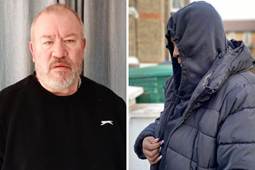
Tony Darke and Zara were each initially denied £10,000 pay-outs under Islington Council’s Support Payment Scheme for survivors of abuse in its children’s homes. But they have triumphed on appeal (Image: Tony Darke / Charles Thomson)
Three alleged abuse victims have won payouts from Islington Council after the Gazette championed their cases.
We raised questions after the trio were each initially turned down by the council’s Support Payment Scheme. The scheme offered £10,000 to survivors of historic abuse in the borough’s children’s homes.
All three were told there was insufficient evidence they were in the homes, or insufficient evidence they were abused.
But appeal panels have now awarded them their money.
The Gazette’s reports were submitted as evidence at two of the hearings.
“The panels found them very useful,” said Dr Liz Davies, of the Islington Survivors Network (ISN).
But, she added, the evidence at appeal was not substantially different to that before the lawyers who made the initial decisions.
“Every single person we’ve been to appeal with and who’s had a response has been successful,” she said.“It brings the original decision-making into question. We never understood the reasons for turning these survivors down.”
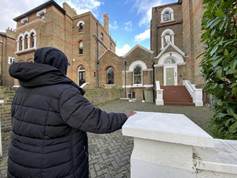
Zara took the Islington Gazette to one of the children’s homes where she said she was neglected and abused by staff (Image: Charles Thomson)
Zara
Zara – not her real name – said kids at the Highbury children’s homes she stayed in smoked, drank and used drugs with the knowledge and consent of staff.
She said some workers even took children to the pub.
Neglected, she fell pregnant as a teenager. She said staff then tried to force her to have an abortion.
Dr Davies helped Zara, now in her 50s, obtain her care records, but they were largely missing.
She had to appeal after decision-makers claimed there was insufficient evidence she was ever in the homes. We reported that she had photos of herself at one of the homes. We also interviewed her roommate at the home, who had already been paid out under the scheme and had mentioned Zara in her own application.
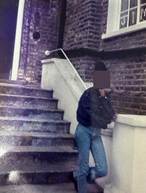
Lawyers who originally considered Zara’s case said there was insufficient evidence she was ever in the children’s homes.
But she had photographs of herself inside and outside.(Image ISN)

Tony Darke was initially rejected and sent to an appeal panel after it was claimed there was insufficient evidence he was abused at Islington Council care homes (Image: Tony Darke)
Tony
Tony Darke lived in three children’s homes in the 1980s, where he said he was violently abused and neglected.
He described staff attacking children, giving them cigarettes, withholding food and even preventing children from seeing their families as a punishment.
He also described staff at Gisburn House driving children into the woods at night and dumping them there to find their own way home in the dark.
Decision-makers said there was insufficient evidence he was abused.
But his care records described him as very thin and stealing to eat. They recorded him self-harming and being “beset by anxiety”.
Dr Davies said others in the homes at the same times, including some named by Tony in his own account, had described the same abuse – including the so called “night runs” at Gisburn – and received pay-outs.
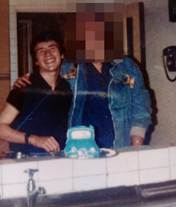
A photo of Tony inside one of the children’s homes, with one of the friendlier members of staff (Image: Tony Darke)
Jo
Jo – also not her real name – was told there was insufficient evidence she had been abused in the council’s home on Conewood Street.
But her care file recorded her telling a social worker she was being under-fed. She was even described in official records as “under-nourished”.
Jo also complained in her application of being violently “pinned down” by a male staff member.
Under the payment scheme’s terms of reference, “pin down” was abuse.
Dr Davies said other complainants had alleged pin-downs by the same man.
Jo’s file even mentioned her “not accepting restraint”.
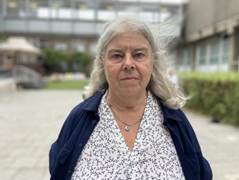
Dr Liz Davies from the Islington Survivors Network said every appeal the group had been involved in had been successful, raising questions about the original decisions (Image: Charles Thomson)
Mixed Emotions
Zara thanked the Islington Gazette, saying: “I am forever grateful for your help.
“To be honest, it was never about the money for me. It was the principle that I wasn’t being heard with my truth – to be still ignored for my pain and suffering over the years.
“There’s still a long journey with healing but I’m sure I will get there one day. Every day is a step to recovery.”
Tony said: “I want to thank Liz for all the help she’s given and also yourselves for running the stories.
“I’m still a bit peeved that it had to get this far. I just think it was a complete waste of time. They paid in the end but it’s caused people unnecessary grief.”
A fourth case highlighted by the Gazette is due before an appeal panel next month.
Islington Council does not comment on individual claims but has previously admitted and apologised for widespread abuse in its children’s homes.
It has said it is now a very different organisation with an emphasis on child safeguarding.
It says pay-outs under the Support Payment Scheme are not compensation and do not amount to an admission of liability.
ISN can be reached at 0300 302 0930 or islingtonsn@gmail.com.
06.12.24. Islington Tribune . Failed by ‘cruel process’ of scheme for survivors of historic child abuse
‘It feels so so so heart-shattering because I never looked for this scheme’
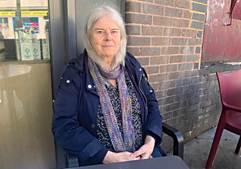
Dr Liz Davies
A SURVIVOR of the Islington children’s homes scandal has been denied financial support packages as an appeal panel concluded that her abuse did not take place within the “qualifying period”.
Sophie (not her real name) was placed in Highbury Crescent and Grosvenor Avenue children’s homes from 1998-1999 where she says she was physically and sexually abused.
However, despite being told that there is “no question” that she had suffered abuse or that she had been in those homes, Sophie’s timeline of events means that she is not eligible for the scheme which gives payouts to those who suffered abuse between 1966 and 1995.
Sophie told the Tribune: “It feels so so so heart-shattering because I never looked for this scheme. I was never trying to get any kind of money. I already tried in my earlier years and I was told no, so I was like ‘OK, it’s not happening for me’. Now, they’ve confirmed that the abuse took place, but because you’re not in the time period, they won’t do anything.”
The mum-of-two, who is in her 30s, was in care from the age of seven – and says she was abused in foster placements prior to living in the children’s homes.
“I feel like I was homeless from the age of seven. I’d have to go to review meetings with about 12 people there. I felt I needed to fight my own battles. I don’t have any fight left in me,” she added.
Sophie says she reported the abuse in the children’s homes at the time, and again to the police when she was in her early 20s.
She said: “I think it’s affected me more than I know, and that’s quite scary. I’m quite resilient. I think I let my resilience take over my trauma, and I’ve now felt it at a later stage. It’s affected my mental health. I’ve had half of my life taken away from me. I’ve not had any support, any recognition that this happened.”
Dr Liz Davies, a former social worker who has campaigned for decades for survivors to be compensated, said that the scheme has been a “painful, cruel process” for them.
She said: “To go through the appeal must have been incredibly painful. You just see a woman’s face on the screen. It’s been very distressing for many survivors. One person just cried the whole way through. It’s just been such a painful, cruel process. For all of them, even the very capable ones.”
Dr Davies, who set up the Islington Survivors Network and has helped hundreds of survivors navigate the payment scheme, said that it had been “completely mismanaged”.
“When a survivor comes forward to the council, they would interview them and take a statement. They were not trained to interview survivors and they didn’t know what they were doing. They were asking really, really intrusive questions and they didn’t know the nuances,” she said.
Dr Davies, who is now compiling evidence to bring to the Local Government Ombudsman, said: “There’s no justice. There’s no liability attached to it. It was a very unique scheme, not everyone can get a civil claim, so it was a whole new way of looking at it. More than 400 survivors have got this payout. This is an achievement, but it’s because of us [ISN].”
An Islington Council spokesperson said: “We’re deeply sorry for the council’s past failure to protect vulnerable children in its children’s homes, which was the worst chapter in this council’s history.
“The support payment scheme was specifically designed for survivors who experienced abuse when placed by Islington Council in its children’s homes. It accepted the independent White Report’s recommendation that 1966 to 1995 represented an appropriate period for the scheme, which was legally and financially complex.
“The scheme was open for two years to ensure that the maximum number of applicants were able to take up the offer within the time frame, and the eligibility criteria were made clear.
“The scheme was designed to be as straightforward and quick to access as possible, aiming to minimise the need to re-live past trauma or the risk of further trauma or harm.
“It’s essential to note that this was not a compensation scheme and any survivors of non-recent child abuse who were placed in a care home by Islington Council can still pursue a civil compensation claim if they wish – regardless of whether or not they qualified for the support payment scheme.
“Survivors of non-recent child abuse in Islington can still get a range of support from the council, including trauma support, access to emotional wellbeing services, help to access care records and advice and support for housing, welfare, learning and employment – accessible at islington.gov.uk/survivorsupport.”
10.07.25. Islington Gazette. Islington child abuse victim refused support payment

Exclusive by Charles Thomson Crime & Investigations Reporter

Max took the Islington Gazette to his former children’s home in Northampton Park last year. He has since been refused a payment under the council’s support scheme (Image: Charles Thomson)
A man says he is considering legal action against Islington Council for historic abuse after being refused a support payment.
Max – his name has been changed – says he was left drug-addicted after being exposed to them when he was placed in children’s homes, but was rejected by the council’s Support Payment Scheme because he entered the homes a few months too late.
Islington offered £10,000 payments to survivors of abuse in its former children’s homes between 1966 and 1995. But Max says that while the council decided to place him in care in 1995, he didn’t enter the first home until 1996.
“I went through opening up the wounds again, letting them interview me at length, wasting my time and making me distressed,” said Max. “I’m just gutted. I’m really pissed off. I’m going to solicitors.”
“That cut-off point of 1995 is so clearly unfair,” said Jane Frawley, of Islington Survivors Network, who supported Max through an unsuccessful appeal over the refusal. “It’s the same sort of abuse by the same staff in the same home, but if you lived there two months earlier you could get the money. It’s absolutely ridiculous.” “It’s just a slap in the face,” Max added. “And you can’t appeal the appeal, so it’s all cushty for them.”
In a 2024 interview, Max described how staff at Northampton Park children’s home, near Canonbury station, would allow children to smoke cigarettes and drugs – an allegation echoed by others placed there. He said he was given hashish and saw other children using crack cocaine. Rumours of sexual abuse were persistent, he claimed, so he used to place furniture up against his bedroom door at night and would be too frightened to go to sleep.
He said his educational needs were also neglected, with staff failing to notice he had dyslexia and ADHD, which meant he received no support or treatment for either. He left school with no qualifications.
After a stint in a second children’s home, he said, he was given no help to find accommodation when he turned 18. He wound up living in a hostel and his drug use escalated. He became addicted to heroin.
He is now clean and sober but says he suffers constant pain in the left side of his body, which he believes is linked to his former drug use.
Islington Council agreed to pay £10,000 to victims abused between 1966 and 1995. It does not deny Max was abused, but won’t pay him because his allegations pertain to 1996 (Image: Charles Thomson)
When Max approached the Islington Gazette in 2024, he had been told his care records were missing.
Some were later found and showed he entered care shortly after the cut-off date for a support payment, whereas he had believed it was shortly before.
But, said Mrs Frawley, there was no question Max was a victim and had been “terribly neglected” in the council’s homes. “I understand they have to have some kind of cut-off point, but in the beginning they said there might be some leeway,” she said. “They are not saying the abuse didn’t take place,” said Max. “They are just saying it was too late. They are not being fair at all.
“There was an application going on for me during that time in 1995. They were looking to put me through the case system. I was on the waiting list.
The council reiterated its apology for its “past failure to protect vulnerable children in its children’s homes, which was the worst chapter in this council’s history.”
It said that while “all abuse is absolutely and equally legitimate and valid”, setting up the support scheme had been “legally and financially complex”. It said the cut-off date of 1995 had been adopted from a recommendation by an “independent” report.
“It’s essential to note that this was not a compensation scheme and any survivors of non-recent child abuse who were placed in a care home by Islington Council can still pursue a civil compensation claim if they wish,” the council said.
“Islington’s top priority is to protect children from harm and we are a very different organisation today than we were in the past.”

