Jason Swift among past tragic cases linked to Conewood site

Islington Gazette, 4th September 2024

Exclusive by Charles Thomson, Investigations Reporter

A children’s home at the centre of a new sex abuse claim was already linked to a succession of controversies and tragedies, including one kidnapping the killings of two teenage boys.

At least four people who worked at Islington Council’s former home in Conewood Street, later named Park Place, have previously been accused of abusing children, according to privileged council documents.

When another was convicted of kidnapping a child he met at the facility, a paedophile magazine sprang to his defence.

Schoolboy Jason Swift, killed by a child sex trafficking ring dubbed the Dirty Dozen, was linked to the building, as was another boy who was violently killed.

The home is now the subject of a lawsuit claiming a teenage girl was repeatedly sexually abused by strange men who entered her bedroom under the cover of darkness.

As lawyers representing the complainant urged other victims to come forward, the Islington Gazette explored the Conewood home’s murky past.

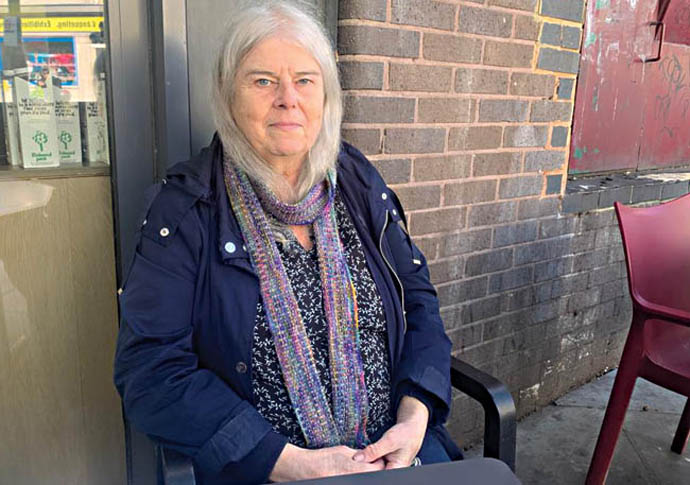
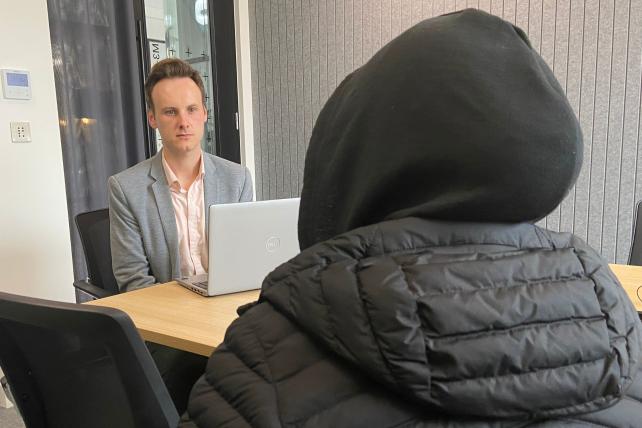
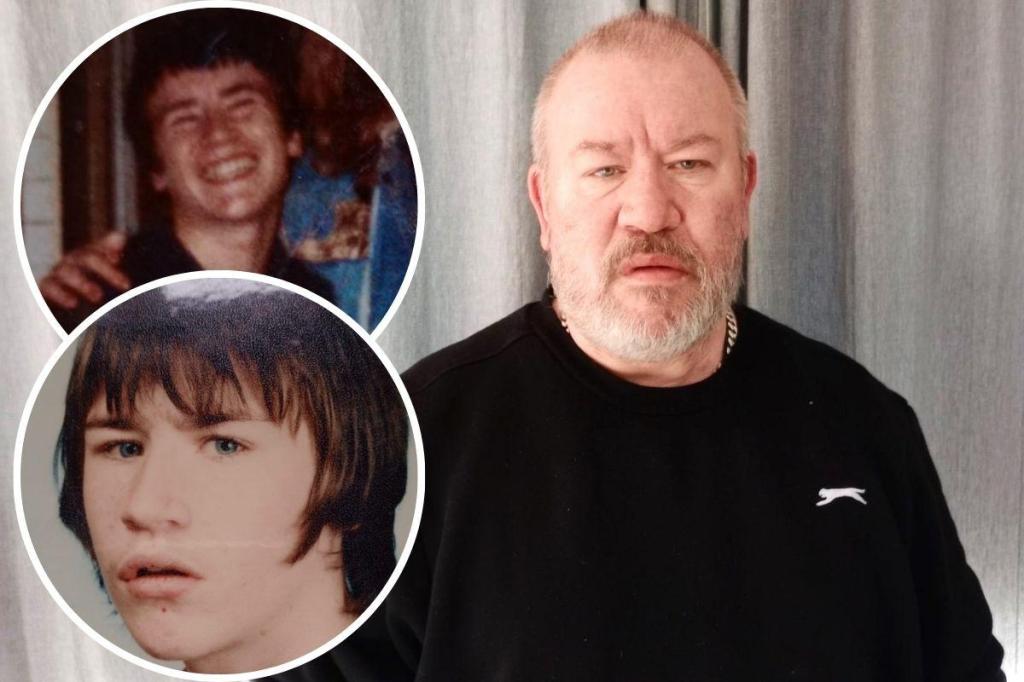
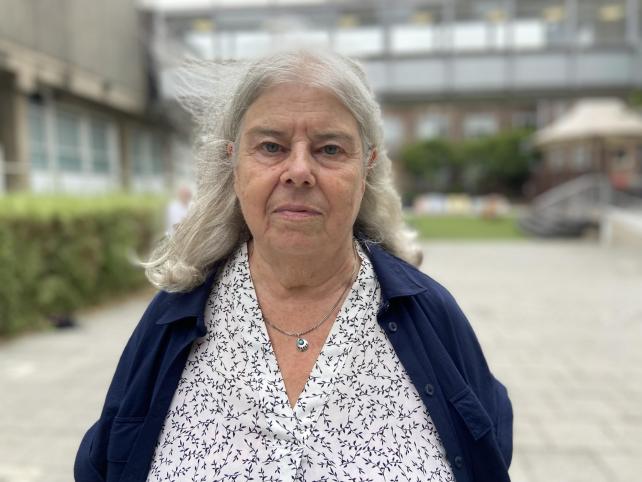
'Sally', now in her 40s, is suing Islington Council, claiming she was repeatedly sexually abused in her bed at Park Place in Conewood Street. She is seen her discussing the case with her lawyer Andrew Lord

‘Sally’, now in her 40s, is suing Islington Council, claiming she was repeatedly sexually abused in her bed at Park Place in Conewood Street. She is seen her discussing the case with her lawyer Andrew Lord (Image: Charles Thomson)

Kidnap

In 1983, social worker John Picton (now deceased) snatched a 13-year-old boy he had met at the Conewood facility.

The boy had moved to an adjoining children’s home in Elwood Street by the time Picton took him.

The homes were joined by their back gardens, so staff and children could move between them.

Picton and the boy he abducted were tracked down almost two months later in Toulouse, France.

He was brought back to the UK and prosecuted, prompting a paedophile magazine called Minor Problems to lament his plight.

In an article titled ‘Affection is not a crime’, the paedophile rights newsletter claimed to have met Picton and been convinced “of his genuine concern for his chosen ‘son’”.

He was sent to prison for six months, which the paedophile pamphlet called an “inhuman wrong”.

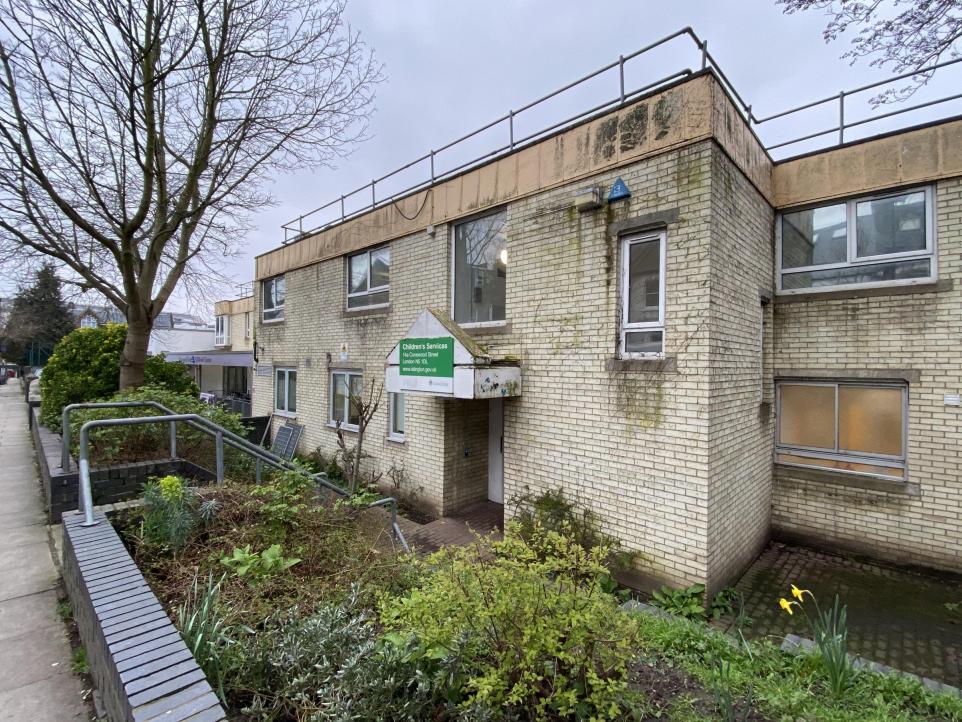
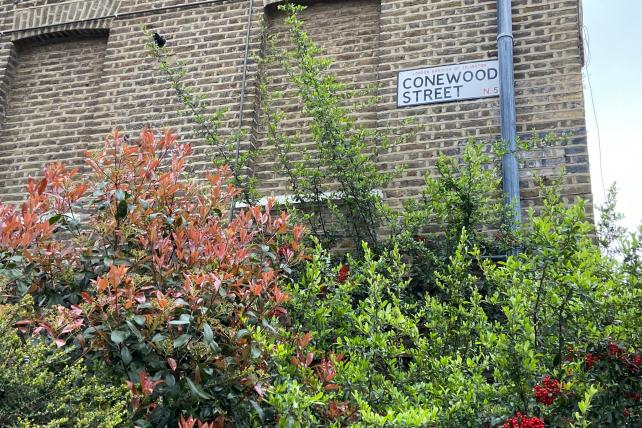
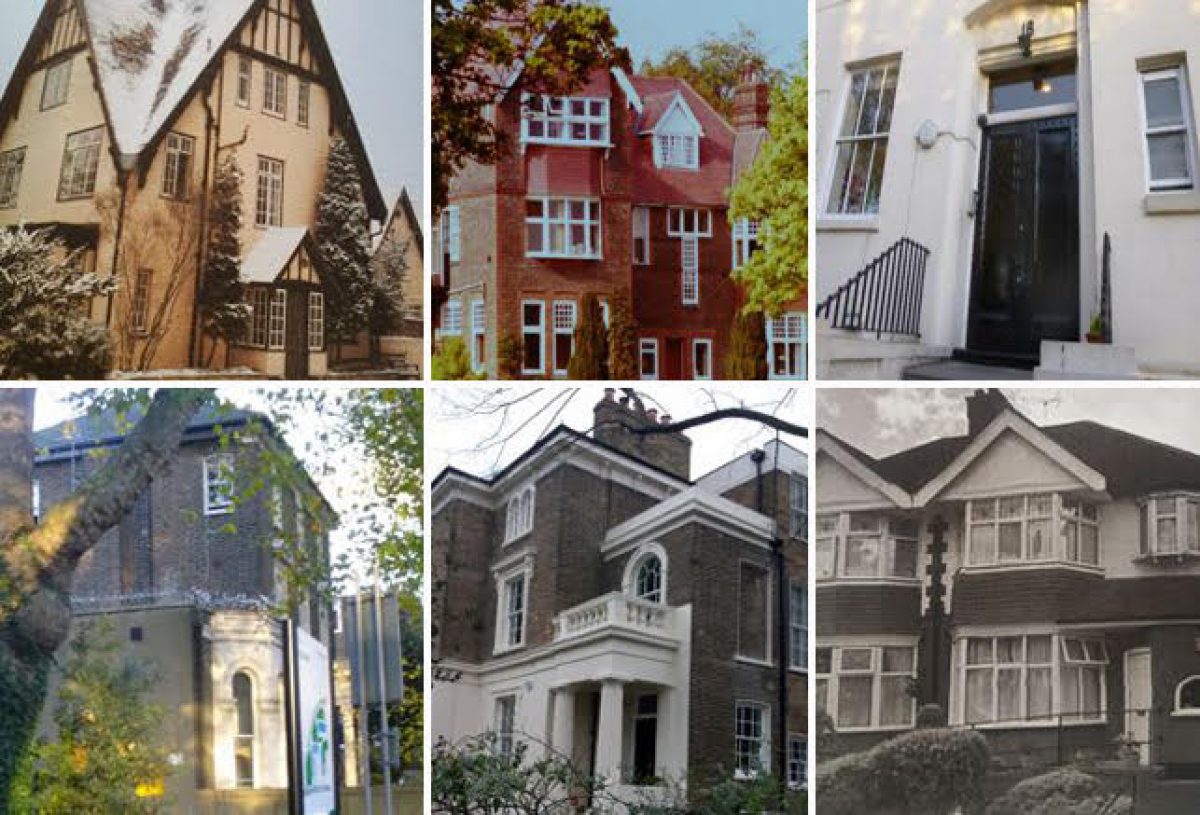
The children’s home in Conewood Street backed onto another one in Elwood Street. Both have been the subject of repeated abuse allegations (Image: Charles Thomson)

Abuse Allegations

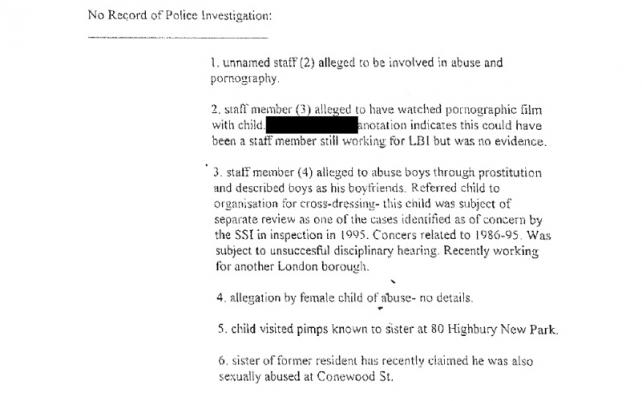
A 1999 council document revealed numerous historic abuse allegations at the Conewood home.

The document, by the council’s Child Protection and Reviews Service, was published under Freedom of Information laws at the request of Dr Liz Davies at the Islington Survivors Network (ISN).

It said two specific staff members were “alleged to be involved in abuse and pornography”.

A third was alleged to have watched a pornographic film with a child, at added.

Two girls separately reported being abused by unidentified persons at Conewood Street.

None of those allegations was dated in the file.

But a fourth identified staff member was “alleged to abuse boys through prostitution and described boys as his boyfriends” between 1986 and 1995, the report said.

After an “unsuccessful disciplinary hearing”, he went to work for another council.

As of 1999, none of these allegations had ever been investigated by police.

A 1999 Islington Council document, released under the Freedom of Information Act, detailed numerous historic abuse allegations linked to the Conewood Street home (Image: ISN)

Jason Swift

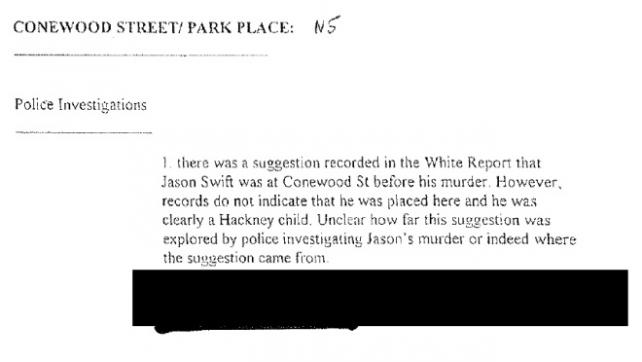
By 1999, police were aware of reports that Jason Swift had been linked to the Conewood facility not long before he died, the document continued.

Numerous staff and children have reported knowing him while he was there, said Dr Davies.

The Hackney teen was not a resident, she added, but attended an education facility there.

Jason, 14, was found in a shallow grave in Essex in November 1985.

He had died during a vicious gang rape by a paedophile gang known as the Dirty Dozen.

The tabloid press described him as a “rent boy”, despite him being a child incapable of consent.

Paedophile Sidney Cooke was convicted of manslaughter over Jason’s death in 1989, but how he first came to the attention of Cooke’s gang has never been properly established.

A 1999 document, released to Islington Survivors Network (ISN) under the Freedom of Information Act, said Jason Swift – later killed by a paedophile gang – had been linked to Conewood Street (Image: ISN)

Tony McGrane

Another Conewood boy wrongly described by tabloids as a “rent boy” also met a violent death.

Tony McGrane, 13, was found stabbed to death in a garage in Clerkenwell in October 1986.

His family denied lurid newspaper reports that he – a child incapable of consent – had been “selling sex in Soho”.

Tony’s death was one of 16 child killings investigated under Operation Stranger – the same operation that investigated Jason Swift’s death – as being potentially linked to one another.

But a 19-year-old family friend from Finsbury, called Gary Whelan, was ultimately convicted of manslaughter over Tony’s death in 1989.

A 1999 document, released years later under the Freedom of Information Act, detailed a catalogue of abuse allegations linked to the Conewood Street home, known to Islington Council but, until that point, never investigated by police (Image: Charles Thomson)

A 1999 document, released years later under the Freedom of Information Act, detailed a catalogue of abuse allegations linked to the Conewood Street home, known to Islington Council but, until that point, never investigated by police

New Allegation

In July, the Islington Gazette published a harrowing interview with a woman who says she was repeatedly sexually abused at Conewood in the 1990s.

Her lawyer Andrew Lord, at Leigh Day, has appealed for anyone with knowledge of the home at that time to make contact.

The council said it could not comment on active lawsuits.

However, it has previously admitted and apologised for decades of widespread abuse in its children’s homes, calling it “the worst chapter in this council’s history”.

Islington: Man says he was abused in Northampton Park home

Islington Gazette, 23rd February 2024

Exclusive by Charles Thomson, Investigations Reporter

‘Max’ says he was placed in Northampton Park children’s home, Canonbury – but Islington Council appears to have lost his care file (Image: Charles Thomson)

A man calling for support after he was left addicted to drugs after years of abuse in children’s homes found his care records had been lost.

Max – not his real name – says he was placed in two Islington Council children’s homes in the 1990s, where children and staff used drugs and he lived in fear of sexual assault.

But when he applied for his care records to support his bid for a £10,000 payout, the council could not find them.

“This is potentially very serious,” said Dr Liz Davies, of the Islington Survivors Network (ISN).

Councils are supposed to keep the records of looked after children for 75 years.

Dr Davies said she had referred several people with missing or incomplete files to a lawyer to see whether a legal action could be brought.

Islington Council would not comment on Max’s case, but said applicants to the support scheme did not necessarily need their care records.

However, Dr Davies said other applicants whose records were missing or incomplete had been turned down.

‘Children smoked crack’

Max said he was taken into care in 1993 and placed in the former Northampton Park children’s home, near Canonbury station.

He said some staff there openly smoked cannabis and permitted children in their care to smoke cigarettes and other substances.

He was given hashish, he alleged, and witnessed other children using crack cocaine.

The former children’s home at Northampton Park, near Canonbury station, is now private residential building (Image: Charles Thomson)

He was neglected, he claimed, with nobody noticing conditions he was later diagnosed with disorders like dyslexia and ADHD, which impacted his education. He left school with no qualifications.

The home was also rife with rumours of sexual abuse, he said.

“Other kids told me something bad was happening in the home,” said Max. “They said to keep away from certain people.”

At night, he claims, he would put furniture against his door and was frightened to go to sleep.

Heroin addiction

Max said he was later moved to another children’s home and got no help finding accommodation after turning 18.

His adulthood has been marred by heroin addition, which sabotaged his career in IT, and failed relationships. At one point, he lived in a hostel.

Only now he is clean and sober has he joined the dots between his childhood trauma and his destructive drug use.

“I was trying to forget,” he said.

Max, now in his 40s, still lives in north London – but has had a chaotic adulthood, marred by heroin addiction and depression. He is now clean and sober, and wants Islington Council to offer redress for the impact of his alleged childhood abuse (Image: Charles Thomson)

He now has constant pain in the left side of his body, which he believes is linked to his past heroin use.

He also has depression – not helped, he said, by living in a rented studio flat so dilapidated that he can’t use his own bathroom. He has to visit a relative daily to use theirs.

He is on the council’s bidding list for a one-bedroom flat, but several thousand places from the top.

Missing file

After admitting and apologising for decades of abuse in its former children’s homes, Islington Council set up the Support Payment Scheme, offering £10,000 to survivors.

Dr Davies helps survivors obtain their care records and file applications.

The Arrangements for Placement of Children Regulations 1991 say case files should be kept until the looked-after child’s 75th birthday – but Max’s cannot be found.

“It’s important to note that we do not require a care file to be supplied as part of an application for the support payment scheme,” a council spokesperson said.

“We don’t want potential applicants to be dissuaded from applying.”

But Dr Davies said some previous applicants have been rejected under similar circumstances.

Max returned to the former children’s home with the Islington Gazette. He said the £10,000 support payment would help get his life back on track (Image: Charles Thomson)

In January, the Gazette reported on Zara, also not her real name, who was rejected after receiving an incomplete care file.

Like Zara, Dr Davies said Max’s memories – the names of staff and children at Northampton Park, and his descriptions of what happened there – are corroborated by other survivors.

But Zara was still turned down and told to apply to an appeal panel if she wanted to pursue payment.

The same happened to another applicant, Tony Darke, even with a care file.

Whistleblowing former Islington social worker Liz Davies said she had referred the cases of several people with missing files to a lawyer, to see whether legal action could be mounted over the apparent legal breaches (Image: Charles Thomson)

Max’s Dream

If Max received the £10,000, he said, he would first book some private therapy – something he started once before but could not really afford.

“If you want it on the NHS you have to wait forever and you might die before you ever get treated,” he said.

He says he would then invest in some IT training to try to get his career back on track.

“I think the main thing I need is to find a nine-to-five job,” he said. 

“The payment would definitely improve some things in my life. It’s not something that would go to waste.”

Once he is back on his feet, he said, he would like to help other recovering addicts get their lives back on track.

The payment scheme is open to applications until May. Visit www.islingtonsupportpayment.co.uk.

Islington Survivors Network can be reached at 0300 302 0930 or islingtonsn@gmail.com.

Islington Council child abuse scheme faces fresh criticism

Islington Gazette, 15th February 2024

Exclusive by Charles Thomson, Investigations Reporter

Tony Darke, 55, says he applied to Islington Council’s Support Payment Scheme after suffering years of cruel and violent abuse in children’s homes – but has been told he will receive no pay-out unless he wins over an appeal panel (Image: Tony Darke)

A man forced to recount years of painful and humiliating abuse says he feels “kicked in the teeth” after his account was not believed.

Tony Darke has been rejected by Islington Council’s support scheme for abuse victims, despite his account being corroborated by others.

The 55-year-old lived in three children’s homes in the early 1980s, where he says he suffered neglect and “very violent” abuse.

But he says he has been refused financial help on grounds that there is insufficient evidence.

“You spill your guts out, remembering all this stuff you don’t want to remember, revealing all these intimate details, and it’s like you get kicked in the teeth in return,” he said.

Initial applications to the Islington Support Payment Scheme are done in writing – but Tony must now face an appeal panel.

“Now I’ve got to relive the whole thing again, but this time to a load of strangers,” he added.

The council told him months ago that it contact him soon with details – but he said he had heard nothing since.

It is the second time this year that the Islington Gazette has reported on applicants being rejected despite what the Islington Survivors Network (ISN) says is compelling corroboration.

Islington Council said it would not comment on individual cases.

A photo of Tony with one of the friendlier staff members inside one of the homes (Image: Tony Darke)

 ‘A knee in the back’

Tony was placed in care, aged 13, when his mother was deemed not to be coping.

He lived in homes in Conewood Street and Highbury Crescent, then Gisburn House in Hertfordshire.

The violent abuse started at Conewood, he alleged, with what he called “pin-downs”.

“It could be anything that triggered it,” he said. “They didn’t really need a reason. You might just swear, or say something they didn’t agree with.

“Everyone plays up sometimes – we were kids! It might be something like, it’s bedtime and you don’t want to go to bed.

“Two or three of them would basically jump you, wrestle you to the ground and hold you down by your legs, your shoulders, so you literally couldn’t move. It hurt. You’d have a knee in your back or  chest. It was a lot of pressure.

“They only let you up when they decided. They lifted you up with your arms behind your back and took you off to your room.”

Sometimes, said Tony, he was grabbed by the throat.

Others were treated even worse, he claimed. He recalled one child who staff taunted constantly, then attacked if they reacted.

One of the few photos Tony Darke has of himself during his years in Islington Council’s care (Image: Tony Darke)

Self-harm

At Gisburne House, Tony alleged, staff gave cigarettes to children as a means of control.

“Most of the kids in there smoked,” he said.

He said some staff at Gisburne were cruel.

“If you misbehaved you would go without dinner, or get a cold dinner. Or they banned you from going home at weekends to your family,” he claimed.

Staff drove children into the woods in the middle of the night in a Transit van and dumped them there, he said. They were split up and told to find their own way home in the dark.

Files show that by the end of Tony’s time in care, he was “beset by anxiety”, with “no confidence and low self-esteem”, and was self-harming.

One a camping trip, files record that he stuck his feet in the campfire. He bit his fingers until they bled, punched walls and scratched his arms.

He was deemed a potential suicide risk and described as very thin. He was caught shoplifting items to sell so he could buy food.

Dr Liz Davies claimed the Islington Support Payment Scheme was making ‘inconsistent’ decisions, with with some applicants rejected despite having no less proof than others who were approved (Image: Charles Thomson)

 “Ridiculous”

After admitting and apologising for decades of abuse in children’s homes, Islington Council’s Support Payment Scheme opened in 2022, offering £10,000 pay-outs to victims.

Tony applied last spring but received a letter on October 12 – his 55th birthday – saying he would receive no payment due to insufficient evidence. It said he could appeal.

The networl’s Dr Liz Davies described the decision as “ridiculous” and “inconsistent”.

“Tony has no less evidence than others who’ve received payments,” she said.

“Others have described the same sorts of abuse in the same homes, naming the same staff. Lots from Gisburn, for example, describe the night runs in the woods.

“Files prove Tony was in the homes. He names other children who were in the homes with him, some of whom I know have already successfully applied.”

Islington Council said all applications were “treated equally and carefully assessed”, adding: “We do not regard an application as having been ‘rejected’ when in fact it has been referred to the independent appeals panel for further consideration.”

The payment scheme is open to applications until May. Visit www.islingtonsupportpayment.co.uk.

Islington Survivors Network can be reached at 0300 302 0930 or islingtonsn@gmail.com.

‘Night run’ care home abuse survivors encouraged to help with investigation

Trips involved children being taken to various forests

Islington Tribune, 23rd July 2023

By Izzy Rowley

Dr Liz Davies

AN appeal for abuse survivors who remember “night runs” has been launched.

The Islington Survivors Network (ISN) has called for any survivors of the borough’s care home abuse scandal who remember “night runs”, which took place during the 1970s and 80s, to come forward.

These trips involved children being taken from their care homes and brought to various forests.

The exact purpose of these trips is unclear, but survivors are certain that the night runs were not recreational or fun, with one reporting to ISN that they were “touched inappropriately and sexually by staff who came with us” while being taken horse riding in Epping Forest.

One man, who does not wish to be named, recalled being “frightened and petrified” on a night run when he was about five years old.

He told the Tribune: “To give you a picture, there was a lot of abuse going on in the home – physical, mental, psychological abuse.

“I remember about three trips altogether. We were taken in a van to Epping Forest. I don’t think the people that took us worked in the care home, but whoever they were, they must have had the authority to take us.

“It was daylight when we left, but it was dark when we arrived there. I recently spoke to someone else who was in the same care home and he said he remembered holding my hand the whole time, he wouldn’t let go of it. There were lots of posh cars lined up – it all seemed very organised.”

He added: “I remember being told to shut up and say nothing on the return to the home.”

He said that an investigation into these runs would be a step towards justice for him and other survivors like him. “I would definitely encourage as many people as possible [to come forward]. I think the more that come forward, the more likely it is that it’s going to make any kind of investigation into it that bit easier,” he said.

Survivors from care homes in Highbury Crescent, Grosvenor Avenue, Conewood Street, Elwood Street, Gisburne House, and Copthorne have reported experiencing these runs.

Different forests were visited including Epping Forest, Cassiobury Park, Thetford Forest and the Norfolk Broads.

According to ISN, many of these children were abandoned in the middle of the forest and left to make their own way back to a campsite or a vehicle they were transported there in. Some survivors report fewer children coming back from these runs than went out on them.

Dr Liz Davies, founder of Islington Survivors Network, said: “This is so serious and we hope there will be an investigation from the police and Islington Council.

“This needs to be investigated because it’s a recurring theme from so many survivors from so many different homes.”

An Islington Council spokesperson said: “We strongly support prosecution of any people involved in abuse, and it’s vital for anyone with new information about non-recent abuse to contact police, so allegations or evidence of abuse can be fully investigated.”

After being contacted on Wednesday the Metropolitan Police did not respond in time to give a comment.

• Anyone who has experienced abuse of this kind can report it directly to the police by calling 101 or visiting www.met.police.uk/ro/ocr/how-to-report-a-crime or contact Islington Survivors Network at islingtonsn@gmail.com who will facilitate a report.

No way to report historic Islington child abuse to Met Police

EXCLUSIVE Islington Gazette: 2nd March 2023

Exclusive by Charles Thomson Investigations Reporter

No way to report historic Islington child abuse to Met Police

Dr Liz Davies, from the Islington Survivors Network (ISN), said victims victims were struggling to report their abuse to the Met Police (Image: Ken Mears)

The Met Police’s failure to investigate historic child abuse in Islington could lead to vigilante attacks on abusers, a former council whistleblower has warned. 

A support group for survivors has received intelligence on paedophiles who are still alive and may pose a continuing risk, but says it is struggling to report the information to police. 

Dr Liz Davies founded the Islington Survivors Network (ISN) and has helped compile more than 130 applications to a council “support payment scheme”. 

READ MORE:

But she said those trying to report their abuse wanted to see the culprits face justice but were being obstructed by bureaucracy. 

“It will get to a point where if nobody does anything, there are a lot of ex-prisoners in ISN who would stop at nothing,” she said.  

“I don’t want that to happen. That’s not how it should be.” 

No police liaison 

Dr Davies blew the whistle on widespread abuse in Islington’s children’s homes in the early 1990s, while working as a social worker. 

Now an emeritus professor at the London Metropolitan University, she uses her office to help people apply to the council’s payment scheme for victims. 

The Gazette reported last week that intelligence was “pouring out”, with multiple complainants describing similar abuse by the same perpetrators. 

READ MORE:

But, said Dr Davies, her repeated calls for a designated liaison officer to act on the intelligence have gone unheeded. 

She is supported by Islington Council. 

“We strongly support the Met having a single point of contact for abuse allegations relating to Islington’s children’s homes and we are writing to the borough commander in support of this,” a spokesperson said. 

“We strongly expect the Metropolitan Police to fully investigate any new allegations of abuse and to allocate appropriate resources to investigate.” 

Trouble reporting 

“We currently have no police to be in contact with on this at all,” said Dr Davies. 

“Since ISN started, we’ve been put with five different police teams and they’ve all folded up. We were tossed around.” 

She said the latest advice from police had been to call 101 or go to a police station. 

But, she claimed, “I tested 101 with some referrals and it was hopeless. 

“One went to Islington police station and got the same response – that they didn’t have anybody to take a statement. 

“He was devastated as he had taken ages to get the courage to report this crime. 

“He then rang the Islington child protection team. He phoned from my room here and I heard it.” 

Dr Davies said the officer simply replied by expressing his annoyance that he had been contacted directly and asked where the complainant had got his details. 

“We had been given his name by the former team that had just closed down,” said Dr Davies. 

But in light of the officer’s response, the complainant decided not to engage with the police any further. 

Abusers are still alive 

“When the payment scheme started, I was well aware that everybody’s statements would be naming abusers, because that’s part of the scheme,” said Dr Davies. 

The 16-page form applicants are asked to fill out includes a section asking for the names of any abusers. 

Dr Davies said her own research had shown some of the abusers being named were still alive and traceable. 

“We need a liaison officer to have strategy meetings on current risk to children that may be posed,” she said. “It’s basic child protection procedure.” 

The Met did not respond to Dr Davies and Islington Council’s request for a dedicated liaison officer. 

It said complainants should call 101 or report their abuse online. 

“Your information will be passed to a specialist team who will work with you and support you” the force said. 

“You will then receive a single point of contact throughout the investigation. 

“We take all reports of abuse, recent or non-recent, extremely seriously. 

“Specially trained officers will support victim-survivors and we will work to seek justice for them wherever possible.” 

  • ISN can be reached on 0300 302 0930 or by emailing islingtonsn@gmail.com. 

Please help to promote the Council Support Payment Scheme and inform survivors about how to apply. Help distribute our leaflet.

Contact Islington Survivors Network if you want leaflets to distribute. We especially want to cover Islington but also Hertfordshire, Essex and Enfield where some of the 41 children’s homes were. We can post them to you or arrange for you to collect them from our office in Holloway Road.

As yet the council has hardly promoted the scheme at all. We had agreed a plan with the Council Communications Team but this has not been implemented. Please put the leaflets on noticeboards – GP surgeries, hospitals, libraries, supermarkets, cafes, shops, foodbanks, voluntary organisations – wherever you think survivors of abuse will see them. THANK YOU!!! We depend on you to help spread the news of this Scheme. We have already assisted over 180 survivors to make an application and 130 have received the payment. None have been refused. The Scheme will only be in place until May 2024 and the process can take 3-6 months so please help to let survivors know about this as soon as you can. If you have any questions about this please call us 0300 302 0930. This is a voicemail service linked to our email and we will get back to you.

What was the Islington Children’s Homes Abuse Scandal?

Islington Gazette 25th February 2023

By Charles Thomson Investigations Reporter

What was the Islington Children’s Homes Abuse Scandal?

Liz Davies fought for more than 30 years for children she knew were being abused in Islington Council’s care.

The former social worker’s efforts eventually secured an apology and a support scheme, which has already paid out almost £1m.

Here is a timeline of how the scandal unfolded. 

1990 

Liz, a social worker, raises concerns about exploitation of children in homes. 

1991 

Islington’s Area Child Protection Committee rejects her concerns. 

1992 

Liz goes to Scotland Yard but no substantial investigation occurs. 

The Evening Standard newspaper publishes a series of reports suggesting Islington’s children’s homes have been “infiltrated by paedophiles”. 

Whistleblowing staff and children describe drug-dealing, sex trafficking and violence. 

Dr Liz Davies first blew the whistle on abuse in Islington’s care homes in 1990. She is still fighting for the survivors today (Image: Ken Mears)

1995 

A report by Ian White, former president of the Association of Directors of Social Services, and Kate Hart, a former senior manager at Hampshire and Oxfordshire councils, finds Islington Council did not properly investigate allegations against workers.

Claims include: “sexual assaults on other staff, encouraging boys to be rent boys, sexual misconduct with residents, sale of drugs, poor child care, involvement in paedophile rings and child pornography”. 

More than a third of accused staff were not investigated. Others left on health grounds before disciplinary proceedings could progress. 

The report warns that abusers may therefore now be working with children elsewhere with clean records. 

Council bosses, including leader Margaret Hodge, resign. 

The White Report is forwarded to the Metropolitan Police, but no investigation occurs.  

1999 

Islington Council chases up the Met, asking whether the White Report’s findings merit investigation. 

Detective Superintendent Sue Akers says there is “insufficient tangible evidence on which to base an holistic enquiry on the scale that would be necessary”. 

The former Grosvenor Avenue children’s home in Highbury is one of many where abuse reportedly occurred (Image: Ken Mears)

2001 

An internal Met Police report says that since the White Report, the force has investigated “at least five former council employees” over “serious sexual abuse in care homes”. 

“With the exception of [one],” it says “none of these suspects were identified previously, despite being prolific offenders during the period under review. 

“I suggest this tends to cast serious doubts about the thoroughness of the council enquiry.” 

To date, 12 complainants have alleged sexual abuse at Gisburn House, in Watford. 

Multiple staff have been accused from another home (Conewood Street/Park Place, N5). 

Since allegations were made about a third home (1 Elwood Street, Highbury), the report adds, “two suspects have fled the country”. 

There is “a high probability” that a “properly resourced cold case review” would identify new victims and offenders, it concludes. 

2003 

Another internal report questions the Met’s continuing inaction, saying it gives the council “a solid security policy against criticism, in that they have asked police to investigate and police have, thus far at least, declined to do so.” 

“Why did the police make this decision at all?” it asks. “Why was the CPS apparently not involved?” 

Still no major investigation occurs. 

READ MORE:

2016 

Dr Davies, now a professor of social work, launches the Islington Survivors’ Network, prompting many new complainants to come forward. 

Two police officers meet Dr Davies and create a list of 26 alleged abusers. But the investigation is closed down and the Met will not say why. 

The Islington Gazette revealed that Sandy Marks, who oversaw the response to the abuse allegations in the early 1990s, had once been linked to a pro-paedophile activist group (Image: Newsquest)

2017 

The Islington Gazette reports that ex-councillor Sandy Marks, chair of Islington’s Social Services committee when the abuse was unearthed in the early 1990s, was once linked to radical pro-paedophile campaign group “Fallen Angels”.  

She initially admits this, saying she was manipulated, then changes her story, denying the link. 

Lawyers advise the council to consider whether this undermines the White Report. 

READ MORE:

The story is part of a series by the Gazette on survivors’ stories. 

Islington finally admits that, “Children placed in our care were subjected to terrible physical and mental abuse.” 

“It is no exaggeration to say that this was the darkest chapter in the council’s history,” says leader Richard Watts.  

“We are deeply sorry for the council’s past failure to protect vulnerable children.” 

He also apologises to Dr Davies for the way her own concerns were handled and commends the Gazette’s reporting. 

2018 

An inquiry by Sarah Morgan QC finds Mrs Marks was affiliated with Fallen Angels, but there is “no evidence” it “affected [her] later role overseeing children’s services at Islington”. 

The White Report is not critically undermined, she finds. 

Islington Council leader Kaya Comer-Schwartz said the authority could not ‘make amends’, but could take responsibility (Image: Islington Council)

2021 

Islington Council announces the Support Payment Scheme, offering £10,000 payments to survivors. 

Council leader Kaya Comer-Schwartz says: “We know that nothing can make amends for the trauma caused, but it is our responsibility as a council to try to address past failings.” 

The Metropolitan Police would not comment on why it had never fully investigated the Islington scandal, but encouraged anyone wishing to report non-recent abuse to do so by dialling 101 or visiting www.met.police.uk/ro/ocr/how-to-report-a-crime/

Intelligence ‘pours in’ on Islington Council child abusers

EXCLUSIVE

HISTORICAL CHILD ABUSE

Islington Gazette: 25th February 2023

Exclusive by Charles Thomson: Investigations Reporter

Intelligence ‘pours in’ on Islington Council child abusers

Islington Council has paid out almost £1 million in the past ten months to victims of historic abuse in its children’s homes. 

More than 180 complainants have come forward since last May, yielding a wealth of new intelligence about paedophiles who infiltrated the borough’s care system.

The support scheme was launched last year, more than three decades after whistleblowers first reported that Islington’s care system had been “infiltrated by paedophiles”.

“They are pouring it out,” said Dr Liz Davies, who has worked on many of the applications. 

“They’ve been naming abusers. Serious assaults. Sexual assaults. Physical assaults. Crimes.” 

In some cases, Dr Davies said, multiple complainants have named the same alleged abusers. 

READ MORE:

“I’ve done a collation of all the children’s homes,” she explained. 

“So if the police contact me and say somebody’s come forward making allegations about Mr So-and-so, I can say, ‘Ten other people have named him’.  

“Then I can contact all those survivors and say, ‘This officer in this police station is investigating Mr So-and-so’, to see if they would like to speak to them.” 

Survivors 

Dr Davies, an emeritus professor of social work at the London Metropolitan University, first raised the alarm about widespread abuse in the homes in 1990, whilst working as a social worker. 

No large-scale police investigation has ever been mounted. 

The Met Police would not comment for this article as to why.

Dr Davies now co-ordinates the Islington Survivors Network (ISN), a non-profit launched in 2016 to help victims access support, and “collate and publish the history of the Islington child abuse scandal”. 

ISN also aims to help the authorities bring abusers to justice. 

Since launching, it has been contacted by more than 600 complainants, as well as ex-staff offering witness testimony. 

In 2017, the council finally admitted and apologised for the abuse. In 2021, it announced the Islington Support Payment Scheme. 

Support Payments 

The scheme, which opened in May 2022 and closes in May 2024, offers £10,000 payments to anyone abused in any of 42 children’s homes between 1966 and 1995. 

“Abuse may be sexual, physical, emotional or neglect,” according to the 16-page form that applicants must complete. 

The scheme covers 12 homes in Islington, plus other Islington-run homes in London, Essex and Hertfordshire.  

It has received 181 applications. To date, 95 have been approved and paid out. 

“No applications have been rejected,” the council said.  

A number of successful claims will also be taken forward as individual civil suits, said Dr Davies. 

“If they win, the £10,000 will come off the damages,” she explained. 

Excluded 

Three-quarters of all applications so far have been made through ISN, which was instrumental in getting the scheme set up. 

Dr Davies said she had lost some battles, with those abused in foster care excluded from the scheme, as well as those abused in children’s homes before Islington became a London borough in 1965. 

“So there were things that were not just,” she said. 

“But in the end, because of time, we thought, we’ve got to run with what we’ve got now, to get people getting paid – because they’re dying. We’re losing them and they’re not getting the money.” 

Dr Davies said the main issue she was experiencing now was waits of “up to six months” for claimants’ care files to be disclosed, then discovering that they are missing or incomplete. 

The Rules 

“Applicants do not need their childhood care records to apply for the scheme,” the council told the Gazette

But the scheme does require “credible information and/or material” supporting a claim. 

In some cases, said Dr Davies, missing files have been overcome by ex-staff providing witness statements confirming that they remember the applicants being in the homes. 

The council confirmed that those still waiting for their care records when the scheme closes will not be excluded, as long as they have already applied for the scheme. 

“All applications submitted before the scheme ends in May 2024 will be processed,” it said. 

The Department for Work and Pensions has agreed that payments under the scheme will not be considered when calculating eligibility for benefits. 

ISN can be reached at http://www.islingtonsurvivors.co.uk: Islingtonsn@gmail.com : 0300 302 0930 They will assist survivors with applying to this Scheme.

The Met Police said anyone wishing to report non-recent abuse should do so by calling 101 or visiting http://www.met.police.uk/ro/ocr/how-to-report-a-crime/

“Your information will be passed to a specialist team who will work with you and support you,” it said. 

Met Police officer on abuse at Islington children’s home

EXCLUSIVE

Islington Gazette 9th March

Met Police officer on abuse at Islington children’s home

Exclusive by Charles Thomson : Investigations Reporter

A police officer has detailed how abuse and neglect at an Islington children’s home left him at the mercy of a paedophile.

Aaron – not his real name – returned to the former Highbury Crescent home with the Islington Gazette last week, to detail his ordeal.

The man is among many to have been abused at Islington children’s homes and is now speaking out, decades after whistleblowers drew attention to the scandal.

Now in his 40s, he has applied to Islington Council’s Support Payment Scheme, which offers £10,000 payments to victims of historic abuse in its homes.

He said he was speaking out to encourage others to come forward.

“Horrific”

Aaron was placed in Highbury Crescent several times because his mother, an alcoholic, struggled to look after him and his siblings, he said.

But at the home, he claimed: “I was subject to various levels of abuse. I was physically assaulted and dragged around.

“Quite often my mum would show up, drunk, trying to get us back. We would be dragged away, struck and thrown into a closet room and locked in from the outside. There was writing all over the walls and small holes knocked through.”

In addition to this physical abuse, said Aaron, children at Highbury Crescent were “neglected” – left unsupervised most of the time and often unfed.

CATCH-UP:

“It was quite a horrific place,” he said.

“The only person that looked out for us was an Irish lady in the kitchen who used to give us a bit of cake or something.

“We would often just be left to our own devices for hours on end, to run around in the park opposite.”

That was where he and others encountered a paedophile called Roger Moody.

Aaron described the treatment of children at the Highbury Crescent home as ‘horrific’, including assaults and neglect (Image: Charles Thomson)

Groomed

“Whenever we used to play in the park opposite, he used to be there,” said Aaron.

“Perhaps he knew that was where he could find vulnerable children. He used to have a little black dog, Sadie.”

Gradually, Moody manipulated his way into Aaron’s life. At the time, Moody volunteered at an adventure playground near Pentonville Road, said Aaron, and told the kids he was a former youth worker.

He got to know Aaron’s family and began taking him on outings with other children, to parks and a swimming pool.

“He was very hands-on and playful with the children,” said Aaron. “We all got changed together and would all be thrown around the pool – hands-on, touching.”

Aaron’s mother accepted Moody’s offer to let Aaron stay at his house over weekends, to give her a break.

“My mother believed he was a trustworthy person,” said Aaron.

Aaron said it was in the park opposite the children’s home that he and other children encountered a paedophile called Roger Moody (Image: Charles Thomson)

Abuse

The house, in Liverpool Road, was filled “with lots of other local children that he knew and associated with, mainly of Asian descent.”

“The place was covered with cigar ash and dirt and dust,” Aaron recalled. “There was a piano with stuff piled on top of it. There were photocopiers in his house.”

Moody was a left-wing activist. He would take the boys to meetings and have them hand out the pamphlets he was producing at home.

Eventually, said Aaron, Moody’s true motive for befriending him became apparent.

Aaron described “unwanted sexual touching” by Moody, but did not want to go into detail.

“I won’t want to bring back the old demons,” he said. “I must have been about 11 or 12. No older than that. I was inappropriately touched on numerous occasions.”

Aaron is still plagued by “recurring nightmares”, he said, and sometimes situations he encounters during his work as a police officer trigger flashbacks.

Aaron never reported his abuse to the police, despite being an officer himself, but did report it several years ago to the Islington Survivors Network (ISN) (Image: Charles Thomson)

Speaking Out

Aaron never reported his abuse, even after joining the force.

“I know of historic cases that never go anywhere,” he said. “It was my word against his. I wasn’t willing to put myself through that.”

But in 2020, he contacted the Islington Survivors Network (ISN) and disclosed his abuse.

Two years later, Moody died.

Islington Council said: “We’re deeply sorry for the council’s past failure to protect vulnerable children in its children’s homes, which was the worst chapter in this council’s history.”

Since May 2022, the authority has paid more than £1 million in support payments to victims of abuse.

Next week: The Gazette investigates Roger Moody, the teflon paedophile who kept finding ways to work with children.

ISN can be reached on 0300 302 0930 or by emailing islingtonsn@gmail.com.

Roger Moody

North London: Youth worker Roger Moody was a proud paedophile

Islington Gazette 28th March 2023

By Charles Thomson Investigations Reporter

A proud paedophile managed to continue working with children even after authoring books, articles and pamphlets advocating sex between men and children.

Throughout the 1970s and 1980s, youth worker Roger Moody called for the age of consent to be abolished, even writing a book bemoaning “simplistic and bigoted” attitudes towards paedophiles.

But press cuttings from the late 1980s and early 1990s show he was still managing to get jobs working with children.  

Earlier this month, the Islington Gazette interviewed a Met Police officer who said he was abused by Moody in the 1990s and recalled him being a volunteer at an Islington adventure playground.

In 2020, that officer was one of two people to approach the Islington Survivors Network (ISN) and report historic abuse by Moody.

Others made allegations decades earlier, but Moody was acquitted at trial.

Moody died in 2022.

The Gazette interviewed a Met Police officer who said he encountered Roger Moody as a direct result of neglect at the former Highbury Crescent children’s home.

‘Boy lover’

Roger Moody was a left-wing activist, campaigning against human rights abuses in the developing world.

In 1971, he even wrote for the Islington Gazette from Bangladesh, where he was delivering aid.

He lived in Caledonian Road at the time and was a “youth worker” in the Bemerton Adventure Playground in Copenhagen Street, Barnsbury.

But in 1975, when Moody outed himself as a paedophile, that should surely have spelled the end of his work with children.

He outed himself in a letter to Peace News, later calling it “the first confessional article by a boy-lover to appear in the British radical press”.

In a follow-up, he claimed sex only occurred between children and paedophiles “because the kids really want it”.

Alarmingly, the address he gave in those letters – in Dartmouth Park Hill, Kentish Town – was also the exact address of a “children’s community centre”.

Trial

In 1978, Moody was charged with child sex offences.

He was acquitted in 1979 at the Old Bailey after the judge banned the jury from seeing his pro-paedophile articles.

In one, he had called on paedophiles to adopt “revolutionary” tactics against their “repression”.

“Specifically, this means we don’t work to lower the age of consent, but to abolish it,” it said.

Ten days after his acquittal, he was arrested again after being seen hand-in-hand with a ten-year-old boy.

No charges followed.

Roger Moody rote a book titled ‘Indecent Assault’, described on the jacket as ‘a defence of paedophilia’ (Image: Charles Thomson)

“Indecent Assault”

In 1980, Moody wrote a book called Indecent Assault, described on its jacket as “a defence of paedophilia”.

“I defend the rights of children to make mutual physical relationships with people of any age,” he wrote, describing young boys as “provocateurs”.

He even dedicated the book to “the boys”, writing: “By the time they are full grown, I trust that most of what this work describes will have become redundant ritual”.

In 1986, he wrote a chapter for another pro-paedophile book – “The Betrayal of Youth” by Warren Middleton, a former vice-chairman of the Paedophile Information Exchange.

He called his chapter: “Ends and Means: How to Make Paedophilia Acceptable”.

“The Dodger”

Despite his pro-paedophile advocacy, Moody continued finding work with kids.

In 1989, the Chelsea News and General Advertiser reported that he had just quit his job as a “youth worker” with the North Kensington Amenity Trust.

Now known as the Westway Trust, it was set up in partnership with the Royal Borough of Kensington and Chelsea.

“All employment matters would have been handled by the charity, not the local authority,” said Westway.

Roger Moody wrote to the Islington Gazette in 1991, saying he had recently been working in schools (Image: Newsquest)

A 1991 letter from Moody to the Islington Gazette, bemoaning “falling standards” in schools, revealed another job with children.

“As a youth worker who until recently worked in a school-based youth project, I was very disturbed to read your report,” he wrote, giving his address as Liverpool Road.

It was at around this time that the Met Police officer interviewed by the Gazette recalled Moody also volunteering in an Islington play park.

Islington Council said it had found no records of Moody being a past employee.

Moody’s death last year provoked tributes from academics and human rights campaigners, seemingly unaware of his murky past.

Among those who wrote eulogies was Thomas O’Carroll, former chairman of Paedophile Information Exchange.

He titled his: “Rodger the Dodger, who beat the rap”.

The Islington Survivors Network can be reached on 0300 302 0930 or by emailing islingtonsn@gmail.com.